 Custer
 Siding in Lynden: What the Nooksack Valley Climate Actually Does to a Home
Lynden sits inland along the Nooksack River, a few miles south of the Canadian border and a short drive from Custer. It's not a beach town, and homes here don't take the direct salt spray that hits properties right on Birch Bay or the Strait. What Lynden does get, year after year, is a long, wet, gray season that runs from October through April, plus the humidity that comes with sitting in a river valley surrounded by farmland. That combination is just as hard on siding as coastal salt exposure — it just works differently.
Constant moisture in the air, morning fog off the river bottoms, and short winter days with limited sun exposure mean exterior surfaces in Lynden often stay damp longer than they would in a drier, more open location. That's the environment where moss, algae, and mildew take hold on north-facing walls and shaded siding runs. Add in wind-driven rain during winter storms, and any siding product with weak seams, absorbent cores, or a finish that isn't built for constant wet-dry cycling is going to show it within a handful of years — cupping, swelling at the joints, paint failure, or soft spots that aren't visible until you push on them.
Why We Only Install James Hardie Fiber Cement in Whatcom County
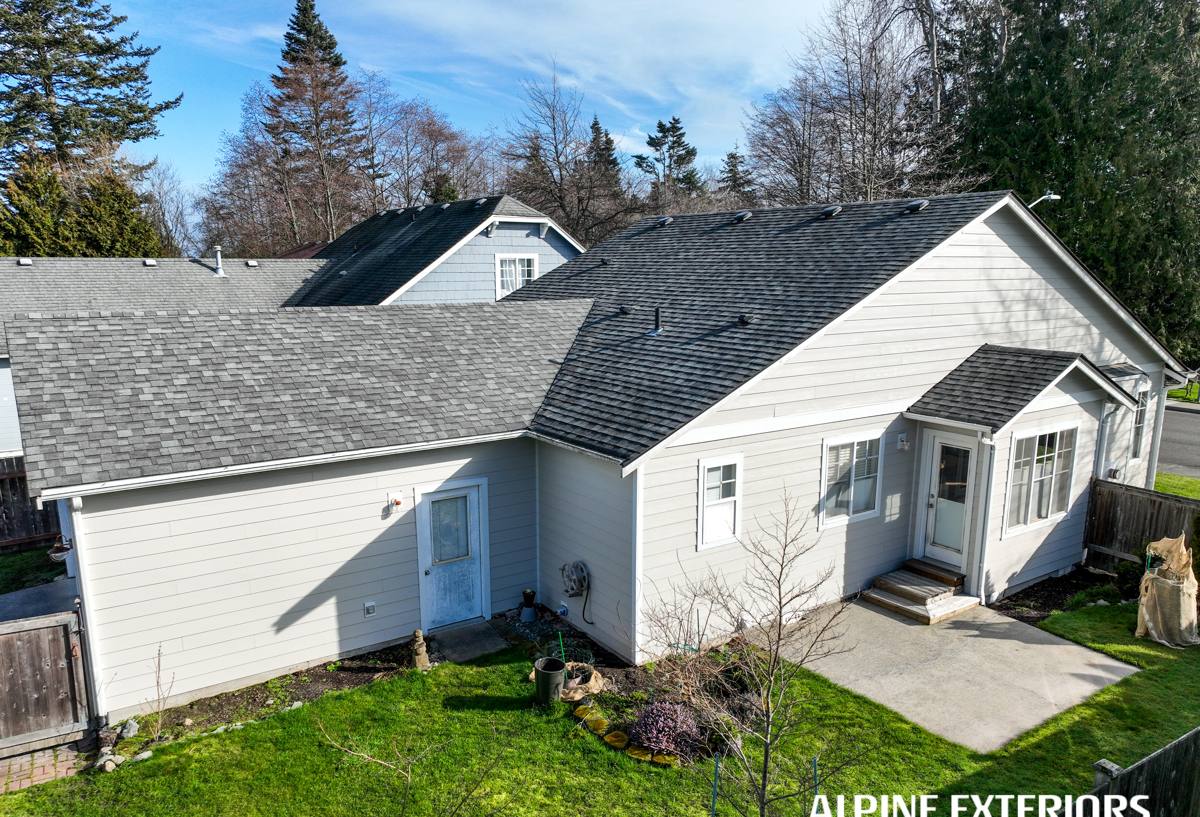
Custer Siding installs one siding system: James Hardie fiber cement. We don't install vinyl, LP SmartSide, Cemplank, Allura, primed spruce, or cedar, and that's a deliberate standard, not a sales pitch. Every one of those products can be installed correctly and can look good going up. The question that matters in a climate like ours is what the product does five, ten, and twenty years in, after repeated freeze-thaw cycles, moss growth, and constant moisture exposure.
How HZ5 Products Are Built for This Climate
James Hardie engineers its siding by climate zone, and Whatcom County falls into the HZ5 category — built for regions with significant moisture and temperature swings. HZ5 products are formulated to resist moisture absorption and hold up to the wet-dry cycling that's normal here. Fiber cement doesn't have an organic wood core to swell, rot, or feed mold the way engineered wood products can when water gets behind a seam or into a cut edge.
ColorPlus Finish and Moss Resistance
Hardie's ColorPlus finish is baked on at the factory under controlled conditions, which gives it better adhesion and UV resistance than field-applied paint. That matters directly for the moss and algae issue: a tight, factory-cured finish gives moss less to grip onto compared to a porous or field-primed surface, and it holds its color instead of chalking or fading under a long gray season.
Common Siding Problems We See on Homes Around Lynden
Most of the calls we get from this area aren't about dramatic failures — they're slow, cumulative problems that started small and got worse because they were hidden behind siding that looked fine from the curb. The most common issues:
- Moss and algae buildup on shaded north- and east-facing walls, especially near mature trees or tight side yards with limited airflow
- Soft or swollen siding at butt joints and corners, where water intrusion concentrates over time
- Caulk and trim failure around windows and doors, which lets moisture behind the siding plane long before it's visible on the surface
- Paint peeling or chalking on older wood or engineered wood siding that wasn't refinished on schedule
- Fascia and trim rot at rooflines, usually tied to gutter or flashing issues rather than the siding itself
None of these are unique to Lynden — they're what you'd expect anywhere in western Whatcom County with a similar mix of rain, shade, and older housing stock. The fix isn't complicated, but it does require a crew that knows what to look for underneath the surface, not just what to nail up on top of it.
Roofing, Windows, and Decks: Treating the Exterior as One System
Siding doesn't fail in isolation. A roof that's shedding water poorly, a window that's not flashed correctly, or a deck ledger board that's trapping moisture against the wall will all eventually show up as a siding problem, even though siding was never the actual cause. We handle siding, roofing, windows, and decks for that reason — when one of these systems is compromised, it puts the others at risk.
On a siding project, we're also looking at roofline transitions, window flashing, and any deck or porch attachment points where water can get trapped against the wall assembly. Fixing the siding while ignoring a bad flashing detail just buys a few years before the same damage comes back.
What a Siding Project Looks Like With a Local Crew
Being based out of Custer means we're familiar with how houses in this part of Whatcom County are typically built, what the older housing stock looks like, and how the weather actually behaves through a full year here — not just what a spec sheet says. That matters when it comes to scheduling around our wet season, sequencing work so a house isn't left exposed during a stretch of driving rain, and knowing which details (like weather-resistive barrier laps and flashing at penetrations) need extra attention in a climate that doesn't give a house much of a break to dry out.
A typical project starts with an on-site assessment of the existing siding, sheathing, and any trouble spots we can identify — soft spots, trim rot, moisture staining. From there we walk through material options, review the scope in plain terms, and give you a straightforward estimate. Once work starts, proper installation includes correct fastening patterns, gapping and caulking per manufacturer specification, and attention to flashing at every window, door, and roofline intersection.
Cost Factors for a Lynden Siding Project
Every house is different, and we won't quote a number without seeing the property, but the factors that move a siding estimate up or down are consistent. Getting familiar with them ahead of time makes for a more useful conversation when we come out for an estimate.
| Factor | Why It Matters |
|---|---|
| House size and wall complexity | More corners, gables, and dormers mean more cutting, flashing, and labor time per square foot |
| Existing wall condition | Rotted sheathing or trim found during tear-off adds repair scope beyond the siding itself |
| Siding profile chosen | Lap width, shingle-style panels, and trim details all affect material and labor cost differently |
| Access and site conditions | Tight lots, landscaping, or multi-story sections can require more staging and time |
| Paired work | Bundling siding with roofing, window, or deck work can improve overall efficiency and sequencing |
Fiber cement generally costs more upfront than vinyl and is comparable to or less than high-end cedar once you account for cedar's ongoing refinishing costs. The honest way to think about it is total cost over the life of the siding, not just the install-day number.
What to Ask Before Hiring Anyone for Siding Work in Whatcom County
Siding work has a low barrier to entry, and this region sees a fair amount of storm-chasing and out-of-area crews after bad weather. A few questions separate a legitimate local contractor from someone just passing through:
- Are you licensed and insured in Washington, and can you provide proof?
- Who is actually on the crew — subcontracted labor or your own installers?
- What's your experience specifically with James Hardie fiber cement installation and manufacturer specifications?
- How do you handle flashing at windows, doors, and rooflines during a siding replacement?
- What does the warranty actually cover, and is it transferable if you sell the home?
- Do you have a permanent local presence, or is this a seasonal or storm-response operation?
A contractor who answers these plainly, without dodging the specifics, is worth taking seriously. One who rushes you toward signing before answering them isn't.
Maintaining Fiber Cement Siding in a Wet Climate
James Hardie siding is low-maintenance compared to wood, but "low-maintenance" doesn't mean "no maintenance," especially in a climate that stays damp as long as ours does. A basic yearly routine keeps siding performing the way it's designed to:
- Rinse siding annually to clear pollen, dust, and early moss growth before it establishes
- Inspect caulking around windows, doors, and trim for cracking or separation
- Keep gutters clear and downspouts directed away from the foundation and wall base
- Trim back vegetation and tree branches that keep siding shaded and damp longer than necessary
- Watch for any soft spots, staining, or discoloration and have them checked before they spread
None of this requires specialized tools or products — it's the same kind of upkeep any exterior surface benefits from, just with the added advantage that fiber cement doesn't rot, delaminate, or feed mold the way an organic-core product can if maintenance slips for a season or two.
Ready for an Estimate?
If your Lynden home is showing moss buildup, soft siding, or you're just planning ahead for a replacement, we're happy to come take a look. The estimate is free, there's no pressure, and you'll get a straight answer about what your home actually needs — use the form below to get started.