 Custer
 Serving Marietta: Siding Done Right
Marietta sits close enough to the water that the weather off Drayton Harbor and the Strait of Georgia shapes almost every exterior decision a homeowner makes here. Salt-laden air moves inland on the wind, rain arrives sideways more often than straight down, and the shoulder seasons bring long stretches of damp, shaded weather that give moss and algae plenty of time to take hold. Custer Siding works this corner of Whatcom County regularly, and we've built our approach around what actually happens to a house here over ten or twenty years, not what happens to a house in a dry inland climate where a lot of siding products are designed and tested.
This page covers what Marietta homes tend to face, how we handle siding, roofing, windows, and decks for properties in this area, and why we standardized on one siding product instead of offering a menu of options.
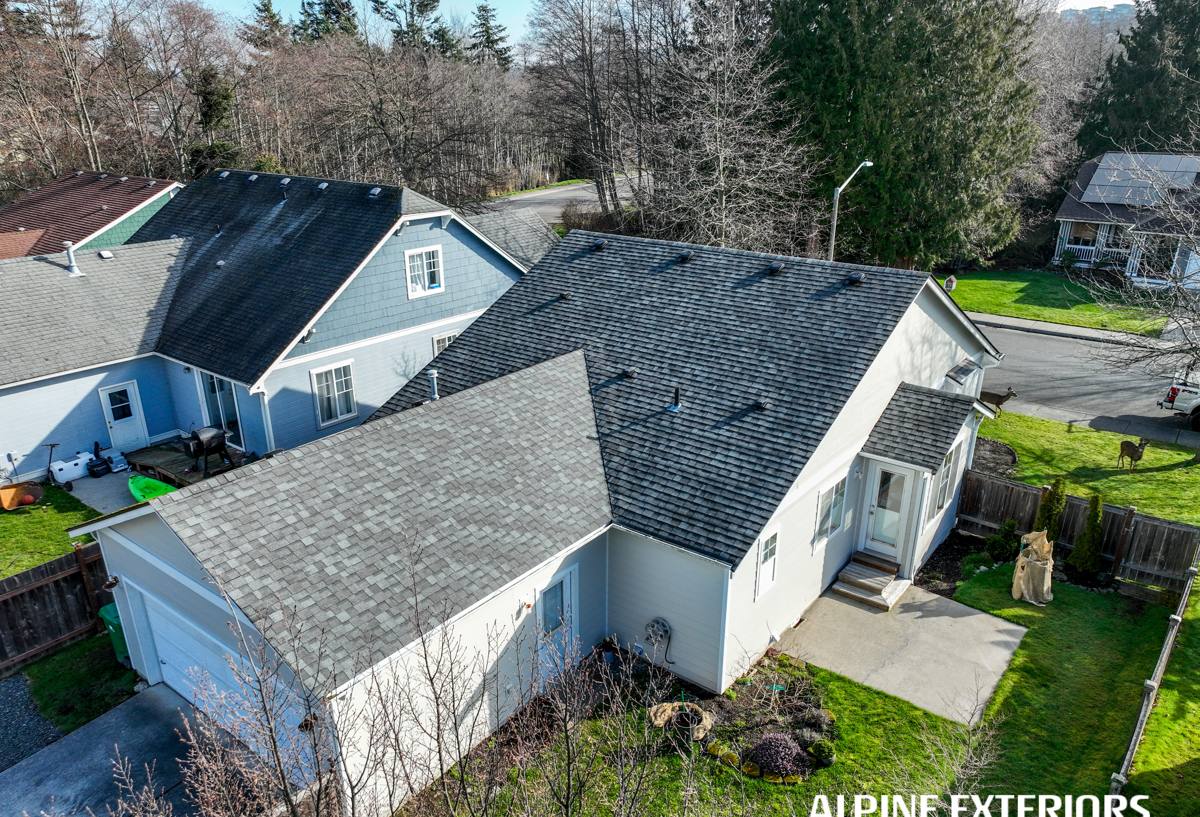
What the Coastal Whatcom County Climate Does to a House
A few conditions show up over and over in this part of the county, and they compound each other rather than acting alone.
Salt Air
Proximity to Drayton Harbor and the Strait means airborne salt is a constant, low-grade presence on exterior surfaces. It accelerates corrosion on fasteners and metal trim, and it can leave a fine residue on siding that holds moisture longer than a clean surface would. Materials and hardware that aren't rated for coastal exposure tend to show their age faster here than they would twenty miles inland.
Driving Rain
Wind off the water regularly pushes rain sideways into wall assemblies rather than letting it fall straight down and shed off a roof edge. That means siding, flashing, and trim details around windows and doors have to actually resist wind-driven water, not just shed rain in calm conditions. Poorly lapped siding, gapped caulk joints, or undersized flashing that would hold up fine in a sheltered inland yard can let water in here.
Moss and Algae Season
Cool, moist, shaded conditions stretch for months in this part of Whatcom County, and that's exactly the environment moss and algae need. North-facing walls, areas under tree cover, and anything that stays damp longer than it should will grow green film faster than homeowners expect. On some siding materials that's a cosmetic problem you can wash off. On others, sustained moisture retention under that growth becomes a structural problem over time.
Why We Install Only James Hardie Fiber Cement
Custer Siding installs James Hardie fiber cement siding exclusively. We don't offer vinyl, LP SmartSide, Cemplank, Allura, or wood products like primed spruce or cedar, and that's a deliberate standard, not a limitation of what we're capable of installing.
Each of those alternatives has real strengths — vinyl is inexpensive and low-maintenance in mild climates, engineered wood products offer a warm appearance at a lower cost than fiber cement, and cedar has a genuine, sought-after look. But in a coastal, wet, salt-exposed climate like ours, the trade-offs matter more than they would somewhere dry. Vinyl can warp and become brittle with age and temperature swings, and its seams are a long-term weak point against driving rain. Engineered wood siding is more moisture-sensitive at cut edges and requires diligent caulk and paint maintenance to keep water out. Cedar and primed spruce are natural wood products that need ongoing sealing, staining, or painting to resist rot, and in a climate with this much sustained moisture, that maintenance schedule is unforgiving if it slips even one season.
James Hardie fiber cement is non-combustible, dimensionally stable across our wet-to-dry seasonal swings, and finished at the factory with ColorPlus Technology — a baked-on finish that resists fading and chipping far better than field-applied paint. Hardie also engineers specific product lines (their HZ5 designation, for example) for harsher climate zones, and the company backs the product with a strong transferable warranty. When it's installed to manufacturer spec — correct clearances, proper flashing, correct fastening — it's one of the most durable siding systems available for a coastal environment like Marietta's.
How We Approach a Siding Project Here
Every siding job starts with an honest look at the wall assembly, not just the visible siding.
Inspection and Moisture Check
We look at the current siding, the condition of the sheathing underneath where accessible, flashing around windows and doors, and any areas showing staining, soft spots, or moss buildup. In a climate this wet, what's happening behind the siding matters as much as what's visible on the surface.
Water Management Details
Given how much wind-driven rain this area sees, we pay particular attention to flashing at windows, doors, and roof-to-wall intersections, along with proper weather-resistive barrier installation and correct siding overlap. These are the details that separate a siding job that holds up for decades from one that starts leaking in five years, regardless of which product is on the wall.
Installation to Manufacturer Spec
James Hardie publishes specific installation requirements — fastener spacing, clearances from grade and roof lines, joint treatment — and warranty coverage depends on following them. We install to that spec as a baseline, not an upsell.
Cleanup and Walkthrough
We walk the finished job with the homeowner, cover basic care, and make sure everything matches what was scoped before any work started.
Beyond Siding: The Full Exterior
Siding doesn't work in isolation — it's one part of an exterior envelope that also includes the roof, windows, and any attached structures like decks. Custer Siding handles all four because they're connected problems in a climate like this one.
Roofing
A roof in poor condition sends water down behind siding and trim, undermining even a well-installed wall system. We address roofing as part of a full exterior evaluation, especially on older Marietta homes where roof and siding age together.
Windows
Window flashing and integration with the siding plane is one of the most common failure points in wind-driven rain climates. When we replace siding around existing windows, or install new windows, we treat that transition as a critical detail, not an afterthought.
Decks
Decks in this climate face their own moisture and moss challenges, particularly ledger board connections to the house, which need the same careful flashing attention as a window or door.
Local Crew vs. Out-of-Area Contractor
Homeowners in Marietta sometimes get bids from companies based well outside Whatcom County. There are real differences worth weighing.
| Factor | Local Whatcom County Crew | Out-of-Area Contractor |
|---|---|---|
| Climate familiarity | Builds for salt air, wind-driven rain, and moss season as routine conditions | May default to techniques suited to drier or milder climates |
| Warranty follow-up | Easy to reach for warranty service years later | May be difficult to reach once the job is done |
| Permitting and local code | Familiar with Whatcom County permitting requirements | May be less familiar with local requirements |
| Material sourcing | Established supplier relationships for the region | Variable, project to project |
Signs Your Marietta Home May Need Exterior Work
- Persistent moss or algae growth on siding, especially north-facing or shaded walls
- Soft spots, staining, or bubbling on wood or engineered wood siding
- Cracked, warped, or missing vinyl panels
- Visible gaps or failing caulk around windows and doors
- Rust streaks near fasteners or metal trim
- Paint that's peeling or chalking faster than expected for its age
- Musty smell or visible moisture inside near exterior walls
What Drives the Cost of a Siding Project
| Factor | Why It Matters |
|---|---|
| Home size and wall complexity | More square footage and more corners, gables, and trim details increase labor and material |
| Condition of existing sheathing | Moisture damage found during tear-off can require repair before new siding goes on |
| Siding profile and finish | Lap width, texture, and ColorPlus finish color options affect material cost |
| Trim and detail work | Window and door surrounds, corner boards, and fascia detailing add time |
| Access and site conditions | Tree cover, slope, and staging access affect labor time |
We provide project-specific estimates after seeing the home in person — broad, honest ranges rather than guesses, since every property is different.
Caring for Hardie Siding in a Coastal Climate
James Hardie siding is low-maintenance compared to wood or vinyl, but "low-maintenance" doesn't mean "no maintenance," especially with the moss and algae pressure this area sees.
- Rinse siding periodically with a garden hose to remove salt residue and organic buildup, especially on north-facing walls
- Trim back tree branches and vegetation that keep siding shaded and damp
- Check caulk joints around windows and doors annually and recaulk if you see gaps or cracking
- Keep gutters clear so water isn't overflowing onto siding below
- Address any staining or soft spots in trim promptly rather than waiting for the next season
Get a Free Estimate for Your Marietta Property
If you're weighing a siding project, or want a second opinion on your roof, windows, or deck, we're happy to take a look and walk you through what we see, with no pressure to sign anything on the spot. Use the form below to request a free estimate for your Marietta home.