 Custer
 Every siding call we get in Custer starts with some version of the same question: "Can this be patched, or do I need all new siding?" It's a fair question, and it deserves an honest answer rather than a sales pitch. This guide walks through how to tell the difference, what drives the cost either way, and why the answer often depends less on how bad the damage looks and more on what's happening behind the siding where you can't see it.
Why This Question Is Harder in Custer Than It Sounds
Custer sits close enough to the Strait of Georgia and the Salish Sea that salt-laden air is a real factor on exterior materials, not a theoretical one. Combine that with Whatcom County's driving rain events off the water and a moss season that can run from October well into April, and you've got a climate that's tough on siding in three distinct ways: moisture intrusion, surface degradation from salt and organic growth, and the freeze-thaw cycles that happen often enough in a Custer winter to matter. A siding problem that would stay cosmetic in a drier inland climate can turn into a structural one here if it's not addressed at the right stage.
That's the real reason repair-vs-replace isn't a simple visual call. The siding you can see is often the last thing to show damage, not the first.
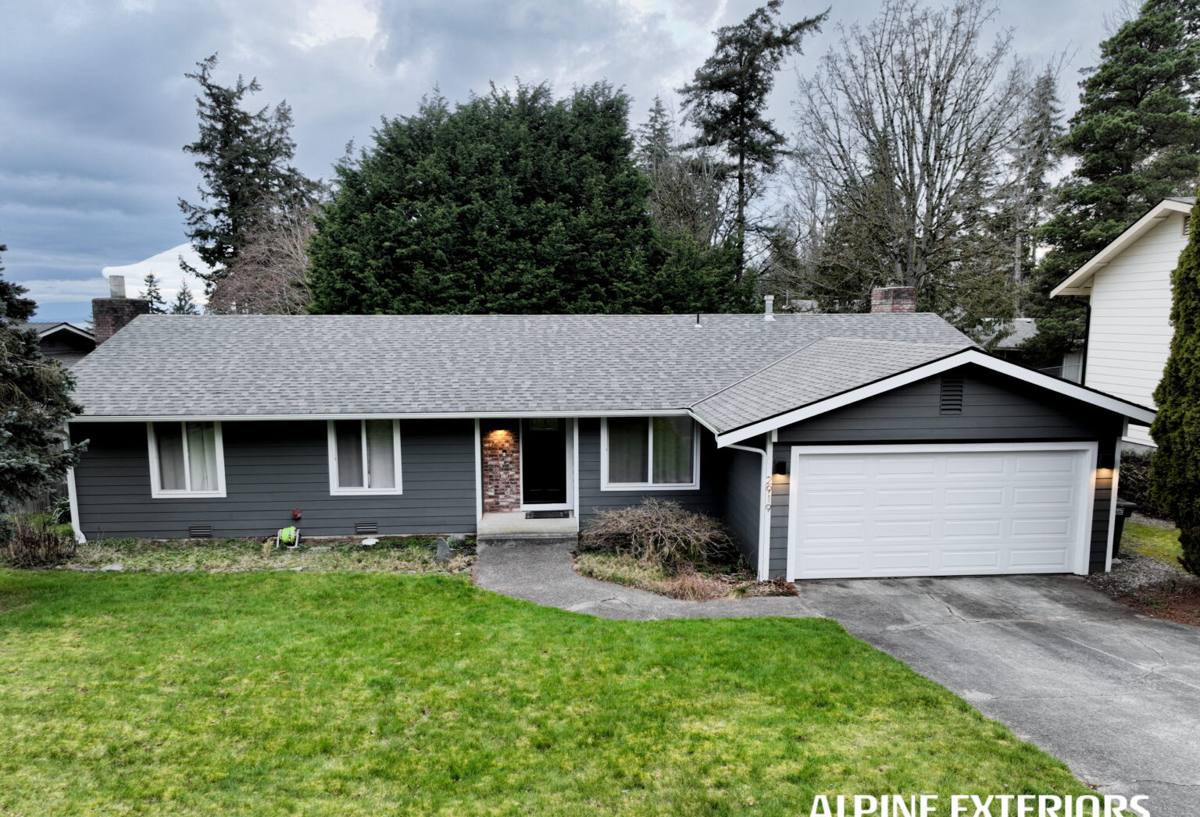
When Repair Is the Right Call
Repair makes sense when the damage is localized, the underlying wall assembly is dry, and the siding material itself is still sound. Common repair-appropriate situations we see around Custer include:
- Impact damage from a fallen branch, ladder, or equipment — a cracked or dented section in an otherwise healthy wall
- A handful of boards with failed caulking or open seams that let water in before it could spread
- Localized moss or algae staining that hasn't compromised the material underneath
- Minor fastener failure (nail pops, loose boards) caught early, before water had a chance to get behind the siding
- Damage confined to one elevation, often the side that takes the most weather
If a contractor can open up the damaged section, confirm the sheathing and house wrap behind it are dry and intact, and match the existing material, repair is the responsible recommendation. Replacing an entire wall or house over a problem that's genuinely contained is not good stewardship of your money.
When Replacement Is the Right Call
Replacement becomes the honest answer once damage is systemic rather than isolated, or once the siding material itself has reached the end of what it can do. Signs that point toward full or substantial replacement:
- Soft or spongy spots when you press on the siding — usually a sign of moisture that has already reached the sheathing
- Widespread cracking, warping, or delamination across multiple elevations, not just the weather-exposed side
- Persistent moss or mildew that keeps returning within a season or two of cleaning, suggesting the siding is holding moisture rather than shedding it
- Visible gaps, buckling, or separation at seams across the whole house, not a few spots
- Siding material that's discontinued or hard to source a matching replacement for
- Paint or finish that won't hold anymore no matter how often it's redone
- Interior signs — musty smells, bubbling paint on inside walls, or unexplained humidity near exterior walls
The interior signs matter more than most homeowners expect. By the time moisture problems show up inside the house, the damage outside has usually been progressing for a while.
The Hidden Factor: What's Behind the Siding
This is the part a visual inspection alone can't tell you. Siding is the outermost layer of a wall assembly that includes house wrap or building paper, sheathing, and framing. In a wet climate like ours, water that gets behind failing siding doesn't just sit there — it wicks into the sheathing, degrades the house wrap's ability to do its job, and can eventually reach framing members. A section of siding that looks 70% fine on the surface can be sitting over sheathing that's already rotted. That's why any serious repair-vs-replace assessment involves opening up a test section, not just walking the exterior with a flashlight.
Repair vs. Replacement: A Side-by-Side Look
| Factor | Repair Usually Makes Sense | Replacement Usually Makes Sense |
|---|---|---|
| Damage extent | Isolated to one area or elevation | Spread across multiple walls |
| Sheathing condition | Dry, sound when opened up | Soft, discolored, or damp |
| Siding age | Well within expected service life | At or past the end of its practical life |
| Moss/mildew pattern | Cleans up and stays clean | Returns quickly, repeatedly |
| Material availability | Matching product still made | Discontinued or hard to match |
| Interior symptoms | None | Musty odor, bubbling paint, humidity |
| Cost over time | Lower upfront, ongoing maintenance | Higher upfront, resets the maintenance clock |
Cost Factors Worth Understanding
We're not going to quote numbers here — every house and every scope is different, and generic price ranges tend to mislead more than they help. But there are cost factors worth understanding before you get a quote from anyone:
- Access and elevation. A two-story wall behind a deck or over landscaping costs more to work on than a straightforward single-story wall.
- What's underneath. If sheathing or framing needs repair too, that's a different job than a straight siding swap.
- Material choice. Different siding products have different material costs, different installation labor requirements, and very different long-term maintenance costs — which matters more over a 20- or 30-year horizon than the installed price alone.
- Trim and detail work. Corners, window trim, and transitions take real time to do correctly and are often underestimated in quick quotes.
- Partial vs. whole-house work. Matching new siding to old, weathered siding is sometimes impossible — factor that into whether a partial repair will actually look acceptable once it's done.
The upfront number is only part of the real cost. A repair on a wall with hidden rot is money spent solving the wrong problem — it'll need to be redone once the underlying issue surfaces. A full replacement on a house with one bad wall and three good ones is money spent that didn't need to be.
What This Means for Material Choice, If You're Replacing
If your assessment lands on replacement — whether it's one wall or the whole house — it's worth thinking about why the original siding failed in the first place before choosing what goes back up. In our experience working on homes throughout Whatcom County, a lot of replacement calls trace back to materials that struggle with sustained moisture exposure: wood-based siding that wicks water at cut edges and seams, or products that depend heavily on perfect field installation and ongoing maintenance to keep water out.
This is why we install James Hardie fiber cement exclusively. It's a non-combustible material engineered specifically for moisture performance, with HZ5 product lines built for climates like ours that see a lot of driving rain. The factory-applied ColorPlus finish holds up to UV and salt air far longer than field-applied paint, which matters directly for a house near the water in Custer. And it comes with a strong transferable warranty that reflects the manufacturer standing behind long-term performance, not just installation.
We won't tell you every house needs full Hardie replacement — plenty of the calls we get end in a straightforward repair, and we say so. But when a homeowner is facing a real replacement decision anyway, it's the right moment to choose a material that won't put them back in this position in ten years.
A Practical Pre-Estimate Checklist
Before you call a contractor — us or anyone else — walking your own exterior with this list will help you describe the problem accurately and get a more useful first assessment:
- Press firmly on several spots per wall, especially near the bottom and around windows — note any softness
- Check for moss or algae patterns and whether they're new or recurring
- Look at seams and corners for gaps, separation, or caulk failure
- Note any interior walls with musty smell, peeling paint, or visible staining
- Check gutters and downspouts — poor drainage often accelerates siding failure in exactly the spots it's draining onto
- Take note of which elevation faces the prevailing weather — problems often cluster there first
How to Vet a Contractor for This Kind of Call
Repair-vs-replace is a judgment call, and it's one where a contractor's incentive matters. Ask any contractor you're considering to open up a section of the damaged area and show you what's underneath before recommending a scope. A contractor who quotes a full replacement without ever removing a board to check the sheathing is guessing, and so is one who promises a cheap patch without checking for rot first. Ask what happens if they find worse damage once they open the wall up, and get that answer in writing as part of the estimate.
If you're dealing with siding damage or wear on a Custer home and want a straight answer about whether it's a repair or a replacement situation, we're happy to come take a look. The estimate is free, there's no pressure either way, and we'll tell you honestly which one your house actually needs.