 Custer
 Ferndale's Weather Is Harder on Siding Than It Looks
Ferndale sits close enough to the water and to the open farmland of Whatcom County that homes here take a steady beating most homeowners never fully clock until they're standing at the base of a ladder looking at soft trim boards. It's not one dramatic storm that does the damage. It's the accumulation: salt-tinged air drifting in off the Strait of Georgia and Bellingham Bay, driving rain that comes in sideways during the fall and winter, and a moss season that can stretch from October well into May on shaded north-facing walls and anything tucked under fir or cedar trees.
Add in the freeze-thaw cycles that hit even mild Whatcom County winters, and you've got a climate that specifically targets the weak points in exterior materials — seams, fastener holes, cut edges, and anywhere moisture can get behind the surface and stay there. Siding that isn't engineered for this specific combination of salt, rain, and shade tends to show its age faster here than it would in a drier inland climate.
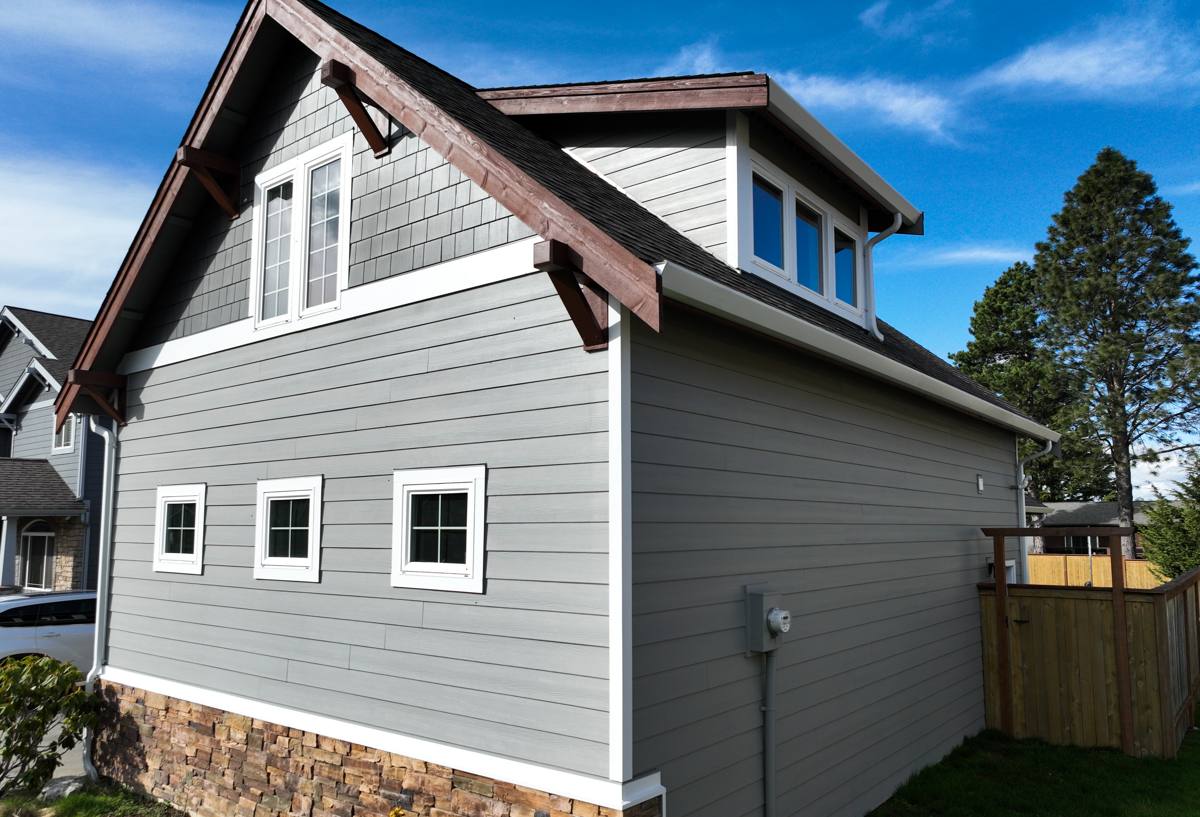
What Salt Air, Rain, and Moss Actually Do to a House
Salt Air
Homes within a few miles of Puget Sound or the Strait pick up airborne salt that settles on siding, trim, and metal fasteners. Over time it accelerates corrosion on unprotected or poorly coated fasteners and can contribute to premature breakdown of paint films and lower-grade composite materials.
Driving Rain
Ferndale's wind-driven storms push water horizontally against the wall plane, not just straight down. That matters because a lot of siding products and installation details are only tested against vertical rain exposure. Wind-driven rain finds gaps at butt joints, corner boards, and window trim that would never see moisture in a calmer climate.
Moss and Shade
Whatcom County's tree cover and long wet season mean north- and east-facing walls, and anything near mature evergreens, stay damp for extended stretches. Moss and algae take hold on porous or textured surfaces, holding moisture against the substrate and, on wood-based products, feeding rot from the outside in.
A Local Crew Sees These Problems Coming
A contractor who works Custer, Ferndale, and the rest of Whatcom County every week isn't guessing about which walls fail first — they've replaced enough rotted trim and swollen panel siding on homes in this exact microclimate to know where problems start. That local pattern recognition changes real decisions on your project: where to add extra flashing, which walls need a rainscreen gap, how far to keep siding off grade and roof lines, and which details on your specific lot (tree cover, wind exposure, proximity to water) deserve extra attention.
It also means faster response when something needs a look — a follow-up on a warranty question, a storm-damage inspection, or simply someone who already knows your house because they've been out to the neighborhood before.
Our Services in the Ferndale Area
We handle the full exterior envelope, not just one piece of it, which matters because siding, roofing, windows, and trim all work together to keep water out of a house.
- Siding: Full siding replacement and repair using James Hardie fiber cement — the only siding system we install.
- Roofing: Roof replacement and repair, installed to shed Whatcom County's rain volume and stand up to wind exposure.
- Windows: Replacement windows installed with proper flashing integration into the siding system, which is often where leaks actually originate.
- Decks: Deck construction and replacement built for a climate where untreated or poorly maintained wood decks don't last.
Because we handle all four, we can flag issues that a siding-only or roofing-only contractor might miss — a window that's been leaking behind the trim for years, or a deck ledger board that's rotting the wall sheathing behind it.
Why We Only Install James Hardie Fiber Cement
We made a deliberate decision to install one siding system: James Hardie fiber cement, in its climate-engineered HZ product lines. We don't install vinyl, LP SmartSide, primed wood, cedar, or other fiber cement brands, and that's worth explaining rather than just stating.
Vinyl siding is affordable and low-maintenance in the sense that it doesn't need painting, but it's a thin, flexible material that can warp in heat, crack in cold, and it relies on lap joints and J-channels that aren't designed to be a primary water barrier in wind-driven rain. Wood-based composite sidings and traditional cedar or primed spruce look good going up, but they're organic materials in a climate built to rot organic materials — moss, sustained moisture, and shade are exactly the conditions that shorten their service life, and they demand ongoing painting and caulking to hold the line.
James Hardie fiber cement is cement, sand, and cellulose fibers — it doesn't feed moss or rot the way wood-based products can, and it holds up to salt air and moisture cycling better than vinyl over the long run. Hardie's ColorPlus factory finish is baked on under controlled conditions rather than field-painted, which means better color retention and fewer touch-ups. The HZ5 product line specifically is engineered for cold, wet climates like ours. It's a heavier, more labor-intensive material to install correctly — it requires specific fastener patterns, clearances, and flashing details — but installed to spec, it's the product we're willing to put our name behind in this climate.
Signs Your Ferndale Home Needs Siding Attention
| What You See | What It Usually Means |
|---|---|
| Soft or spongy spots when pressed | Moisture has gotten behind the siding and is rotting the substrate |
| Persistent moss or dark staining on one wall | Shade and moisture exposure that a non-cementitious material can't shed well |
| Peeling or bubbling paint | Moisture trying to escape through the finish, or a finish that was never rated for this climate |
| Warped, bowed, or separated panels | Material movement from moisture cycling — common with wood-based composites |
| Rust streaks near fasteners | Corrosion from salt-air exposure on unprotected hardware |
How We Approach a Siding Project
Every project starts with a real inspection, not a drive-by estimate. We look at the current siding, the condition of the sheathing and framing underneath where it's exposed, window and door flashing, and roofline transitions — the places most likely to be hiding moisture damage. From there:
- We remove the old siding and inspect and repair the sheathing underneath as needed.
- We install a weather-resistive barrier and, where the wall assembly calls for it, a rainscreen gap to let any incidental moisture drain and dry.
- We install James Hardie panels or planks to manufacturer fastening and clearance specifications — this is where a lot of Hardie installs go wrong if the crew isn't trained specifically on the product.
- We detail flashing at every window, door, and roofline intersection, since that's where wind-driven rain finds its way in.
- We walk the finished job with you before calling it done.
Cost Factors on a Ferndale Siding Project
| Factor | Why It Affects Cost |
|---|---|
| Home size and wall complexity | More square footage and more corners, gables, and dormers means more material and labor time |
| Existing siding removal | Tear-off and disposal adds labor; some jobs uncover sheathing repairs once old material is off |
| Substrate repair | Rot or moisture damage found underneath old siding needs to be fixed before new siding goes on |
| Trim and detail work | Corner boards, window trim, and fascia detailing take more time than plain wall runs |
| Siding profile chosen | Lap siding, panel siding, and shingle-style Hardie products differ in material and labor cost |
We give straightforward, itemized estimates so you know what you're paying for and why — no vague lump-sum numbers.
A Simple Maintenance Checklist for Whatcom County Homes
- Rinse siding annually to remove salt residue and organic buildup, especially on shaded walls
- Trim back tree branches and shrubs that keep siding damp or shaded
- Check caulking around windows and trim each fall before the wet season sets in
- Clear debris from gutters so water isn't overflowing onto the wall plane
- Walk the exterior once a year looking for soft spots, staining, or fastener corrosion
Choosing a Contractor in the Ferndale Area
Whatcom County has plenty of contractors who'll install whatever siding you ask for. Fewer will tell you honestly which products hold up in this specific climate and which ones create maintenance headaches down the road. When you're vetting a contractor, ask direct questions: Are they licensed and insured in Washington? Will they put the scope of work and the warranty terms in writing? Do they have manufacturer-specific training on the product they're installing, not just general carpentry experience? A contractor who's confident in their process will answer all of that without hesitation.
We stand behind our work with the manufacturer's transferable warranty on James Hardie products, backed by our own workmanship guarantee, and we're happy to walk you through exactly what that covers before you sign anything.
If you're in Ferndale, Custer, or elsewhere in Whatcom County and want an honest look at what your siding, roofing, windows, or deck actually need, reach out for a free, no-pressure estimate. We'll walk the property with you and tell you straight what we see.