 Custer
 Why Siding Failure Often Goes Unnoticed
Siding is one of those things homeowners stop seeing after a while. It's just "the outside of the house" — until a contractor pulls off a section during a repair estimate and finds soaked, rotted sheathing behind it. By the time siding failure is obvious from the curb, it has usually been failing quietly for years. In Custer and the rest of Whatcom County, that quiet failure moves faster than it would in a drier climate, because our siding rarely gets a real chance to dry out between weather events.
This page walks through what to actually look for, why it matters more here than in most parts of the country, and how to tell the difference between a cosmetic issue and a problem that's already inside your wall.
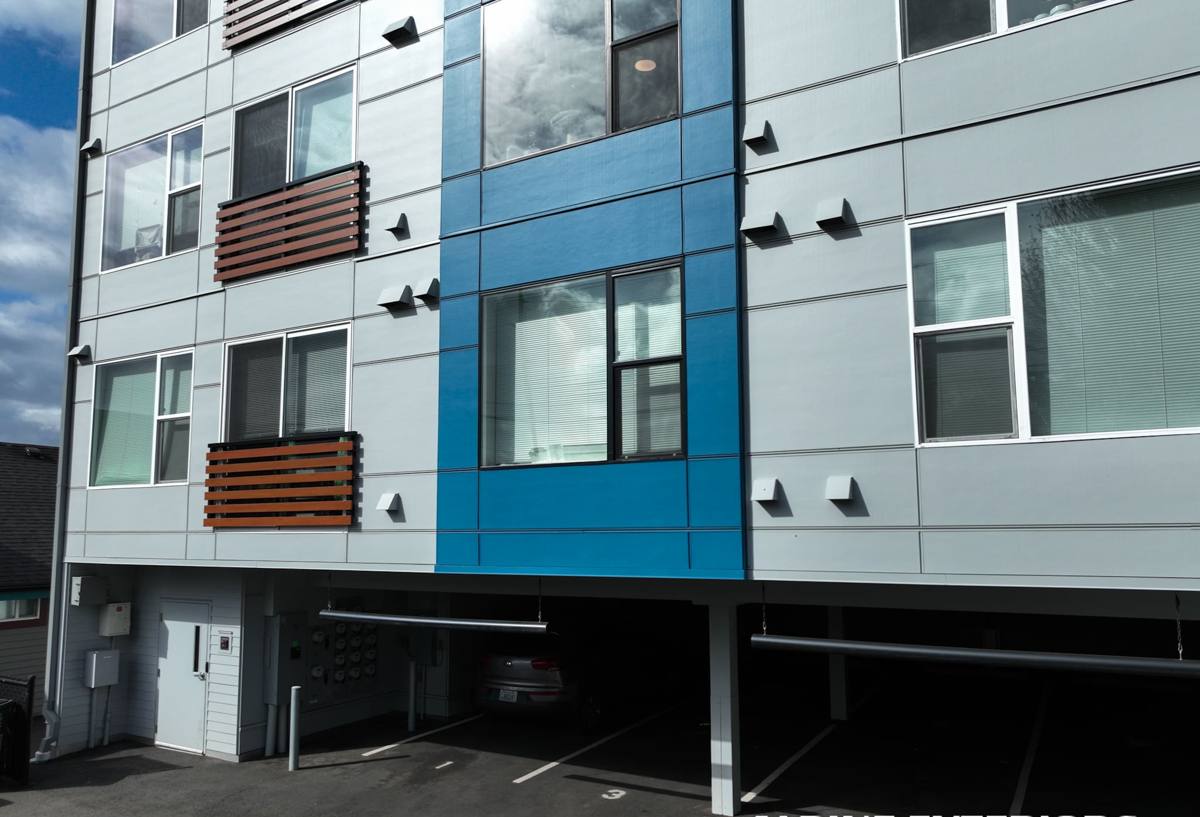
The Visible Warning Signs
Cracking, Warping, and Buckling
Cracks running along or across a siding panel are a sign the material has taken on moisture and expanded, or that it's simply reached the end of its service life. Warping and buckling — where boards or panels no longer sit flat against the wall — usually means moisture has gotten behind the siding and the substrate underneath is swelling or has already started to break down.
Bubbling or Peeling Paint
Paint that bubbles, blisters, or peels in patches (rather than fading evenly) is almost always a moisture signal, not just an aging-paint problem. Water trapped behind the paint film is pushing it off the surface. On wood and engineered wood siding, this is one of the earliest signs something is wrong underneath.
Soft Spots and Give When Pressed
Press on the siding near the bottom of walls, around window trim, and near any roof-to-wall transition. If it flexes, feels spongy, or gives more than the surrounding area, moisture has likely broken down the material fibers. This is common on OSB-based and untreated wood products long before any crack is visible from a few feet away.
Staining, Streaking, and Discoloration
Dark streaks running down from seams or nail heads, black or green staining in shaded areas, and rust-colored bleed marks are all worth investigating. Some of it is surface mildew that washes off. Some of it is a sign that water is tracking through a seam and staining the material from repeated wetting.
Gaps, Separation, and Missing Caulk
Siding that has pulled away from window and door trim, corner boards that have separated from the wall, or caulk joints that have shrunk, cracked, or disappeared entirely all create direct paths for wind-driven rain to get behind the cladding. In our climate, an open seam doesn't dry out on its own — it gets fed by the next storm before it ever has the chance.
Signs Vary by Siding Type
What failure looks like depends heavily on what's on the wall. Here's a quick comparison of how common siding materials tend to show distress:
| Siding Type | Early Warning Sign | Late-Stage Sign |
|---|---|---|
| Cedar / wood lap | Fading, raised grain, small surface checks | Soft, crumbling wood; visible rot at butt joints |
| Vinyl | Fading, warping in direct sun, loose panels | Cracked panels, gaps pulling from trim, panels that rattle in wind |
| LP SmartSide / OSB-based | Swelling at bottom edges, paint failure at seams | Soft, delaminating panel edges; visible board expansion |
| Fiber cement (uncoated or poorly painted) | Chalking, paint fade, hairline cracking at joints | Cracking along fastener lines, moisture staining at seams |
| James Hardie fiber cement (ColorPlus) | Rare — mainly caulk/joint maintenance needed | Typically holds appearance and structure for decades when installed to spec |
The pattern that shows up again and again in our service calls: engineered wood products and untreated wood are the fastest to show soft-spot failure, vinyl fails more by physical deformation and gapping than by rot, and factory-finished fiber cement holds up the longest — provided it was installed correctly with proper flashing and clearances in the first place.
Why Custer's Climate Speeds This Up
Whatcom County sits in a spot that's genuinely tough on exterior building materials. A few things stack together here:
- Salt air: Custer's proximity to the Strait of Georgia and Puget Sound means airborne salt accelerates corrosion on fasteners, flashing, and any exposed metal trim — and salt-laden moisture penetrates porous siding materials more aggressively than fresh water alone.
- Driving rain: Storms here don't just fall straight down — wind-driven rain gets pushed sideways into seams, laps, and trim joints that were never designed to be a primary water barrier.
- A long moss season: Cool, damp conditions for much of the year create ideal growing conditions for moss and algae on north-facing and shaded walls. Beyond the cosmetic issue, moss holds moisture directly against the siding surface for extended periods, which is exactly the condition that accelerates rot and paint failure.
- Short, inconsistent drying windows: In drier regions, siding gets long stretches of sun and low humidity to dry out fully between rain events. Here, that window is often just a day or two, especially in fall and winter.
None of this means every house in Custer is doomed to early siding failure — it means the margin for error on material choice and installation quality is smaller here than in, say, eastern Washington.
A Homeowner's DIY Inspection Checklist
You don't need a ladder or any special tools to catch most early warning signs. Walk the perimeter of your house on a dry day and check for:
- Cracked, warped, or buckled panels or boards, especially near the bottom of walls
- Paint that's bubbling or peeling in patches rather than fading uniformly
- Soft or spongy spots when you press firmly with your palm
- Dark streaking below seams, nail heads, or trim joints
- Visible gaps where siding meets window trim, corner boards, or the foundation
- Missing, cracked, or shrunken caulk at joints and penetrations
- Heavy moss or algae buildup on north- and west-facing walls
- Musty smells or visible staining on interior walls that back up to exterior siding
- Any area where a previous repair patch looks different in color or texture from the surrounding siding
Cosmetic Issue or Structural Problem?
Not every flaw means you need full replacement. Fading, light chalking, and surface mildew are largely cosmetic and can often be cleaned or repainted. The line gets crossed when moisture has reached the substrate — that's when soft spots, delamination, and rot show up, and at that point patching the surface without addressing what's underneath just hides the problem for another season.
A general rule: if you can identify the issue by looking at the surface and it doesn't flex, give, or smell musty, it's likely maintenance-level. If pressing on it changes how it feels, or there's a smell or interior staining involved, treat it as a signal to get a closer look before it spreads further.
What Happens If You Wait
Siding problems rarely stay contained to the siding itself. Water that gets behind cladding eventually reaches the house wrap, the sheathing, and sometimes the framing. The longer a gap, crack, or soft spot goes unaddressed, the more of the wall assembly ends up needing repair — not just a few boards or panels. Catching issues at the "cracked caulk joint" stage is a very different project than catching them at the "rotted sheathing behind three walls" stage, both in scope and in cost.
Why We Rebuild With James Hardie
When a Custer homeowner calls us about failing siding, the repair conversation almost always turns into a bigger conversation about what to put back up. We install James Hardie fiber cement exclusively — not vinyl, not LP SmartSide, not Cemplank, Allura, primed spruce, or cedar. That's a deliberate standard, not a default.
Hardie's fiber cement is non-combustible, engineered specifically for wet climates in its HZ5 product line, and comes with a factory-applied ColorPlus finish that holds color and resists the chalking and repainting cycle that shortens the life of site-painted materials. It also carries a strong transferable warranty, which matters to buyers if you ever sell the house. None of that is marketing — it's the reason we stopped installing the alternatives after seeing how each one tends to age in exactly the conditions Whatcom County throws at a house: salt air, driving rain, and months of damp, shaded moss season.
Correct installation matters as much as the material. Proper flashing, correct fastener spacing, factory-recommended clearances from grade and roof lines, and sealed joints are what separate siding that lasts decades from siding that fails early regardless of brand.
Get an Honest Look at Your Siding
If you're seeing any of the signs above — or you're just not sure how your siding is holding up after a few Whatcom County winters — we're happy to take a look. We offer free, no-pressure estimates, and we'll tell you plainly whether you're looking at a maintenance fix, a targeted repair, or a case for full replacement.