 Custer
 Exterior Work Built for Cherry Point's Coastline
Cherry Point sits right at the edge of the Strait of Georgia, and that location shapes everything about how a house ages here. Homes in this stretch of Whatcom County take on a steady diet of salt-laden air, wind-driven rain coming off the water, and long stretches of the year where moisture just doesn't leave. It's a different exposure profile than you'd find a few miles inland in Custer proper or Ferndale, and it calls for exterior materials and installation details that actually account for it rather than a generic approach.
We're a local crew, and we've worked enough properties along this shoreline-adjacent belt to know that "good enough" siding, roofing, and trim in a sheltered subdivision often isn't good enough out here. Salt air accelerates corrosion on fasteners and flashing. Driving rain finds every gap in a poorly lapped joint. And moss doesn't just grow on roofs in this climate — it takes hold on north-facing siding, in trim crevices, and anywhere water sits instead of shedding.
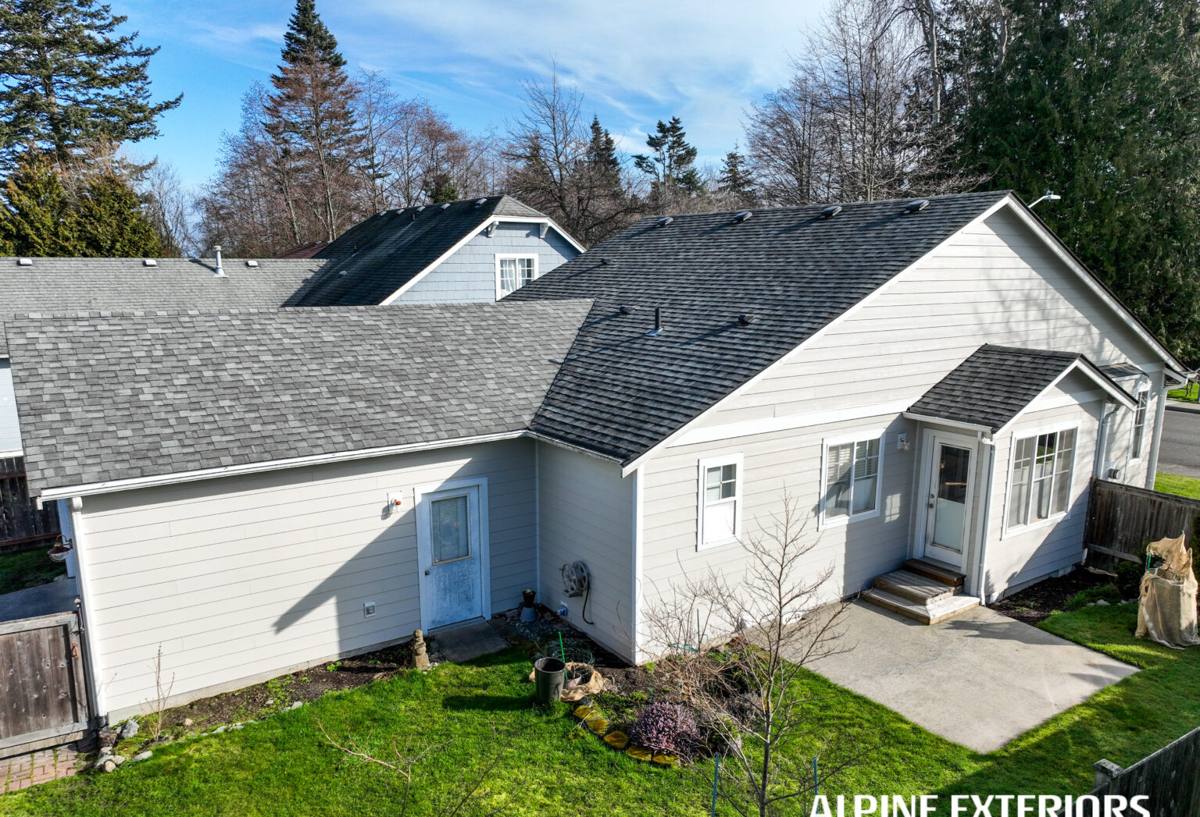
What Salt Air Actually Does to a House
Salt air isn't just a coastal cliché — it's a corrosive agent. Airborne salt settles on every exterior surface and, combined with the region's humidity, speeds up the breakdown of metal fasteners, uncoated flashing, and lower-grade paint finishes. On a house near Cherry Point, that means:
- Nails and screws corrode faster if they're not rated for coastal exposure, leading to streaking and eventual fastener failure
- Cheap flashing pits and rusts, which compromises the water-shedding layer behind your siding long before the siding itself looks worn
- Paint and factory finishes that aren't formulated for UV and salt exposure chalk, fade, and peel noticeably faster than the same product would inland
- Wood-based siding products absorb salt-laden moisture more readily, which accelerates rot at seams and butt joints
None of this means a home near the water is doomed to constant repairs. It means the materials and fastening details matter more here than they do in a lot of other parts of the county, and a contractor who treats this like any other job is setting a homeowner up for problems in five to eight years instead of twenty-five.
Driving Rain and Wind-Loaded Water Intrusion
Rain in this part of Whatcom County rarely falls straight down. Coming off open water, it's frequently wind-driven, which means it hits siding at an angle and gets pushed up under laps, around window and door trim, and into any gap where a house wasn't properly flashed. This is one of the most common ways moisture gets behind siding without ever showing an obvious sign on the surface — the damage happens in the sheathing and framing before a homeowner sees anything visible.
Where Wind-Driven Rain Causes the Most Damage
The failure points we see most often on coastal-exposed homes are the same handful of details, over and over:
- Window and door head flashing that wasn't lapped correctly under the water-resistive barrier
- Butt joints in lap siding that weren't caulked or back-flashed properly
- Deck ledger connections where the deck meets the house wall
- Roof-to-wall transitions and kickout flashing at rooflines that daylight into a siding wall
Because we handle siding, roofing, windows, and decks as one crew, we look at these transition points as a system rather than as separate trades handing off to each other. A siding job that ignores the roof flashing above it, or a deck installed without proper ledger flashing against the house wall, just relocates the water problem instead of solving it.
Moss Season Is Longer Here Than People Expect
Whatcom County's moss season isn't a two-month nuisance — on shaded, north-facing, or coastal-exposed walls, it can be a near year-round condition. Moss needs moisture and reduced sun exposure to establish itself, and Cherry Point's combination of marine humidity, tree cover in places, and long overcast stretches gives it exactly that. Moss holds moisture against a surface, which is bad news for any siding material that isn't fully sealed and factory-finished on all six sides.
On roofing, moss is the more familiar problem — it lifts shingle edges and traps water against the roof deck. On siding, it's subtler but just as damaging over time: moss and algae growth on the surface hold water at the substrate, and on products with exposed or field-cut edges, that moisture has a way in.
Why We Install Only James Hardie Fiber Cement
We made a decision, as a company, to install one siding system: James Hardie fiber cement. We don't install vinyl, LP SmartSide, Cemplank, Allura, or primed wood species like spruce or cedar. That's not a marketing angle — it's a standard we hold because of what we've seen play out on homes in exactly this kind of coastal, high-moisture climate.
What That Means in Practice
James Hardie fiber cement is non-combustible, dimensionally stable, and factory-finished with their ColorPlus coating system, which is baked on and warranted separately from the substrate. That matters in salt air because the finish doesn't rely on a field-applied paint job holding up against UV and salt exposure the same way an unfinished or site-primed product would. Hardie also engineers specific product lines (their HZ5 designation, for example) for wetter, more variable climates like ours in the Pacific Northwest, with formulations meant to resist moisture-related damage better than their standard lines built for drier regions.
We're not going to tell you every other product on the market is junk — that's not fair, and it's not our call to make about a manufacturer's engineering. What we will say is that fiber cement, correctly flashed and installed, has held up consistently on the coastal and high-moisture jobs we've done, and that's the standard we're willing to put our name behind.
Siding, Roofing, Windows, and Decks — One Crew, One Set of Details
A lot of exterior problems on Cherry Point homes aren't failures of a single material — they're failures at the seams between trades. Water gets behind siding at a window flange the window installer didn't seal correctly. A deck ledger rots because it wasn't flashed against the house wall it's attached to. A roof edge dumps water directly onto a siding wall below it because the kickout flashing was never installed.
Handling all four — siding, roofing, windows, and decks — under one crew means those transition points get treated as connected details rather than separate scopes. When we're re-siding a home, we're looking at the roof edge above it and the window flanges within it as part of the same water-management plan, not a separate job for someone else to figure out later.
Common Coastal Exterior Issues We Check For
| Symptom | Likely Cause | Where It Shows Up First |
|---|---|---|
| Dark streaking below fasteners | Corroding or non-coastal-rated fasteners | Lap siding, trim boards |
| Soft or spongy siding near ground level | Improper clearance or splashback moisture | Base of walls, near grade |
| Moss buildup on north walls | Reduced sun exposure, trapped humidity | Shaded elevations |
| Peeling or chalking finish | Non-factory paint finish breaking down under UV/salt | South and west-facing walls |
| Staining below window corners | Improper head flashing or sealant failure | Window and door trim |
| Rot at deck-to-house connection | Missing or improper ledger flashing | Deck ledger board |
What a Siding Project Looks Like for a Cherry Point Home
Every property is different, but the sequence of a proper install doesn't change: assess the existing wall assembly, address any moisture or rot found underneath the old siding before anything new goes up, install a correctly lapped water-resistive barrier, flash every penetration and transition, then install the Hardie panels or lap siding per the manufacturer's fastening schedule for our exposure category. Skipping or rushing any one of those steps is how a house ends up with hidden problems five years down the road, even if the finished product looks fine on day one.
Questions Worth Asking Before You Sign a Contract
- Will you replace or repair any damaged sheathing found once the old siding comes off, and how is that priced?
- What fastener type and flashing materials are you using, and are they rated for coastal/marine exposure?
- Which James Hardie product line and profile are you specifying, and why that one for this house?
- How are window and door openings flashed and integrated with the new siding?
- What does the manufacturer's warranty cover, and what does your workmanship warranty cover separately?
- Are you pulling the required local permits, and who's responsible for inspections?
Roofing and Moss: The Companion Problem
We'd be doing Cherry Point homeowners a disservice if we talked only about siding. Roofing in this microclimate deals with the same moss pressure, and a roof that's shedding moss-trapped water onto the wall below it will undo even a well-installed siding job over time. Regular roof maintenance — moss treatment, clear gutters, and proper kickout flashing where the roofline meets a wall — is part of protecting the siding investment underneath it, not a separate consideration.
What Realistic Cost Factors Look Like
We're not going to quote a number here — every home's size, wall condition, and scope (siding only versus siding plus roofing, windows, or a deck) changes the estimate. What we can tell you honestly is what tends to move the price:
| Factor | Why It Matters |
|---|---|
| Existing wall condition | Hidden sheathing damage found during tear-off adds scope |
| Number of stories and access | Affects labor time and staging/scaffolding needs |
| Trim and detail complexity | More corners, windows, and transitions mean more flashing work |
| Combined scope | Bundling siding with roofing, windows, or a deck often improves overall efficiency |
| Product line and profile | Hardie offers multiple textures and panel sizes at different price points |
Why a Local Crew Matters Here
Cherry Point and the surrounding Custer area have their own microclimate within Whatcom County — closer to open water, more direct salt exposure, and its own moss and rain patterns compared to homes further inland. A crew that works this specific area regularly knows which details to over-build rather than build to a generic minimum. That's the difference between a siding job that looks right at handoff and one that's still performing correctly a decade later.
If you're weighing a siding, roofing, window, or deck project for a home in or around Cherry Point, we're happy to come take a look and give you an honest, no-pressure estimate — there's a form below to get that started.