 Custer
 Exterior Work Built for Nooksack's Climate
Nooksack sits in the northern reaches of Whatcom County, close enough to the Salish Sea and the marine air patterns that roll in off it that homes here take a different kind of beating than houses further inland. It's not dramatic weather most of the year — no hurricanes, no hailstorms — it's persistent, low-grade exposure that never really lets up. Salt-tinged air moves through on prevailing winds, rain drives sideways during fall and winter storms, and a long stretch of gray, damp months each year gives moss, algae, and mildew plenty of time to take hold on anything that stays wet. None of that is unique to one street or subdivision; it's the baseline condition for exterior materials anywhere in this part of the county, and it's the lens we use when we talk to Nooksack homeowners about siding, roofing, windows, and decks.
A lot of exterior damage in this region isn't sudden. It's cumulative. A house that looks fine in July can be hiding softened trim, a moss mat holding moisture against a roof valley, or a window that's been letting in enough dampness to swell the framing around it. The homes that hold up best over 20 and 30 years aren't the ones with the flashiest materials — they're the ones where every component was installed correctly the first time, with this specific climate in mind.
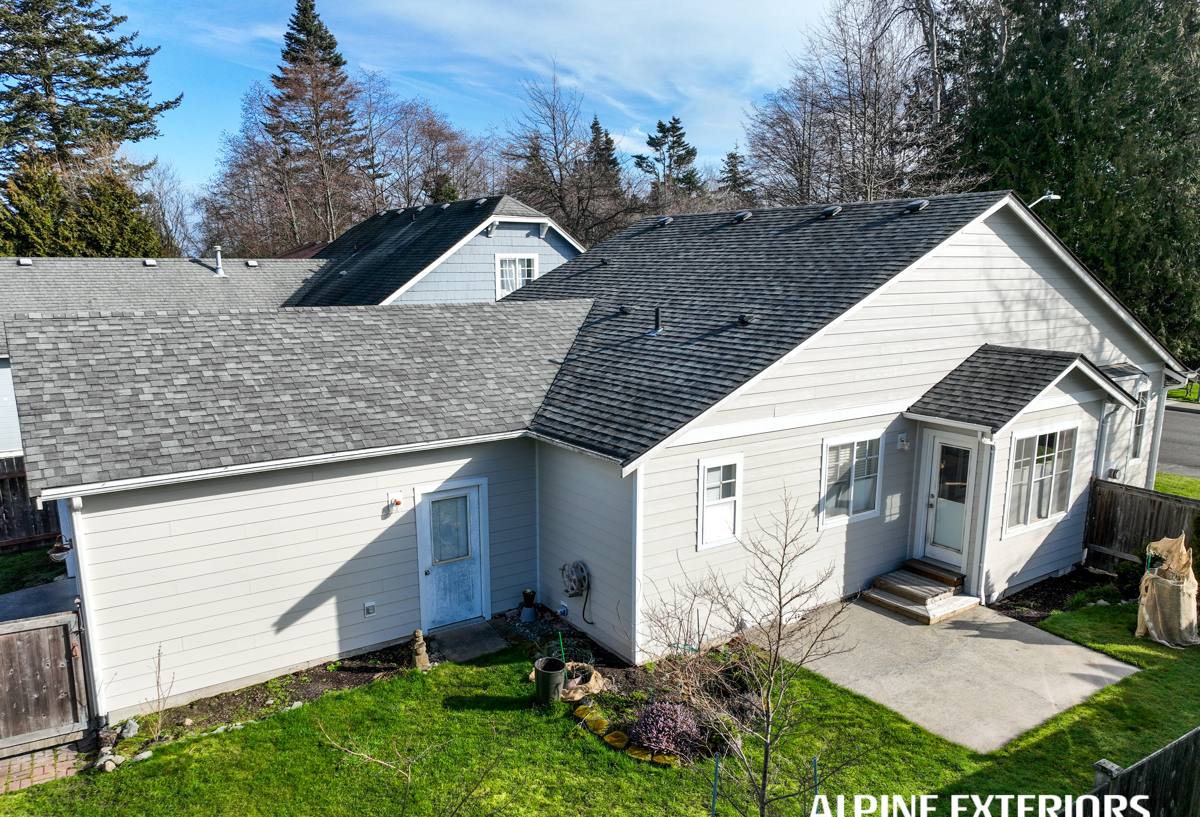
What Salt Air and Driving Rain Actually Do to a House
Salt Air
Proximity to marine air means airborne salt settles on exterior surfaces over time. It's not enough to corrode steel overnight, but it accelerates the breakdown of certain paints and coatings, and it can be harsh on fasteners and hardware that aren't rated for coastal-adjacent exposure. Over years, homes that aren't right on the water still see faster fading and chalking on lower-grade siding finishes than homes further inland would.
Driving Rain
Wind-driven rain doesn't just fall on a house — it gets pushed sideways and upward under laps, around trim, and into any gap that wasn't sealed or flashed correctly. This is where installation quality matters more than product choice. A premium material installed with poor flashing details will fail faster than a modest material installed correctly. Water intrusion around windows and at siding butt joints is one of the most common repair calls we see in this part of the county, and it almost always traces back to a detail that was skipped during the original install.
Moss and the Long Damp Season
Whatcom County's extended stretch of overcast, wet weather each year is exactly the environment moss and algae need. Roofs with poor airflow or shaded north-facing slopes are especially prone to moss buildup, which holds moisture against shingles and shortens their service life. Siding in shaded, damp corners of a lot can develop the same kind of growth if the material and the finish underneath don't resist it well.
Siding: Why We Only Install James Hardie
We install James Hardie fiber cement siding exclusively. We don't install vinyl, LP SmartSide, Cemplank, Allura, primed spruce, or cedar, and we're upfront with every homeowner about why — because in a climate like this one, the trade-offs of those alternatives show up faster than most people expect.
- Vinyl siding can warp or buckle with temperature swings and tends to become brittle over decades, and it doesn't offer the same fire resistance as fiber cement.
- LP SmartSide is an engineered wood product — it performs reasonably well when perfectly maintained, but wood-based siding is inherently more vulnerable to moisture intrusion than fiber cement, and this region gives it a lot of moisture to contend with.
- Cemplank and Allura are other fiber cement brands, and while the base material is similar to Hardie's, we've standardized on one manufacturer so we can guarantee consistent product performance, factory-finish quality, and a warranty structure we trust to back up our installations.
- Primed spruce and cedar are natural wood products that require ongoing repainting, staining, and caulking to hold up, and in a climate with this much sustained dampness and moss pressure, that maintenance burden is significant and never really ends.
James Hardie fiber cement is non-combustible, holds its factory-applied ColorPlus finish far longer than field-applied paint, and its HZ5 product line is engineered for climates that see exactly this combination of moisture, temperature swings, and coastal-influenced air. It doesn't rot, it resists moss and mildew far better than wood-based products, and it comes with a strong, transferable warranty when installed to Hardie's specifications — which we follow to the letter, including the flashing and clearance details that matter most in a wet climate.
Roofing in a High-Moisture, Long-Moss Environment
Roofing decisions in Nooksack and the surrounding area come down to two things: material selection and ventilation. A roof that traps moisture underneath it — through poor attic ventilation or ice-and-water shield gaps — will age faster than the shingle warranty suggests, regardless of brand. We pay close attention to underlayment, flashing at valleys and penetrations, and ridge ventilation, because those details determine whether a roof sheds the region's rain and resists moss growth or becomes a slow, hidden moisture problem.
Regular roof maintenance — clearing moss, checking flashing, keeping gutters clear so water doesn't back up under the roof edge — extends the life of any roofing system in this climate. We talk homeowners through a realistic maintenance schedule rather than a one-time install and forget approach.
Windows: Where Driving Rain Finds the Weak Points
Window failures in this region are rarely about the glass itself — they're about the seal and the flashing around the frame. Wind-driven rain tests every window on a house, and the ones that fail first are usually older units with degraded seals or windows that were installed without proper flashing tied into the surrounding siding or sheathing. When we replace windows, we treat the flashing integration with the siding as part of the same system, not a separate trade — because a gap between the two is exactly where water gets in.
Decks: A Different Set of Exposure Problems
Decks face constant direct exposure to rain, standing moisture, and — depending on the site — shade that keeps them from drying out between storms. Fastener corrosion, ledger board rot, and slick, moss-covered surfaces are the most common issues we see on older decks in this area. Material choice, proper drainage slope, and ledger flashing all matter more here than in drier climates, and we build decks with that reality in mind rather than defaulting to whatever's cheapest.
Cost Factors for Nooksack-Area Exterior Projects
| Factor | Why It Matters Locally |
|---|---|
| Home exposure (sun, shade, wind direction) | Shaded, wind-sheltered walls hold moisture longer and develop moss faster |
| Existing moisture damage | Hidden rot behind old siding or under roofing adds scope once uncovered |
| Flashing and trim detail work | Driving rain punishes shortcuts here faster than in calmer climates |
| Material choice | Fiber cement costs more upfront than vinyl but requires far less long-term upkeep |
| Access and site conditions | Lot slope, tree cover, and driveway access affect labor and equipment needs |
Why a Local Crew Makes a Difference
A crew that works throughout Whatcom County regularly sees how homes in this specific corner of the Pacific Northwest actually age — which details fail first, where moss builds up, which wall orientations take the worst of the driving rain. That's different from general regional experience. It shapes how we flash a window, how we detail a siding butt joint, and how we talk to a homeowner about what their roof will actually face over the next 20 years. We're not guessing at climate conditions from a manual — we're accounting for what we see on houses near Nooksack and Custer every season.
A Practical Checklist Before You Commit to a Project
- Ask what siding, roofing, and window brands a contractor installs — and why they chose them
- Confirm they carry proper licensing and insurance for exterior work in Washington
- Ask how they handle flashing at windows, doors, and roof penetrations — this is where most failures start
- Get a clear explanation of warranty coverage, including what's manufacturer-backed versus installer-backed
- Ask how they've seen their own past installations hold up in this specific climate over several years
- Get a written, itemized estimate rather than a vague lump-sum number
Let's Take a Look at Your Home
If you're weighing a siding, roofing, window, or deck project on a home in or around Nooksack, we're glad to come take a look and walk you through what we see — no pressure, no obligation. Use the form below to request a free estimate.