 Custer
 Exterior Homes Around Semiahmoo
Semiahmoo sits right up against the water in the far northwest corner of Whatcom County, close enough to the Salish Sea that salt air is simply part of daily life. Homes here take on a combination of stresses that inland Whatcom County properties rarely see at the same intensity: salt-laden marine air, wind-driven rain coming straight off the water, and a long, damp shoulder season that keeps north-facing walls and shaded eaves wet for weeks at a time. Add in the moss and algae growth that thrives in that kind of moisture, and you've got an exterior environment that is genuinely harder on siding, trim, roofing, and decking than most manufacturers' warranty testing accounts for.
We're a Custer-based crew that works this specific stretch of Whatcom County regularly, and Semiahmoo's climate profile shapes how we approach every job here — the products we recommend, the flashing and drainage details we insist on, and the maintenance conversations we have with homeowners before we ever pick up a nail gun.
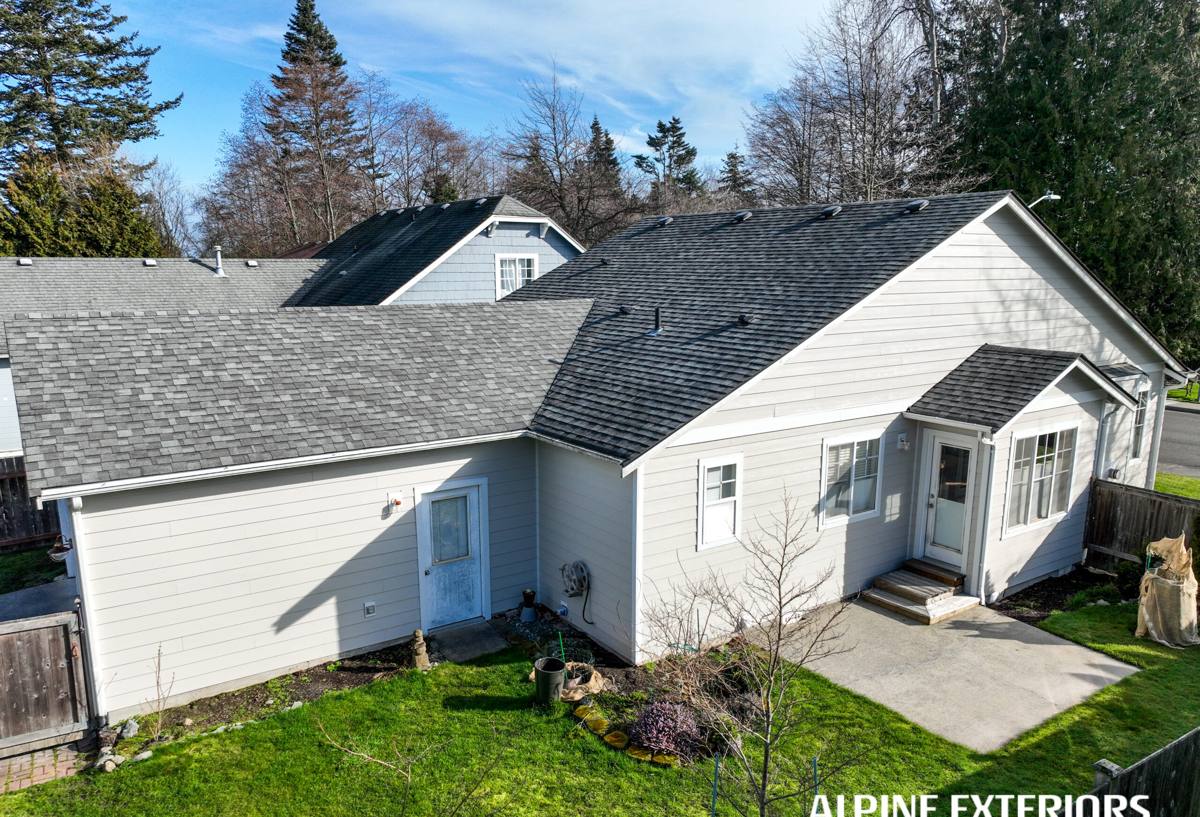
What Salt Air and Driving Rain Actually Do to a House
It's worth being specific about the mechanisms, because "coastal weather is tough on houses" doesn't tell you much on its own.
Salt Air
Airborne salt is corrosive to exposed metal — fasteners, flashing, gutter hardware, and hinges — and it also accelerates the breakdown of lower-grade paints and coatings. Over years, salt exposure shows up as chalking, fading, and premature coating failure on anything that wasn't built or finished to handle it.
Driving Rain
Wind off the water doesn't just fall on a house, it drives sideways into it. That means water gets pushed up under laps, into gaps around trim, and behind poorly sealed penetrations that would stay dry in a calmer inland setting. The house-wrap, flashing, and caulking details behind the siding matter as much as the siding itself — arguably more.
Moss and Algae Season
Shaded, north- and west-facing walls near mature trees or close neighboring structures stay damp long after a storm passes. That extended moisture window is exactly what moss and algae need to establish. On roofs it's a well-known problem; on siding and trim it's just as real, and it's a major reason we see premature paint failure and soft trim on homes that otherwise look well maintained.
Why We Only Install James Hardie Fiber Cement Siding
We get asked fairly often why we don't offer vinyl, LP SmartSide, or cedar alongside Hardie. The honest answer is that in a climate like Semiahmoo's, those products all carry trade-offs we're not willing to put our name behind.
Vinyl is affordable and low-maintenance in the sense that it doesn't need repainting, but it's a thin plastic product that expands and contracts with temperature swings, can crack in cold snaps, and — critically for a salt-air environment — its seams and panel laps aren't sealed the way a fiber cement system is. Wood-based products, including engineered wood siding like LP SmartSide, perform well when installation and maintenance are perfect, but they rely on an intact factory coating and diligent caulking to keep moisture out of the wood substrate. In a place where wind-driven rain finds every gap and moss holds moisture against the wall for weeks, that margin for error gets thin fast. Primed spruce and untreated cedar go a step further — they need regular refinishing to hold up at all near the water, and skipping even one cycle can let rot get started underneath.
James Hardie fiber cement is a different category of material. It's cement, sand, and cellulose fiber pressed and cured into a rigid board — it doesn't absorb water the way wood does, it's non-combustible, and it doesn't degrade from UV or salt exposure the way vinyl and lower-grade coatings can. Hardie's ColorPlus finish is baked on at the factory under controlled conditions, which gives it more consistent, longer-lasting color than field-applied paint, and it comes backed by a real transferable warranty. For a house that's going to sit through decades of Semiahmoo winters, that combination is what we're willing to stand behind.
How the Main Options Compare in This Climate
| Factor | James Hardie Fiber Cement | Vinyl | Wood / Engineered Wood |
|---|---|---|---|
| Salt air resistance | Strong — non-organic material, factory finish | Fair — can chalk and fade over time | Weak without diligent upkeep |
| Wind-driven rain tolerance | Strong when installed to spec | Depends heavily on seam quality | Moderate — coating and caulking dependent |
| Moss/algae resistance | Good — doesn't feed organic growth | Good on the material, but grime shows | Poor — moss holds moisture against wood |
| Fire resistance | Non-combustible | Combustible | Combustible |
| Maintenance | Occasional wash, no repainting for years | Low, but limited repair options | Regular refinishing required |
Roofing, Windows, and Decks for Semiahmoo Properties
Siding doesn't work in isolation — it's one piece of the building envelope, and in a marine climate the other pieces matter just as much.
Roofing
Roofs near the water deal with the same moss and moisture pressure as siding, plus direct wind and rain exposure. Proper underlayment, flashing at every penetration, and ventilation that actually moves damp air out of the attic all reduce the moss buildup and shingle degradation that's common on shaded, coastal-exposed roofs.
Windows
Old or poorly flashed windows are one of the most common places we find hidden water intrusion during a siding tear-off — especially on walls that catch driving rain directly. When we replace siding around existing windows, we check flashing and sealant at every opening; when windows are due for replacement too, doing both together lets us get the water management right in one pass instead of patching around old details.
Decks
Outdoor living space near Semiahmoo takes a beating from the same rain and damp shoulder seasons that affect siding. Decking materials and fastener choices matter here — corrosion-resistant hardware isn't optional this close to salt air, and drainage underneath the deck surface matters as much as the boards on top.
Why a Local Crew Matters Here
A crew that mostly works drier, inland jobs doesn't always think in terms of wind-driven rain and salt exposure by default — they can install a product correctly by general standards and still leave it under-flashed for what this specific area throws at it. Working Whatcom County's coastal edge regularly means we've seen where water actually gets in on homes like these: behind poorly lapped trim, around window flanges facing the water, and at roof-to-wall transitions on shaded elevations. That local pattern recognition shapes the flashing and sequencing details on every Semiahmoo job, not just the product we hang on the wall.
It also means we're not guessing about maintenance timelines. We can tell a Semiahmoo homeowner honestly how often to expect to wash moss and algae off a north-facing wall, or which elevations tend to need attention first, because we've worked on houses just like theirs.
Our Process on a Semiahmoo Job
- On-site inspection of existing siding, trim, flashing, and any moisture or rot found during a walk-around
- Honest assessment of whether full replacement, partial replacement, or repair is the right call
- Written estimate covering material, labor, and any additional water-management work the house needs
- Removal of old siding with a check of the sheathing and house-wrap underneath before anything new goes on
- Correct flashing, weather-resistant barrier, and fastening per James Hardie's installation specifications
- Final walkthrough so you know what was done and what to keep an eye on going forward
Signs Your Siding Needs a Closer Look
- Persistent moss or dark streaking on north- or west-facing walls that comes back soon after cleaning
- Soft or spongy spots when you press on siding or trim, especially near ground level or window sills
- Paint that's chalking, peeling, or fading noticeably faster on the side of the house that faces the water
- Visible gaps, cracked caulking, or warped panels around windows, doors, and corner trim
- Rust staining below fasteners or metal flashing
- A musty smell or visible staining on interior walls that back up to exterior siding
Cost Factors for a Semiahmoo Exterior Project
Every house is different, but a few things consistently move the price on jobs in this area:
| Factor | Why It Matters |
|---|---|
| Extent of hidden water damage | Rot found under old siding or trim adds sheathing and framing repair before new material goes on |
| Number of window and door openings | Each one needs flashing and trim work, which adds labor time |
| House height and access | Multi-story walls and steep sites need more staging and scaffolding |
| Siding profile and trim detail | Board-and-batten or more detailed trim packages take longer to install than plain lap siding |
| Scope — siding only vs. combined with roofing, windows, or decking | Bundling exterior work can reduce redundant setup and staging costs |
We don't quote a job over the phone for exactly this reason — what's happening behind the old siding on a Semiahmoo home can change the scope significantly, and we'd rather find that out during an inspection than after the estimate.
If you're weighing your options for siding, roofing, windows, or decks on a Semiahmoo-area property, we're happy to come take a look and walk you through what we're seeing — no pressure, no obligation. Use the form below to request a free estimate.