 Custer
 Siding Built for the California Creek Climate
California Creek sits close enough to the water that homes here deal with a different set of exterior conditions than you'd find further inland in Whatcom County. Salt-laden air off the bay, wind-driven rain that finds its way into every gap and seam, and a long, damp moss season that can run most of the year all take a steady toll on siding, trim, and roofing. If you've owned a home in this area for more than a few years, you've probably already seen it: chalky or peeling paint, soft trim boards near the ground, dark streaking on north-facing walls, or moss creeping across shaded siding that never fully dries out.
None of that is unusual for this part of Custer. It's just what happens when a building envelope isn't matched to the actual conditions it faces. The good news is that exterior materials and installation methods exist specifically to handle salt air, sustained moisture, and shade-driven organic growth — they just have to be chosen and installed correctly from the start.
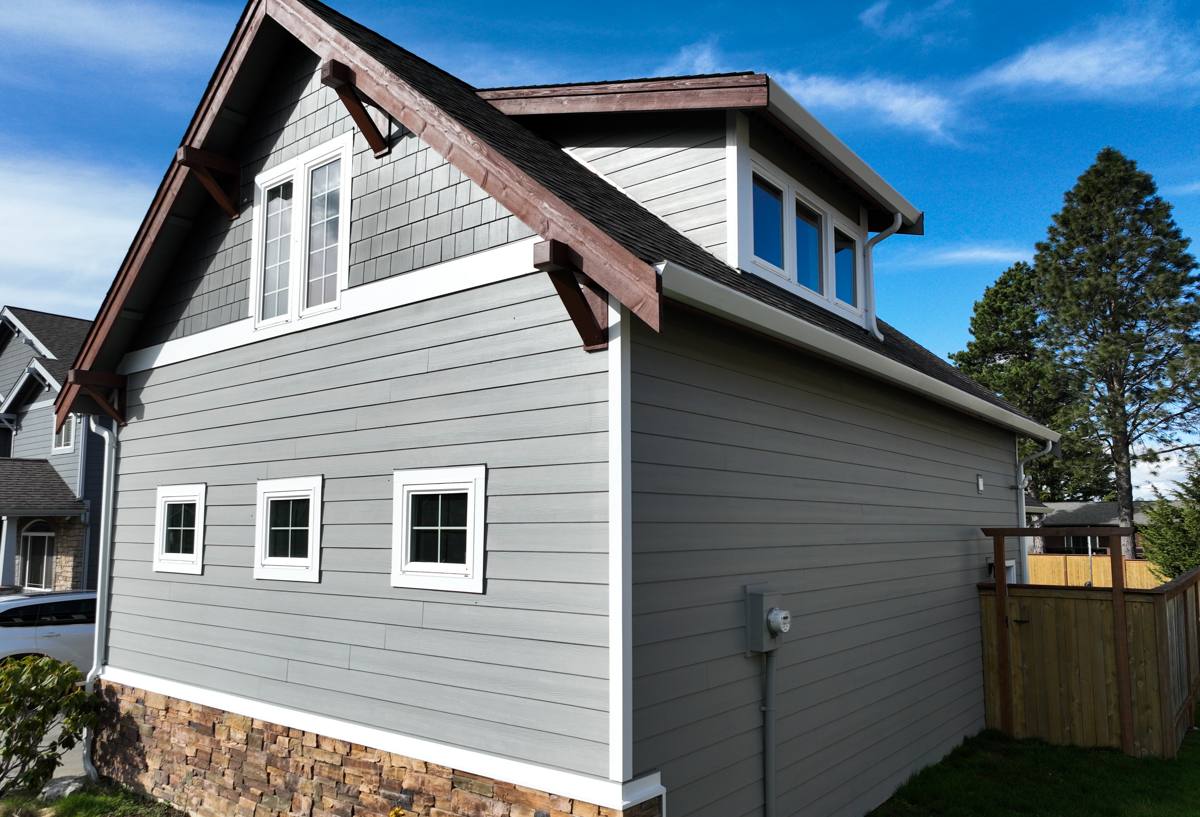
What Salt Air and Driving Rain Actually Do to a Home
Salt Air
Airborne salt is corrosive to metal fasteners, flashing, and hardware, and it can accelerate the breakdown of lower-quality paint films over time. Materials that rely on a surface coating to keep moisture out are more exposed to this kind of slow degradation than materials that are inherently water-resistant at their core.
Driving Rain
Wind off the water doesn't let rain fall straight down — it pushes it sideways, into lap joints, around window and door trim, and behind siding that isn't properly flashed. Over years, that kind of exposure finds every weak point in a building envelope: a missed kick-out flashing, a caulk joint that was never meant to be a primary water barrier, or a siding product that swells and traps moisture once water gets behind it.
Moss and Organic Growth
Shaded, north- and west-facing walls near tree cover stay damp longer after every rain event. That's exactly the environment moss, algae, and mildew need to take hold. On some materials this is mostly cosmetic. On others — anything with an organic or wood-fiber component that can absorb moisture — sustained dampness plus organic growth is a combination that leads to real deterioration underneath the surface, not just staining on top of it.
Common Signs of Climate Wear We See in This Area
- Soft or spongy siding near the bottom courses, especially close to grade or sprinkler lines
- Paint that's chalking, peeling, or needs recoating far sooner than expected
- Moss or dark streaking concentrated on shaded or wind-exposed walls
- Corroded or rust-streaked fasteners and metal trim
- Visible gaps or separation at butt joints and trim after a few winters
- Soft spots around window trim where wind-driven rain collects
Why We Install Only James Hardie Fiber Cement
We made a decision as a company to install one siding system — James Hardie fiber cement — and not to offer vinyl, LP SmartSide, Cemplank, Allura, primed spruce, or cedar. That's not a marketing position; it's a practical one, built around exactly the conditions homes in places like California Creek face.
Fiber cement is a mix of cement, sand, and cellulose fibers. It doesn't have an organic wood component that can wick and hold moisture the way engineered wood siding or traditional cedar can, and it doesn't soften, warp, or become brittle from prolonged rain exposure the way vinyl can over decades of UV and temperature cycling. For a coastal-influenced climate with heavy rain and long damp stretches, that difference matters more than it does in a drier inland setting.
James Hardie also finishes many of its boards at the factory with ColorPlus Technology — a baked-on finish that's more consistent and generally more resistant to fading and moisture intrusion than field-applied paint, which is where a lot of the maintenance burden on other sidings comes from in the first place.
Honest Trade-offs of the Alternatives
| Material | What It Gets Right | Where It Struggles Here |
|---|---|---|
| Vinyl | Low upfront cost, no painting | Can warp or crack under wind/temp swings; seams and J-channels are a common water-entry point in driving rain |
| LP SmartSide / engineered wood | Reasonable cost, easy to install | Wood-fiber core is sensitive to sustained moisture at cut edges and joints if not sealed and maintained precisely |
| Cedar | Natural look, long tradition in the Northwest | Needs regular refinishing; more prone to moss/algae growth and rot in shaded, damp areas without upkeep |
| Primed spruce | Lower material cost | Primer is a thin, field-applied barrier; less inherently moisture-resistant than a cement-based product |
| James Hardie fiber cement | Non-combustible, factory-cured finish, engineered for regional climate zones | Higher installed cost; requires correct fastening and clearances to perform as designed |
Every one of these products has a legitimate place in the market and has worked fine on plenty of homes. Our position is simply that, given what we see on siding jobs in this area year after year, fiber cement is the material we're willing to put our name behind and warranty.
How We Approach a California Creek Siding Job
Assessment First
Before we talk products, we look at the house — sun and wind exposure, drainage around the foundation, existing moisture damage, and how the current siding and flashing have held up. That tells us where water has been getting in and what needs to change, not just what needs to be covered up.
Moisture Management, Not Just a New Surface
A siding job that doesn't address flashing, house wrap, and drainage behind the new material is just delaying the same problems. We install a proper water-resistive barrier, correct flashing at windows, doors, and penetrations, and rain-screen or drainage gap detailing where it's called for, so the siding itself has a chance to dry out between storms instead of holding water against the wall.
James Hardie Product Selection
James Hardie's HZ5 product line is engineered for the kind of freeze-thaw, moisture, and temperature swings the Pacific Northwest sees, which fits this region well. We'll walk through lap siding, panel, and trim options and colors based on the home's exposure and your preferences.
Roofing, Windows, and Decks — The Rest of the Envelope
Siding doesn't work in isolation. A roof that's shedding water improperly, windows that aren't flashed correctly, or a deck ledger board that's trapping moisture against the house can undercut even a well-installed siding job. Since we handle roofing, windows, and decks as well as siding, we can look at a California Creek home as one connected system and flag issues in one area that are actually driving damage in another — instead of fixing the siding and leaving a roofing or flashing problem to keep causing trouble.
Why a Local Crew Matters Here
Custer and the surrounding Whatcom County waterfront communities have their own microclimate — different wind exposure, moisture load, and growing season for moss than you'd see even a few miles inland. A crew that works this area regularly knows which walls on a typical lot face the weather, where drainage tends to be a problem, and what detailing actually holds up locally, rather than applying a generic install approach. That local knowledge shows up in the small decisions — fastener spacing, flashing laps, clearance at grade — that determine whether a siding job lasts fifteen years or thirty.
What to Ask Any Contractor Before Hiring
- Are you licensed and insured in Washington, and can I see proof?
- Who will actually be on the crew doing the install — subcontracted or in-house?
- What water-resistive barrier and flashing details do you use behind the siding?
- What's the manufacturer's warranty, and what's your own workmanship warranty?
- Can you explain why you recommend this material for a home in this specific location?
What Affects Cost on a Job Like This
| Factor | Why It Matters |
|---|---|
| Extent of existing moisture damage | Rotten sheathing or framing found during tear-off needs repair before new siding goes on |
| Home size and complexity | More corners, dormers, and trim detail means more labor and material |
| Siding profile and finish | Lap vs. panel, and factory-finish color options, affect material cost |
| Access and site conditions | Slopes, landscaping, and staging space affect labor time |
| Scope beyond siding | Bundling roofing, window, or deck work can affect scheduling and total investment |
We don't quote broad numbers without seeing the house — every property near the water carries a different amount of existing wear, and that's usually the biggest driver of final cost.
If you're noticing moss, soft trim, peeling paint, or other signs of weather wear on your California Creek home, we're happy to take a look and walk you through your options. There's no pressure and no obligation — just a straightforward assessment from a crew that works this area and this climate every week. Fill out the form below to schedule a free estimate.