 Custer
 Why Roofs Around Lynden Wear Differently Than Roofs Inland
Lynden sits close enough to the Strait of Georgia and the Puget Sound air mass that homes here deal with a different mix of weather stress than a roof forty miles inland gets. It's not one big storm that does the damage — it's the combination, repeated for months at a stretch. Salt-tinged air off the water accelerates corrosion on exposed metal fasteners and flashing. Driving rain, pushed sideways by wind rather than falling straight down, finds every gap in flashing and underlayment that a calmer climate would never test. And Whatcom County's long, wet, low-sun winters give moss and algae months of shade and moisture to get established on north-facing slopes before a homeowner even notices the color change.
None of that means asphalt shingle roofing is a bad fit for Lynden — it's still the most practical, cost-effective roofing material for the vast majority of homes here. It means the installation details that would be optional in a dry climate are not optional here. A shingle roof put on correctly for this specific stretch of Whatcom County will handle decades of that weather. One put on with shortcuts — the kind that might never show up in Arizona or eastern Washington — will show leaks, granule loss, and moss colonization years before it should.
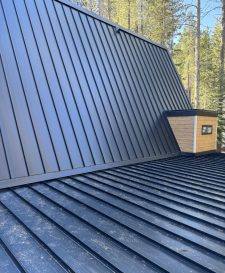
What a Correct Installation Actually Involves
"New roof" sounds like one job, but it's really a stack of separate systems that all have to work together. Skipping or shortcutting any one of them is where most premature failures start.
Tear-off and deck inspection
We remove the old roofing down to the deck rather than layering over it. That's the only way to actually see the plywood or OSB underneath — soft spots, old water staining, and rot don't show up until the old shingles are off. Given how much rain this area gets in a typical winter, deck damage from a slow, long-term leak is common enough that we budget time for it rather than treating it as a surprise change order.
Underlayment
This is the layer that actually keeps water out if wind-driven rain gets past the shingles — which, in a coastal wind event, it will, at least at the edges and valleys. We use synthetic underlayment across the full roof and self-adhering ice-and-water membrane at eaves, valleys, and any roof-to-wall transitions, which is where wind-driven rain concentrates.
Flashing
Flashing around chimneys, skylights, sidewalls, and valleys fails more roofs than the shingles themselves ever do. Salt air speeds up corrosion on lower-grade or older galvanized flashing, so we install new flashing on every reroof rather than reusing what's there — reused flashing is one of the most common causes of a callback within a year or two.
Nailing pattern and fastener choice
Manufacturer nailing patterns exist for a reason, and in a wind-exposed area they matter more, not less. Correct nail placement, count, and depth is what keeps shingles attached during the gusty fall and winter storm systems that come through this part of Whatcom County. We also use corrosion-resistant fasteners given the salt content in the air near the water.
Choosing a Shingle for This Specific Climate
Not every asphalt shingle product is built the same way, and the differences matter more here than in a dry climate. The two big factors for Lynden homes are algae resistance and wind rating.
| Shingle Type | Typical Wind Rating | Algae Resistance | Best Fit |
|---|---|---|---|
| 3-tab (standard) | Lower | Only if algae-resistant granules specified | Budget-driven projects, secondary structures |
| Architectural / laminate | Higher | Usually available with algae-resistant granules | Most primary Lynden homes |
| Impact-rated architectural | Highest | Usually available | Exposed sites, homes with heavy tree cover overhead |
We recommend algae-resistant (AR) granules as a default for this area, not an upsell. Standard granules on a shaded, north-facing slope near the water can show streaking within a few years; AR granules push that timeline out considerably. Architectural shingles also sit flatter and shed water more consistently than 3-tab, which matters on the shallower roof pitches common on ranch-style and single-story homes in this area.
Ventilation and Moisture: The Part No One Sees
A shingle roof isn't just what's on top — it's a ventilation system that has to move air from soffit to ridge underneath it. In a climate as wet as Whatcom County's, poor attic ventilation traps moisture, which condenses on the underside of the roof deck and encourages rot and mold long before it ever shows as a visible leak. We check and correct intake (soffit vents) and exhaust (ridge or box vents) balance on every reroof, because installing new shingles over an unbalanced ventilation system just buys time before the same moisture problem resurfaces from the inside.
Signs of a ventilation problem, not a roofing problem
- Frost or condensation on the inside of the roof deck visible from the attic in winter
- Musty smell in the attic that doesn't go away with weather
- Ice or heavy frost buildup at the eaves in cold snaps
- Shingles curling or granule loss concentrated near the ridge
Moss, Algae, and Salt Air: What Ongoing Maintenance Actually Looks Like
Moss doesn't just sit on top of shingles looking bad — its root structure holds moisture against the granule surface and can lift shingle edges over time, giving wind and rain a place to start working. Lynden's long wet season and the shaded north- and east-facing slopes common on wooded lots give moss a full season to establish itself most years. Salt air compounds this by speeding up the breakdown of exposed metal and accelerating granule loss on the shingles most directly exposed to weather off the water.
A correctly installed roof with zinc or copper strips at the ridge and AR granules will resist this far longer than an older roof without them, but no asphalt roof in this climate is maintenance-free. Reasonable, low-cost habits go a long way:
- Keep gutters clear so water doesn't back up under the shingle edge
- Trim overhanging branches to reduce shade and debris buildup on north-facing slopes
- Have moss growth removed gently (soft wash, not pressure washing) rather than left to spread
- Have flashing and fasteners checked every few years for salt-related corrosion, especially closer to the water
Our Process, Start to Finish
- On-site inspection. We walk the roof and attic, not just look from the ground, and check for the deck and ventilation issues described above before quoting.
- Written estimate. Materials, scope, and any deck repair allowance spelled out plainly — no vague "and other work as needed" line items.
- Scheduling around weather. Given how much of the year sees rain here, we plan tear-off in windows where the deck won't sit exposed longer than necessary, and we tarp and protect the structure if weather turns mid-job.
- Tear-off and deck repair. Old roofing removed, deck inspected, any soft or damaged sheathing replaced before anything new goes down.
- Underlayment, flashing, and ventilation correction. Done before a single shingle is installed.
- Shingle installation to manufacturer nailing and exposure specs, including hip, ridge, and valley detailing.
- Cleanup and final walkthrough, including a magnetic sweep for stray nails around the property.
What Drives Cost on a Lynden Reroof
Every roof is different, but the same handful of factors move the price up or down on most jobs in this area.
| Factor | Why It Matters Here |
|---|---|
| Roof pitch and access | Steeper or harder-to-access roofs take longer and need more safety setup |
| Deck condition | Long-term leaks common in older roofs often mean sheathing replacement, found only after tear-off |
| Layers of existing roofing | Multiple layers add tear-off time and disposal cost |
| Shingle class chosen | Architectural and impact-rated products cost more upfront but hold up longer against local wind and algae |
| Flashing and ventilation scope | Chimneys, skylights, and valley count all add material and labor |
| Number of penetrations | Vents, chimneys, and skylights each need individual flashing detail |
We give firm, itemized quotes after the inspection rather than a rough phone estimate, because deck condition in particular can't be judged accurately from the ground or from photos.
Why a Crew That Already Works This Area Matters
Roofing code, permitting, and typical construction details vary somewhat by jurisdiction, and Whatcom County has its own permitting process separate from incorporated cities. A crew that regularly works in and around Custer and Lynden already knows what that process requires and doesn't burn a homeowner's time figuring it out mid-project. Just as important, a local crew has actually seen how roofs in this specific area age — which slopes hold moss longest, which flashing details tend to fail first near the water, and which shingle products have held up over multiple winters here rather than in a manufacturer's climate-controlled test data from somewhere else. That's the kind of judgment that only comes from doing the work here repeatedly, not from a general roofing background.
Repair or Replace? A Quick Gut Check
Not every issue means a full reroof. Use this as a rough guide before assuming the worst:
- Isolated leak around one flashing point, roof otherwise sound → usually a repair
- Granule loss concentrated in one area, rest of roof intact → often a repair or partial replacement
- Widespread curling, cracking, or bald spots across multiple slopes → replacement is usually more cost-effective than repeated repairs
- Soft or spongy decking found in more than one spot → replacement, since the underlying structure is compromised
- Roof original to a home built more than two decades ago, never reroofed → worth a full inspection even without visible symptoms
If you're in Lynden, Custer, or elsewhere in Whatcom County and want a straight answer on which category your roof falls into, we're happy to take a look. The estimate is free, there's no pressure to book on the spot, and you'll get a written scope you can compare against anyone else's quote.