 Custer
 Why Blaine Roofs Wear Differently Than Roofs Inland
Blaine sits right up against the water and the Canadian border, and that location shapes everything about how a roof ages here. Salt-laden air off the Strait of Georgia and Semiahmoo Bay works on metal fasteners, flashing, and exposed hardware year-round. Add Whatcom County's long, wet fall-through-spring stretch of driving rain and wind, and a roof that would last two decades in a drier climate can show real wear in twelve or fifteen years if it wasn't built for these conditions from the start. Then there's moss. The combination of shade, moisture, and mild temperatures gives moss and algae a season that runs most of the year, not just a few weeks.
None of this means Blaine homes need exotic materials or gimmicks. It means the installation details that get skipped on an easy inland job — fastener choice, underlayment coverage, ventilation balance, and flashing at every transition — are not optional here. They're the difference between a roof that looks good for its first two years and one that actually holds up for its full service life.
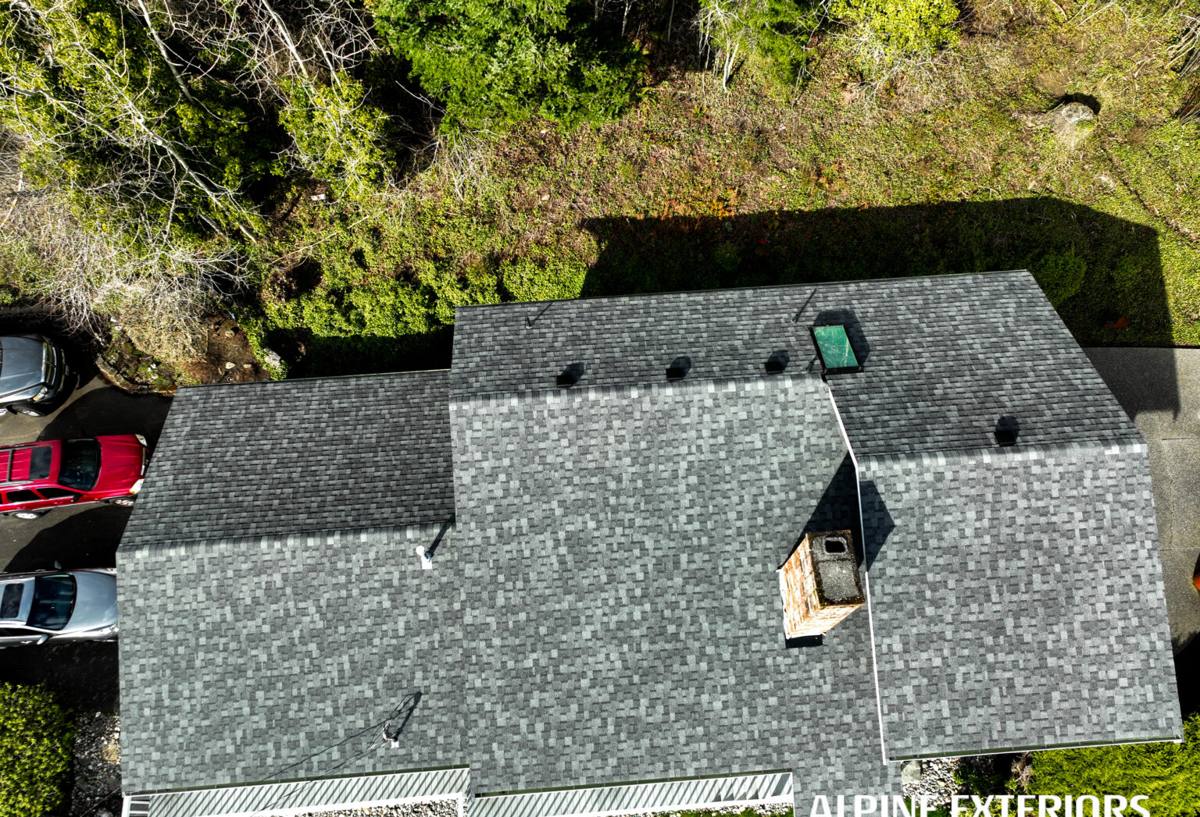
What a Correct New Roof Installation Actually Involves
Starting With What's Under the Old Roof
A new roof is only as good as the deck underneath it. Once the old roofing material is stripped, the decking gets inspected board by board for soft spots, delamination, or water staining — problems that are invisible from the attic or the ground but show up fast once new shingles or panels go down over them. Any damaged sheathing gets replaced before anything else happens. Skipping this step is one of the most common corners cut in this trade, and it's the one that causes the most expensive problems later.
Underlayment and Ice-and-Water Protection
In a climate that gets sustained wind-driven rain rather than just straight-down rain, underlayment coverage matters more than the brand name on the shingle wrapper. Eaves, valleys, roof-to-wall transitions, and any low-slope sections get self-adhered ice-and-water shield membrane, not just standard felt or synthetic underlayment. This is what actually stops water that gets pushed sideways or backed up by wind from finding its way under the shingles.
Field Installation and Fastening
Nail or screw pattern, fastener length, and fastener material all get chosen for the roof pitch, the wind exposure of the specific lot, and the coastal environment — not just pulled from a generic spec sheet. Under-fastening is one of the leading causes of wind damage on Whatcom County roofs; over-fastening or the wrong fastener metal invites corrosion and leaks a few years down the road.
Material Choices That Make Sense for This Coastline
There's no single "best" roofing material for Blaine — the right choice depends on budget, roof pitch, how much moss and shade the lot deals with, and how long the homeowner plans to stay in the house. Here's how the common options actually compare under real coastal conditions:
| Material | Salt Air / Corrosion Resistance | Moss & Algae Resistance | Typical Lifespan Here | General Cost Position |
|---|---|---|---|---|
| Architectural asphalt shingle | Good, if fasteners and flashing are corrosion-rated | Fair; algae-resistant (AR) granules recommended | 20-30 years with proper ventilation | Lowest upfront cost |
| Standing seam metal | Excellent with correct coatings and fastener spec | Very good; sheds moisture, little for moss to hold onto | 40-60 years | Highest upfront cost |
| Synthetic/composite shingle | Good; doesn't corrode itself, but hardware still needs attention | Good to very good depending on product line | 30-50 years | Mid-to-upper cost |
| Wood shake | Fair; hardware exposure is the weak point | Poor without ongoing treatment; holds moisture | 20-25 years with maintenance | Mid cost, higher maintenance cost over time |
We'll walk through these trade-offs honestly during an estimate rather than steering every homeowner to the same product. A steep, shaded, tree-lined lot in Blaine has different needs than an open, wind-exposed lot closer to the water.
Ventilation: The Detail Most New Roofs Get Wrong
A roof needs balanced intake at the eaves and exhaust at the ridge so air actually moves through the attic space. In a marine climate like this one, poor ventilation doesn't usually show up as ice damming — it shows up as trapped moisture that feeds mold, rots sheathing from underneath, and shortens the life of the shingles from the inside out. When we install a new roof, we size and balance the ventilation system to the actual attic, not a one-size-fits-all vent count. This is one of the most overlooked steps in the trade, and it's often the reason a roof that looked fine for the first five years starts failing early from the underside.
Flashing and Hardware: Where Salt Air Does Its Damage
Flashing failures — not shingle failures — cause the majority of roof leaks we're called out to inspect. Chimneys, skylights, dormers, valleys, and any wall-to-roof transition all depend on flashing that's cut, lapped, and sealed correctly, using metal that's rated for a coastal environment. Standard steel fasteners and flashing in a salt-air zone can start showing surface corrosion well before the roofing material itself is due for replacement. We spec corrosion-resistant flashing and fastener packages for Blaine installs as standard practice, not as an upgrade option.
Building Moss Prevention Into the Installation Itself
Moss isn't just a cosmetic problem — over time it holds moisture against the roof surface and lifts shingle edges. Rather than treating moss control as an annual maintenance chore, a good installation reduces the conditions moss needs in the first place:
- Zinc or copper strips installed near the ridge, which release trace metal ions that inhibit moss growth as rain washes over the roof
- Algae-resistant (AR) shingle products in shaded or north-facing sections of the roof
- Keeping valleys, gutters, and roof-to-siding transitions clear of debris so water doesn't sit and give moss a foothold
- Trimming back overhanging branches where practical, since shade and organic debris are the two biggest drivers of moss growth
None of this eliminates the need for occasional roof cleaning, but it meaningfully extends the time between cleanings and reduces how aggressive that cleaning needs to be.
Our Process for a Blaine New Roof Installation
- On-site inspection and estimate — we look at the existing roof, attic ventilation, decking condition where visible, and the specific exposure of the lot (wind, shade, proximity to water).
- Material selection — we go over the honest trade-offs between options based on the home, the budget, and how long the homeowner plans to own it.
- Permitting — handled before work starts, per local requirements.
- Tear-off and deck inspection — old material removed, decking checked board by board, any damage repaired before moving forward.
- Underlayment and ice-and-water shield — installed at eaves, valleys, and all transitions, not just where code requires the minimum.
- Roofing installation — field material installed to manufacturer spec and adjusted for local wind exposure.
- Flashing, vents, and moss-prevention details — installed as part of the standard scope, not billed as add-ons after the fact.
- Final walkthrough and cleanup — magnetic sweep for nails, full site cleanup, and a walkthrough so the homeowner sees exactly what was done.
What to Confirm Before You Sign a Roofing Contract
- Is deck replacement priced per board or lumped into a vague allowance?
- What underlayment and ice-and-water shield coverage is included, and where specifically?
- Are flashing and fasteners specified as corrosion-resistant for a coastal environment?
- Is attic ventilation being assessed and balanced, or just left as-is?
- Is moss prevention (zinc/copper strip, AR shingle) included or treated as an upsell?
- What does the workmanship warranty actually cover, separate from the manufacturer's material warranty?
Why It Matters That We Already Work in Blaine
A crew that installs roofs across Whatcom County but doesn't regularly work this specific stretch of coastline can miss things that only show up after a season or two — the wind patterns off the water, how much moss pressure a particular tree line creates, which details actually need the coastal-grade upgrade versus which don't. We work in Blaine and Custer regularly enough to know what these roofs need before the first shingle goes down, and we're close enough to come back quickly if a punch-list item needs attention after the install.
If you're weighing a new roof for a Blaine home, we're happy to take a look and walk you through what your specific roof, exposure, and budget actually call for. The estimate is free, there's no pressure, and you can start with the form below.