 Custer
 Why Everson Siding Takes a Different Kind of Beating
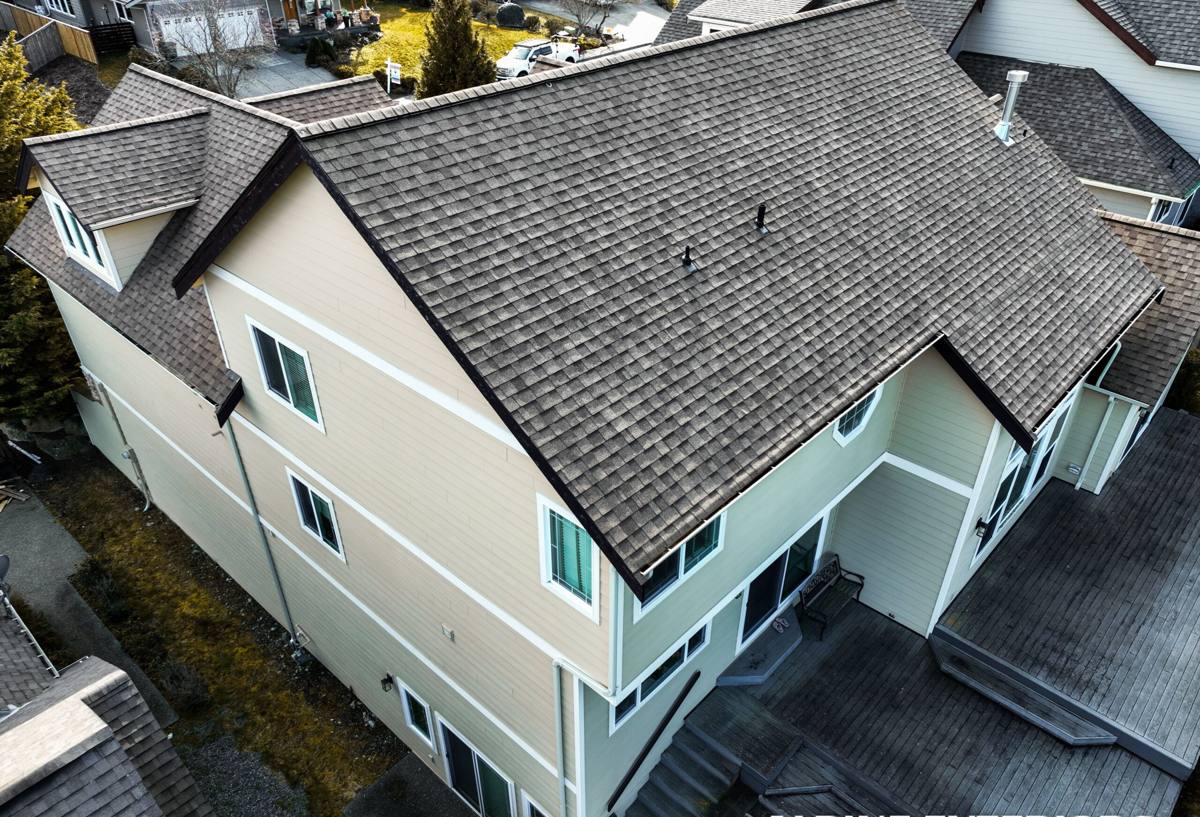
Everson sits inland from the water, but "inland" in Whatcom County doesn't mean sheltered. The same marine-influenced weather system that soaks Custer and the rest of the county reaches Everson too: long stretches of driving rain, humidity that doesn't fully break for months at a time, and a moss season that can run from late fall well into spring on shaded, north-facing walls. Add in salt-laden air that moves through the region on Pacific storm systems, and you have a climate that is quietly hard on exterior building materials, even when nothing dramatic ever happens to the house.
Most siding damage out here isn't caused by one big event. It's caused by years of small ones — a caulk joint that opened up and let water track behind a board, a section of trim that stayed wet two extra days after every storm, a north wall that never gets enough sun to dry out between rain events. By the time a homeowner notices a soft spot, discoloration, or a board that's started to cup, the underlying problem has usually been building for a while.
What "Siding Repair" Actually Covers
Siding repair is a broader category than most people expect. It's not just replacing a cracked or missing board. In practice, the repair calls we see around Everson fall into a handful of categories:
- Impact damage — a board cracked or knocked loose by a falling branch, ladder contact, or debris in wind.
- Moisture-compromised sections — boards, trim, or corners that have absorbed water over time and started to swell, soften, or delaminate.
- Failed caulking and sealant joints — the single most common entry point for water behind siding in this climate.
- Damaged or missing flashing — around windows, doors, and roof-to-wall transitions, where a lot of real leaks actually originate.
- Localized moss and algae growth — cosmetic on its own, but a signal that a wall isn't drying properly between storms.
Signs It's Time to Call Someone
Homeowners usually notice one of a few things first: a section of siding that looks different in color or texture from the rest of the wall, a soft or spongy feel when you press on a board, visible gaps at seams or corners, or moss that keeps coming back no matter how many times it's cleaned off. None of these are emergencies on their own, but none of them get better by waiting, either.
What a Correct Repair Actually Involves
Diagnosing the Cause, Not Just Patching the Symptom
The biggest mistake in siding repair is treating the visible damage as the whole problem. A cracked board is easy to swap. But if that crack let water in and it's been sitting behind the siding for a season or two, replacing just the board and leaving the underlying issue untouched means the same repair gets made again in a year or two — sometimes worse, because now there's rot or mold to deal with as well. A correct repair starts with figuring out why that section failed: bad flashing detail, a missing or torn weather-resistant barrier, a caulk joint that was never sealed right in the first place, or simple age.
Matching Materials and Finish
Once the cause is addressed, the visible fix has to actually match. That means matching board profile, exposure, and — where possible — color, so a repaired section doesn't stick out on the wall for the next fifteen years. This is one of the places where the siding material itself matters a lot, which we'll get into below.
Reintegrating the Water Management Details
Every repair has to tie back into the house's flashing and drainage plane correctly — new pieces have to shed water the same way the original installation was designed to, not just look right from the ground.
Repair or Replace? How We Help Homeowners Decide
Not every damaged section needs a full re-side, and not every repair is worth doing on its own. The right call depends on a few factors we walk through on every estimate.
| Factor | Repair Usually Makes Sense | Replacement Usually Makes More Sense |
|---|---|---|
| Extent of damage | Isolated to one or two sections/walls | Spread across multiple walls or elevations |
| Age of existing siding | Siding is mid-life and otherwise sound | Siding is near or past its expected service life |
| Underlying moisture damage | Contained, sheathing and framing unaffected | Rot has reached sheathing, framing, or insulation |
| Color and finish matching | Close match available or repair area is inconspicuous | Existing finish is too faded or discontinued to match |
| Cost over a 5–10 year horizon | Repair cost is well below replacement cost | Repeated repairs are approaching replacement cost |
We'll never push a full replacement on a homeowner who just needs a section repaired — but we'll also tell you honestly when a repair is a short-term fix on siding that's genuinely at the end of its life.
Our Process for Everson Repair Calls
- Inspection. We look at the damaged area and the surrounding wall, not just the spot the homeowner pointed us to — problems in this climate rarely stay isolated.
- Diagnosis. We identify what actually let water or damage in, whether that's flashing, caulking, a failed joint, or something else.
- Straight estimate. We explain what needs to happen, what it costs, and whether repair or a broader fix is the smarter move — in plain terms, no upsell pressure.
- Sourcing matched material. Since we work exclusively in James Hardie fiber cement, we source the correct profile and, where possible, a ColorPlus finish that matches or closely complements the existing siding.
- The repair itself. Damaged material comes out, the water management details get corrected — not just covered up — and new siding goes in to the same fastening and clearance standards as a full installation.
- Final walk-through. We show you what was done and why, so you understand the fix rather than just seeing a patched wall.
Why James Hardie Matters Even for a Repair Job
We install James Hardie fiber cement exclusively, and that standard doesn't change for repair work — it actually matters more. Fiber cement doesn't absorb and swell the way some other siding materials do when it stays wet, which means a correctly repaired Hardie section is far less likely to become next year's callback. The ColorPlus factory finish process also gives us a real shot at matching color across a repair, something that's much harder with field-painted materials that fade unevenly over time.
We don't repair vinyl, LP SmartSide, primed spruce, cedar, or other fiber cement brands with mismatched material, because a patch that doesn't match the performance characteristics of the surrounding siding isn't a real fix — it's a different problem waiting to happen. If your home currently has a different siding product, we'll always give you an honest read on your options rather than force a Hardie repair where it doesn't fit.
Why Non-Combustible, Engineered Siding Holds Up Better Here
Fiber cement is engineered to handle sustained moisture exposure and temperature swings without the dimensional movement that causes gaps, cracks, and caulk failure in other materials. In a climate where a wall can stay damp for days after a storm, that stability is the difference between a repair that lasts and one you're doing again in a couple of years.
Why It Matters That We Already Work This Area
A repair crew that already works Everson and the surrounding Custer area knows the local failure patterns before they ever get on a ladder — which elevations take the worst weather, where moss shows up first, how the marine air affects drying time on shaded walls. That's not something you get from a crew driving in from out of the county for a one-off job. It also means faster turnaround: we're not scheduling a special trip out for a small repair, and we can usually get eyes on a problem before it turns into a bigger one.
Keeping Repairs From Becoming a Pattern
Between repairs, a little regular attention goes a long way in this climate. Homeowners who stay ahead of small issues almost never end up with the bigger, more expensive ones.
- Walk the exterior after major storms and after the wet season eases, looking for new gaps, cracks, or soft spots.
- Keep gutters and downspouts clear so water isn't sheeting down walls it shouldn't be hitting.
- Trim back vegetation and tree limbs that keep a wall shaded and slow to dry.
- Check caulk joints at trim, corners, and penetrations once a year — this is the most common early failure point.
- Address moss or algae growth on north-facing walls promptly rather than letting it establish.
- Don't ignore a single damaged board — isolated damage is cheap to fix and expensive to ignore.
Get an Honest Look Before It Gets Worse
If you're seeing a soft spot, a discolored section, or a joint that's opened up on your Everson-area home, it's worth getting an honest opinion before another wet season passes. We'll take a look, tell you straight whether it's a repair or something bigger, and give you a free, no-pressure estimate — no obligation, just a clear read on what your siding actually needs.