 Custer
 Composite Decking Built for Laurel's Coastal Climate
Laurel sits in the part of Whatcom County where Puget Sound weather doesn't ease up for long. Homes here deal with salty marine air rolling off the water, driving rain that comes in sideways more often than straight down, and a moss season that can stretch from October through May. A deck built for a dry inland climate doesn't hold up the same way out here — and a lot of the deck failures we get called out to fix trace back to a design or installation choice that ignored that fact. Composite decking, installed correctly for this environment, is one of the more sensible answers for Laurel homeowners who want a deck that still looks and performs well five, ten, and twenty years out.
This page is about composite decking specifically for Laurel properties — what the local climate actually does to a deck over time, what a correct installation involves, and why the details matter more here than they would somewhere drier and more sheltered.
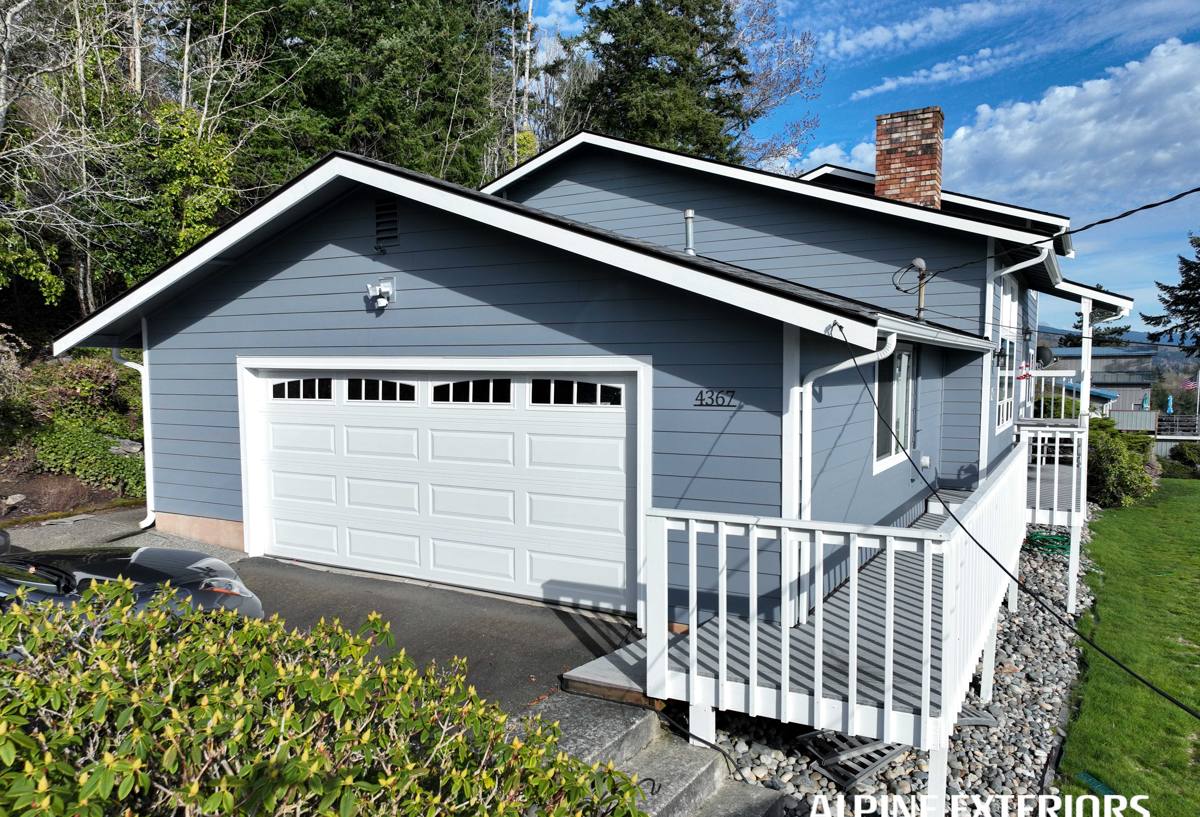
What Laurel's Weather Actually Does to a Deck
Salt Air and Fastener Corrosion
Proximity to the water means a steady low-level exposure to salt in the air, even on properties that aren't right on the shoreline. Salt air is hard on anything metal — fasteners, brackets, joist hangers, railing hardware. Standard galvanized fasteners can start showing corrosion within a few years in this kind of exposure, and once a fastener starts to rust, it weakens the connection it's holding and can streak the decking around it. The decking surface itself matters less here than the hardware underneath it, which is one of the first things we check when we quote a job in Laurel.
Driving Rain and Moisture Intrusion
Rain that comes in at an angle finds its way into gaps that vertical rain never would — under railing posts, behind ledger boards, into end-grain cuts that weren't sealed. Composite boards themselves don't absorb water the way wood does, but the framing underneath, the flashing at the house connection, and any exposed cut ends are all still vulnerable. A deck can have a flawless composite surface and still be rotting from the substructure up if the water management underneath wasn't done right.
Moss Season
A long, damp moss season is just part of living in this part of Whatcom County. Moss and algae need moisture, shade, and organic debris to establish, and a deck with poor drainage, tight board spacing, or heavy tree cover gives them all three. Once moss gets a foothold on a deck surface, it holds moisture against the boards and makes the surface slick and, frankly, a fall hazard on wet mornings — which in Laurel is most mornings for half the year.
Why Composite Makes Sense for This Environment
Composite decking doesn't rot, splinter, or need annual staining, which already puts it ahead of wood in a climate this wet. Modern capped composite boards have a shell that resists moisture absorption and staining, so they don't swell, cup, or hold water the way uncapped boards or bare wood do. That resistance matters directly for moss control too — a denser, capped surface gives moss and algae less to grip onto than a porous wood surface, and it cleans off easier when it does show up.
That said, composite isn't a material you can install the same way everywhere and expect the same result. The manufacturers' installation specs — gapping, fastening pattern, ventilation clearance — exist for a reason, and in a high-moisture climate like Laurel's, skipping or fudging them is where problems start. We follow those specs closely, not loosely, because the margin for error is smaller here than in a drier climate.
What a Correct Composite Deck Installation Involves
Substructure and Joist Spacing
Composite boards are heavier and behave differently under load than wood, and most manufacturers require tighter joist spacing than a standard wood deck would use, especially for boards run at an angle. Using wood-deck joist spacing under composite boards is a common shortcut that leads to bounce and, over time, board deflection between joists.
Ventilation and Ground Clearance
Trapped moisture under a deck is a bigger problem in a climate that stays damp most of the year. Adequate clearance between the ground (or a lower roof) and the underside of the framing lets air move through and keeps humidity from sitting against the joists and hangers. Low-clearance decks — common on daylight basements and sloped Laurel lots — need extra attention here, sometimes with added venting or a different framing approach.
Fastening and Board Layout
Hidden fastener systems give a clean surface with no exposed screw heads for water to pool around, and they're our standard approach for composite decking in this area. Board gapping has to account for both thermal expansion and drainage — too tight, and water and debris sit between boards where moss can start; too loose, and the deck feels and looks unfinished.
Flashing at the House Connection
The ledger board — where the deck attaches to the house — is the single most common source of hidden water damage on any deck, composite or wood. Proper flashing here, integrated correctly with the house's existing weather barrier, is non-negotiable in a driving-rain climate. This is also the connection point most likely to involve corrosion-resistant, stainless or coated hardware given the salt air exposure.
Composite vs. Other Decking Materials for a Laurel Property
| Material | Moisture Resistance | Moss/Algae Resistance | Maintenance | Typical Lifespan |
|---|---|---|---|---|
| Capped Composite | Strong — resists absorption and swelling | Good — dense surface, easier to clean | Occasional wash-down | 25–30+ years |
| Pressure-Treated Wood | Moderate — needs sealing | Poor without regular treatment | Annual cleaning/staining | 10–15 years |
| Cedar | Moderate — naturally decay-resistant but still absorbs moisture | Fair, degrades faster in shade | Regular sealing | 15–20 years |
| PVC Decking | Very strong — no wood content | Good | Low | 25–30+ years |
PVC decking performs similarly to composite in moisture resistance, but it has a different feel underfoot and a different price point, and some homeowners find the appearance less natural. We'll talk through the honest trade-offs of each option for your specific deck rather than pushing one product line — the right call depends on your budget, how much shade the deck gets, and how the deck will be used.
Our Process for a Laurel Composite Deck
- On-site assessment of the deck location, sun/shade exposure, drainage, and existing structure (for replacements or additions)
- Framing plan sized to the composite manufacturer's spec, not generic wood-deck spacing
- Ledger flashing and house-connection detailing done to current code and manufacturer requirements
- Corrosion-resistant fastener and hardware selection appropriate for coastal/marine air exposure
- Hidden-fastener board installation with correct gapping for drainage and expansion
- Railing, stair, and edge detailing
- Final walkthrough covering how the deck drains, how to clean it, and what to watch for
What Affects the Cost of a Composite Deck in Laurel
| Factor | Why It Matters |
|---|---|
| Deck size and shape | More cuts, angles, and edge detail add labor time |
| Substructure condition | Replacing an existing deck may require new or repaired framing before decking goes down |
| Height and ground clearance | Low-clearance or elevated decks need more structural and ventilation planning |
| Railing style | Composite, metal, or cable railing systems vary widely in material cost |
| Board tier | Composite lines range from base capped boards to premium multi-tone finishes |
Composite decking generally costs more upfront than pressure-treated wood and less than most PVC systems, but the honest way to compare is over the deck's full life — factoring out the staining, sealing, and board replacement that wood typically needs. We'll give you real numbers for your project rather than a broad estimate that doesn't reflect your deck's actual conditions.
Keeping a Composite Deck Clean Through Moss Season
Composite resists moss better than wood, but "resists" isn't "immune." A little seasonal attention keeps a Laurel deck looking right through the wet months:
- Sweep leaves and needles off the deck regularly in fall — trapped organic debris is what gives moss a place to start
- Rinse the surface with a garden hose every few weeks during the wettest months
- Use a soft-bristle broom and mild soap-and-water solution for any early moss or algae film — avoid pressure washers set too high, which can damage the board's cap surface
- Keep gutters and downspouts clear so runoff isn't dumping extra water directly onto or near the deck
- Trim back overhanging branches where possible to cut down on shade and debris
- Check railing posts and fastener points once a year for any sign of hardware corrosion
Why Hire a Crew That Already Works in Laurel
A lot of what separates a composite deck that holds up in this climate from one that doesn't isn't the brand of board — it's the installation decisions made before a single board goes down: joist spacing, ventilation, flashing, and fastener choice. Those decisions look different for a deck in a dry, sheltered climate than they do for a property dealing with Whatcom County's salt air and moss season year after year. A crew that already works in Laurel and the surrounding Custer area has already seen how decks in this specific setting age, what fails first, and what holds up — and builds accordingly from the start instead of learning it on your project.
If you're planning a new composite deck or replacing an aging wood deck in Laurel, we're happy to take a look and talk through what your property actually needs. Reach out for a free, no-pressure estimate using the form below.