 Custer
 Windows Take a Different Beating This Close to the Water
California Creek sits close enough to Drayton Harbor and the open water of the Strait of Georgia that homes here deal with a combination most inland Whatcom County properties don't: salt-laden air, wind-driven rain that hits window walls sideways instead of straight down, and a moss season that runs longer than almost anywhere else in the state. None of that is a reason to panic about your windows, but it is a reason to treat window selection and installation here differently than a standard replacement job on a sheltered lot ten miles inland.
We install and replace windows throughout the Custer area, and California Creek homes consistently show the same failure patterns: hardware that corrodes years ahead of schedule, sills that stay damp long after a storm has passed, and frames that trap moss and organic debris in tracks and weep systems. A window that's correctly built and correctly installed for this exact environment will outlast one installed the same way you'd do it in a dry, sheltered subdivision — sometimes by a decade or more.
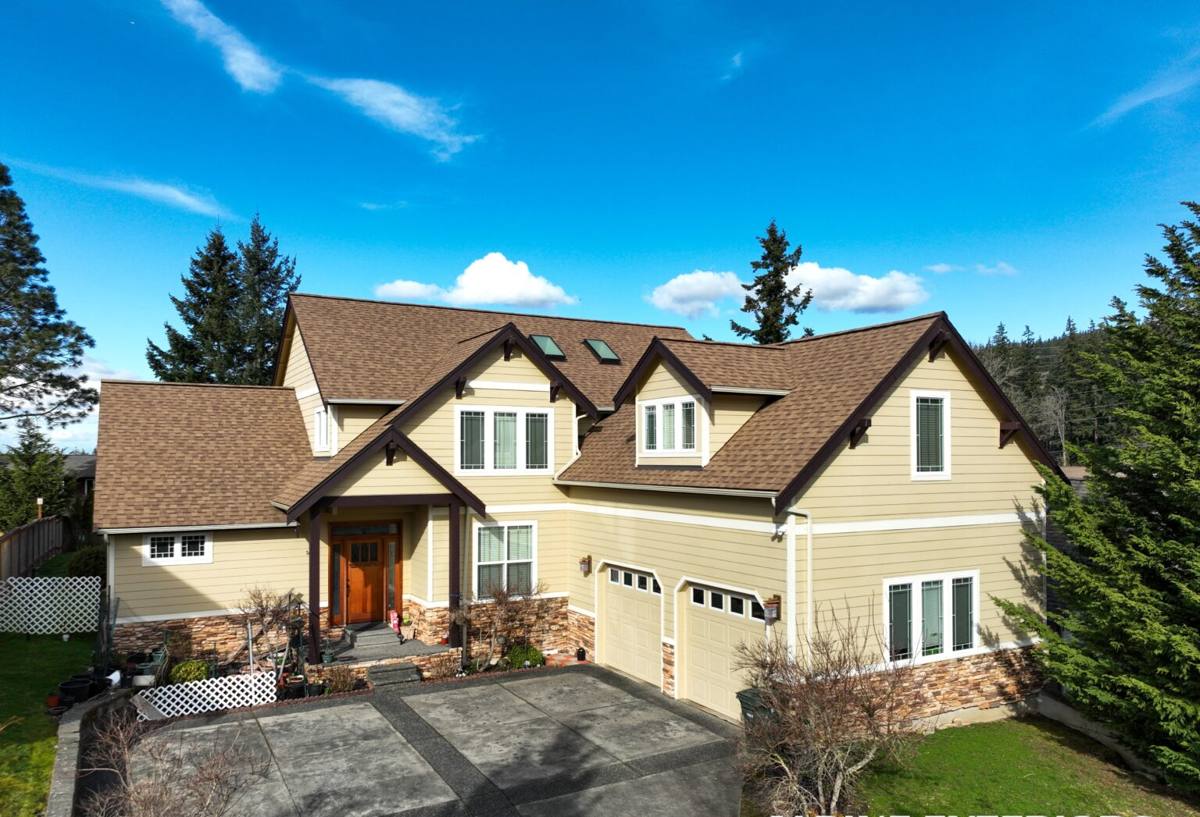
What Salt Air, Rain, and Moss Actually Do to a Window
Salt air
Airborne salt doesn't just sit on glass and wash off in the next rain. It settles into hardware — hinges, cranks, locks, and screws — and accelerates corrosion on anything that isn't rated for a marine-adjacent environment. Aluminum components are the most vulnerable; even coated aluminum hardware can start pitting within a few years this close to the water. Vinyl and fiberglass frames themselves resist salt corrosion well, but the metal fasteners and moving parts inside them often don't, which is why hardware spec matters as much as frame material.
Driving rain
Whatcom County's weather off the Strait pushes rain sideways during winter storms, which means water hits the upper third of a window and the head flashing far more aggressively than it would in a typical inland install. A window that relies on caulk alone to keep water out, instead of proper flashing and a sloped sill pan, will eventually leak — it's a matter of when, not if. We see this most often on older homes where windows were installed with builder-grade flashing details that were adequate for a drier site but were never built for wind-driven, near-constant winter rain.
Moss and organic buildup
The long damp season here means moss, algae, and organic debris build up in window tracks, weep holes, and sill channels faster than they do in drier parts of the county. When weep holes clog, water that's supposed to drain back outside instead pools inside the frame, which is one of the most common causes of hidden wood rot and frame failure we find on older installs in this area.
Signs Your Current Windows Are Losing the Fight
- Fogging or moisture between panes of a double-pane window (seal failure)
- Soft, spongy, or discolored wood on the sill or lower frame, especially on north- or west-facing windows
- Hardware — cranks, locks, hinges — that's stiff, corroded, or leaves rust streaks on the sill
- Visible moss or dark green growth building up in the tracks or corners of the frame
- Drafts you can feel even when the window is fully latched
- Paint or finish that's bubbling or peeling near the window opening, on the interior or exterior
- Water staining on the wall or trim below a window after a hard rain
Any one of these on its own isn't an emergency. Several at once, or wood damage that's spread past the immediate sill, usually means it's time to talk about replacement rather than another round of caulk and paint.
What a Correct Custom Window Installation Involves Here
"Custom" doesn't just mean the window is built to an odd-sized opening, though that's often part of it, especially on older California Creek homes that predate today's standard sizing. It means the whole assembly — frame, flashing, sill, and weather barrier — is built and installed as a system for this specific site.
The details that matter most in this climate
- Sloped sill pan flashing so any water that does get past the glazing drains back out instead of sitting against the sill
- Head flashing that integrates with the house wrap or weather-resistive barrier, not just caulk over the top of the trim
- Corrosion-resistant hardware — stainless steel or coated hardware rated for coastal exposure rather than standard-grade fasteners
- Clear weep paths designed and positioned so they're easy for the homeowner to check and clear, since debris buildup is a known issue this close to the water
- Correct glazing spec — Low-E coatings and appropriate gas fill for our marine-influenced climate, balancing heat retention with condensation control on cold, damp days
Skipping any one of these doesn't necessarily show up as a problem on day one. It shows up two, five, or eight years later as a soft sill, a fogged pane, or a stuck sash — usually right around the time a builder-grade warranty has expired.
Frame Material: What Holds Up Here vs. What Struggles
| Frame Material | Salt Air Performance | Moisture Handling | Maintenance |
|---|---|---|---|
| Vinyl | Excellent — won't corrode or oxidize | Good, if weep paths are kept clear | Low; occasional track cleaning |
| Fiberglass | Excellent — very stable in coastal air | Very good; low expansion/contraction | Low; more durable finish long-term |
| Wood-clad | Good on the clad exterior; interior wood needs protection | Requires diligent sealing and finish upkeep | Moderate to high; refinishing over time |
| Bare aluminum | Poor — prone to pitting and corrosion near the water | Conducts cold and can condensate heavily | High; we generally steer clients away from this in coastal spots |
We're not going to tell you a bare aluminum frame is a disaster waiting to happen for every homeowner, but for a property this close to salt water, we don't recommend it as a primary choice — the corrosion and condensation issues are a maintenance burden most people don't want to sign up for. Vinyl and fiberglass are our default recommendations for California Creek homes; wood-clad is a good option for homeowners who want a wood interior look and are committed to keeping up the finish.
What Affects the Cost of a Custom Window Job
| Factor | Why It Matters Here |
|---|---|
| Opening size and shape | Older, non-standard openings require true custom sizing rather than stock replacement units |
| Flashing and sill complexity | Proper sloped-sill and integrated flashing details take more labor than a basic caulk-and-trim install |
| Frame material | Fiberglass typically costs more upfront than vinyl but needs less long-term maintenance in salt air |
| Number of window openings | Per-window cost usually drops as the job scales up |
| Existing damage | Rotted framing or sheathing found during removal adds repair scope before the new window goes in |
We won't quote a job sight unseen, and we're not going to throw out a number here that doesn't reflect your actual opening. What we can say honestly: budgeting for proper flashing and corrosion-resistant hardware upfront is almost always cheaper than repairing water damage from a window that was installed without it.
How We Handle a California Creek Window Job
- On-site assessment — we look at each opening, check for existing water or rot damage, and note site-specific exposure (which walls take the worst of the wind-driven rain, proximity to salt water, shade and moss patterns)
- Measurement and material selection — we measure for a true custom fit and walk you through frame material and glazing options based on that specific opening's exposure
- Removal and inspection — once the old window is out, we check the framing and sheathing underneath before anything new goes in, since hidden moisture damage is common on older coastal-adjacent homes
- Flashing and sill pan installation — this is the step that gets rushed on cut-rate jobs and is the one we won't shortcut
- Window installation and sealing — set, shimmed, and sealed to manufacturer spec, integrated with your home's weather barrier
- Final check and cleanup — operation check on every unit, site cleanup, and a walkthrough so you know how to maintain the tracks and weep paths going forward
Why Hire a Crew That Already Works This Area
A contractor who mostly works drier, more sheltered parts of Whatcom County isn't wrong about windows in general — they just haven't spent years watching what actually fails on California Creek homes specifically. We have. We know which walls on a property this close to the water take the worst of the winter rain, why weep holes here clog faster than they do a few miles inland, and why hardware spec is worth the upfront conversation instead of an afterthought. That's not a sales pitch — it's the difference between a window that's still performing in fifteen years and one that's showing rot at the sill in five.
We also know the practical side: permitting expectations in unincorporated Whatcom County, realistic install windows around our wet season, and how to sequence a job so openings aren't sitting exposed to weather any longer than necessary.
Living With Custom Windows in a Salt-Air, Moss-Prone Climate
- Clear window tracks and weep holes of moss and debris a couple of times a year, especially heading into and out of the wet season
- Rinse exterior frames periodically to reduce salt residue buildup, particularly on the sides of the house facing the water
- Check hardware operation each season — stiffness or grinding is often the first sign of corrosion starting
- Keep an eye on caulking and sealant lines around trim; UV and salt exposure break these down faster here than inland
- Address any soft or discolored sill wood immediately rather than waiting — moisture problems compound quickly in this climate
Good materials and a correct install do most of the work, but a few minutes of seasonal upkeep goes a long way toward getting the full lifespan out of a custom window on a property exposed to this much salt air and rain.
Get a Straight Answer About Your Windows
If you're dealing with fogged panes, corroded hardware, a soft sill, or you're just planning ahead for a home this close to the water, we're happy to come take a look. We'll give you an honest read on what's actually going on, what a correct fix looks like for your specific exposure, and a free, no-pressure estimate — no upsell, just what your California Creek home actually needs. Fill out the form below to get started.