 Custer
 Decks in Point Roberts Take a Different Kind of Beating
Point Roberts sits out on its own peninsula, exposed to Boundary Bay and the Strait of Georgia on three sides. That location is part of why people love it — and it's exactly why decks out there wear out faster than decks just a few miles inland in Custer or elsewhere in Whatcom County. Salt-laden air corrodes fasteners and hardware, wind-driven rain gets pushed sideways into joints and ledger boards that were never meant to see standing water, and the long gray stretch of fall through spring keeps every horizontal surface damp enough for moss and algae to move in and stay.
None of that means a deck in Point Roberts is doomed — it means the deck has to be built and maintained with that exposure in mind. When we get called out for deck repair in this area, the damage almost always traces back to one of three things: fasteners and connectors that were never rated for coastal exposure, moisture trapped somewhere it couldn't dry out, or surface neglect that let moss and rot get a foothold before anyone noticed.
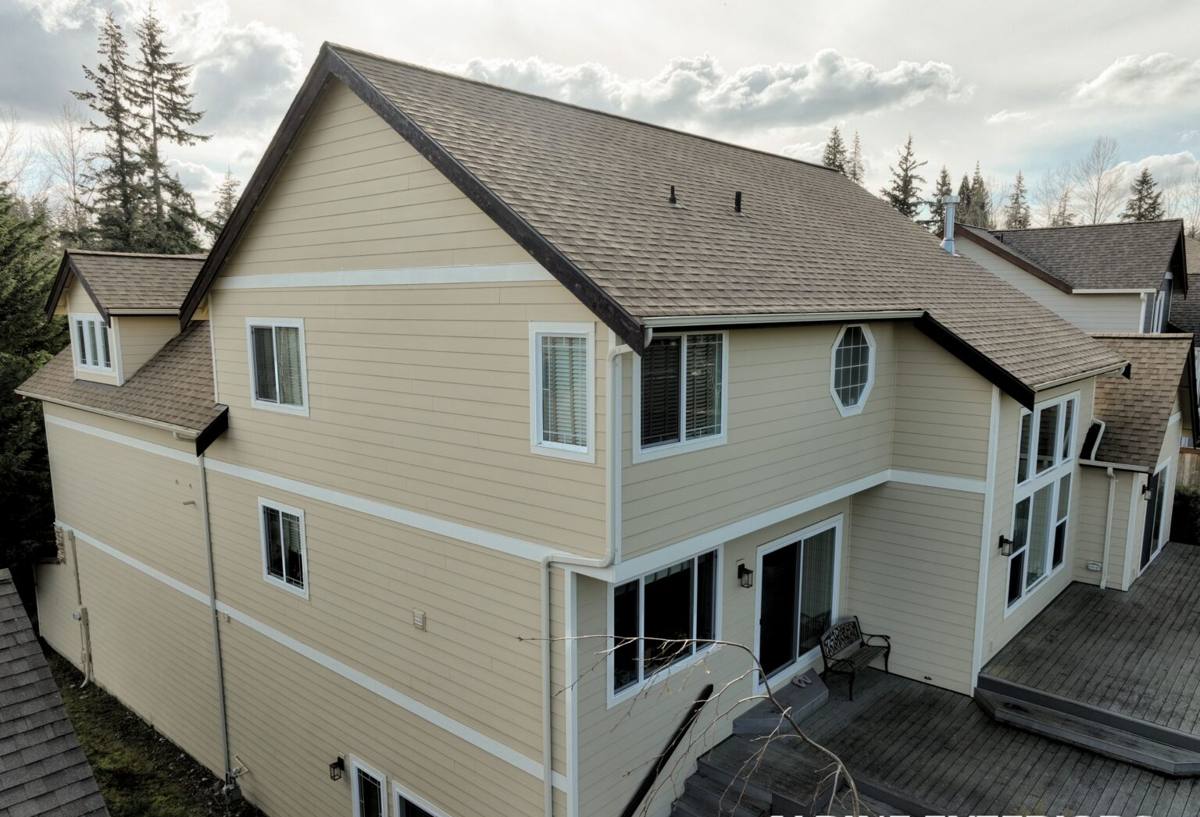
What Salt Air, Driving Rain, and Moss Actually Do to a Deck
Salt Air and Corrosion
Standard galvanized fasteners and brackets hold up fine in a lot of climates, but salt air accelerates corrosion in ways that aren't always visible from the top of a deck board. A nail or screw can look fine on the surface while it's rusting away underneath, in the wood, where you can't see it. Over a few seasons that weakens the connection between boards and joists, or between the deck and the ledger board attaching it to the house — which is one of the most important structural connections on the whole structure.
Driving Rain and Trapped Moisture
Rain that falls straight down is a lot easier for a deck to shed than rain that's being pushed sideways by wind off the water. Driving rain finds its way into board gaps, under flashing, and into any spot where two pieces of wood meet without a clear path to dry. Ledger boards, stair stringers, and the framing under built-in benches or planters are common trouble spots because they hold moisture longer than open, exposed decking.
Moss, Algae, and the Long Wet Season
Whatcom County's wet season stretches long, and a north- or shade-facing deck in Point Roberts can stay damp for weeks at a time. Moss and algae aren't just a slip hazard — they hold moisture against the wood surface, which speeds up rot and makes the wood grain more prone to splintering. A deck that gets moss every year without ever being cleaned off is aging faster than it needs to.
Signs Your Deck Needs Attention, Not Just a Wash
- Boards that feel spongy, springy, or soft underfoot, especially near the house or stairs
- Rust streaks running down from screw heads or bracket edges
- Gaps opening up between the ledger board and the house siding or trim
- Railing posts that wiggle or feel less solid than they used to
- Persistent green or black staining that comes right back after cleaning
- Stair stringers that flex or creak more than they did a year or two ago
- Fasteners that are visibly corroded, popped up, or missing entirely
- Standing water that doesn't drain within an hour or two after rain stops
Any one of these on its own might be minor. A few of them together usually mean it's time for a proper inspection rather than another round of pressure washing.
What a Correct Deck Repair Actually Involves
A repair that's done right starts below the surface, not with the boards you can see. We look at the structural bones first — ledger board attachment, joist condition, post bases, and any spot where wood sits in contact with concrete or soil without a moisture break. Coastal exposure means we pay particular attention to hardware: any fastener or connector we replace goes back in rated for the environment it's actually going to live in, not just whatever matched the original build.
Typical Repair Scope
- Inspect framing, ledger attachment, and posts for rot or corrosion before touching the decking
- Replace or sister any joists and framing members that have lost structural integrity
- Remove and replace corroded fasteners with hardware appropriate for salt-air exposure
- Address drainage — regrading board spacing, adding flashing, or correcting slope where water is pooling
- Replace damaged or moss-compromised decking boards, matching spacing and fastening pattern
- Reset or reinforce loose railing posts and stair stringers
- Treat or seal repaired areas so new wood weathers evenly with the rest of the deck
We don't patch over a structural problem with new boards on top. If the framing underneath is compromised, fixing what's visible without addressing what's holding it up just means the same repair again in a year or two.
Repair or Rebuild? Honest Cost Factors
Not every deck problem calls for a full rebuild, and not every deck can be saved with spot repairs. The right call depends on how much of the structure is still sound versus how much has been compromised by long-term moisture or corrosion.
| Factor | Leans Toward Repair | Leans Toward Rebuild |
|---|---|---|
| Framing condition | Joists and ledger are solid, damage is localized | Rot or corrosion is widespread through the structure |
| Age of the deck | Built within the last 10-15 years with decent materials | Original build is old, hardware and lumber grade unknown |
| Extent of moss/rot damage | A few boards or one section affected | Damage spread across most of the deck surface |
| Fastener condition | Isolated corrosion, easy to access and replace | Corrosion throughout, hardware failing in multiple spots |
| Ledger board attachment | Secure, properly flashed | Compromised, gapping, or improperly flashed originally |
We'll give you a straight answer on which side of that line your deck falls on, and why — not just an estimate that assumes the biggest job.
Materials That Hold Up in This Environment
For repairs and rebuilds alike, we lean toward materials and hardware chosen for what actually survives coastal exposure over time, not just what's cheapest to install. That means stainless or coated fasteners rated for the environment, framing lumber treated appropriately for ground or moisture contact where it matters, and decking board selection that accounts for how much sun versus shade a given deck actually gets. A deck tucked under trees on the shaded side of a house needs different maintenance expectations than one that gets full sun most of the day — we'll talk through that with you rather than treat every deck the same.
We're also honest about trade-offs. Some decking materials look great on day one but require more frequent sealing to keep performing in wet, salty conditions, and some hardware that's cheaper up front corrodes faster and ends up costing more in repeat repairs. We'd rather explain the maintenance reality up front than have you find out the hard way in three years.
Our Process for Point Roberts Deck Repairs
- On-site inspection. We walk the full deck — framing, connections, decking, railings, and stairs — and tell you honestly what we find.
- Written scope and estimate. You get a clear breakdown of what needs repair, what's optional, and what it costs, before any work starts.
- Repair work. Structural issues get addressed first, then decking, railings, and stairs. We work efficiently since access to Point Roberts means planning trips carefully.
- Final walkthrough. We check the work with you before we consider the job done.
Because Point Roberts is a border-crossing trip for most contractors, we plan our visits there deliberately rather than treating it as an afterthought stop. A crew that's worked the area before knows to budget for that logistics factor and to bring what's needed the first time, instead of discovering a missing part mid-job.
Why Local Experience Matters for This Job
Deck repair looks similar on paper anywhere in Whatcom County, but a contractor who hasn't worked Point Roberts specifically can underestimate how much the coastal exposure changes the math — which fasteners actually hold up, how fast moss comes back on a shaded section, where driving rain tends to find its way in on a peninsula lot. We've seen how decks in this specific environment age, which means fewer surprises once we open things up and a repair plan that's built for how this deck will actually be used and weathered, not a generic template.
If your deck in Point Roberts has soft boards, corroded hardware, persistent moss, or just feels less solid than it used to, we're happy to take a look and give you a straightforward assessment. Reach out for a free, no-pressure estimate using the form below.