 Custer
 New-Construction Windows in Laurel: Built for This Corner of Whatcom County
Laurel sits in that stretch of Whatcom County between Custer and Ferndale where the weather comes off the Salish Sea and doesn't let up for months at a time. If you're framing a new home or an addition out here, the windows are one of the few components that have to get everything right on the first try — flashing, fastening, and material choice all have to hold up to salt-laden air, sideways rain, and a moss season that can run from October into May. We install new-construction windows on builds in and around Laurel as part of our regular siding and exterior work, and we treat the window opening as part of the whole water-management system, not a separate trade to work around.
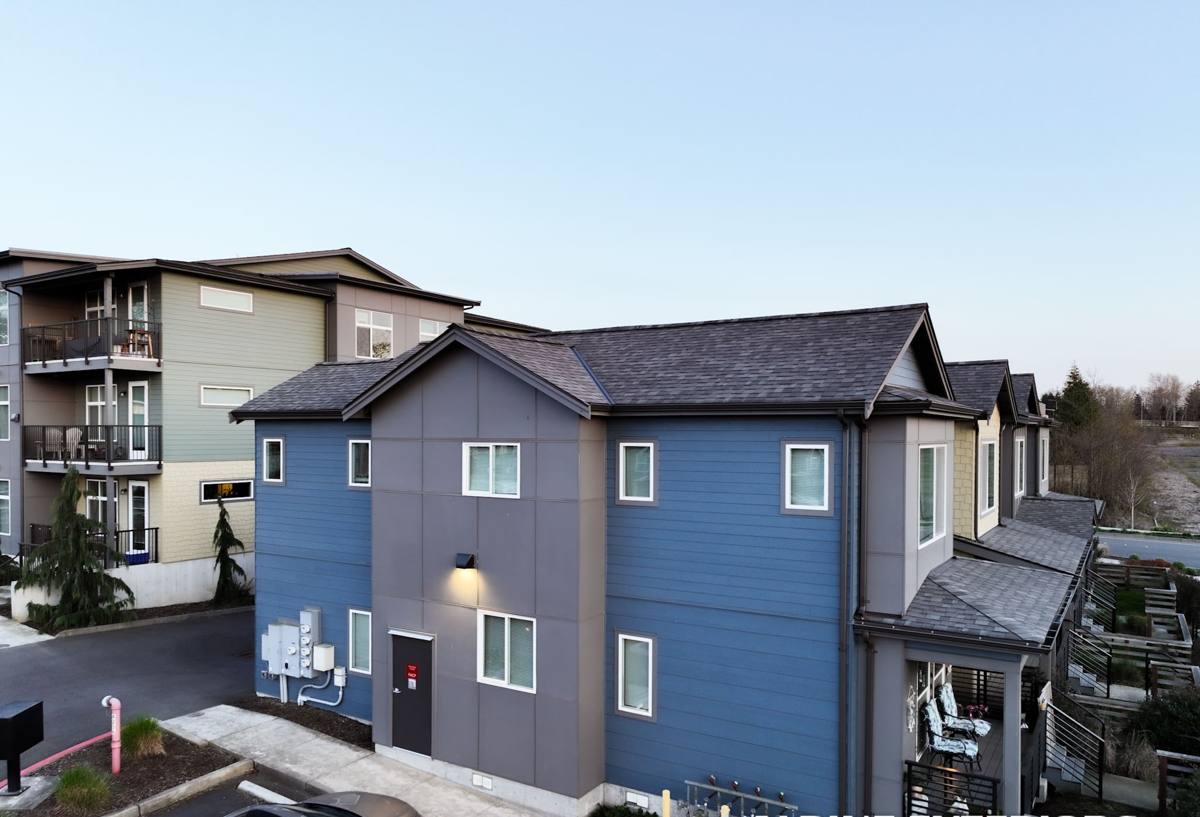
What Laurel's Climate Actually Demands From a Window Install
Salt Air and Hardware Corrosion
Laurel is close enough to tidal water and open exposure that salt-laden air reaches window frames, screens, and hardware well before it shows up as a visible problem. Cheap fasteners, bare aluminum trim, and low-grade cladding corrode faster here than they would twenty miles inland. That's not a defect in the house — it's just what this stretch of Whatcom County does to unprotected metal over years of exposure.
Driving Rain
Winter storms here don't just drop rain straight down — wind pushes it sideways and up under trim, sills, and any flashing lap installed backwards or short. A new-construction window is only as good as the flashing sequence behind it. Get the sill pan, jamb flashing, or head flashing lap order wrong and you won't see the consequence for a year or two, by which time it's sheathing rot instead of a five-minute fix.
A Long Moss and Wet-Shade Season
Between the tree cover and the persistent damp, north- and west-facing walls in Laurel stay wet longer than they would in a drier climate. That prolonged moisture exposure is hard on any window opening that doesn't drain properly, and it's exactly the kind of condition that turns a minor sealant gap into sustained water intrusion behind the cladding.
New-Construction Windows vs. Replacement Windows — Why the Distinction Matters
New-construction windows have a nailing flange built into the frame and are installed before the siding goes on, integrated directly into the wall's weather-resistive barrier (WRB). Replacement or "pocket" windows go into an existing frame after the fact and don't have that flange. On a new build or addition, using a true new-construction window and installing it into the WRB correctly is what gives you a continuous drainage plane from roof to foundation. Skipping that step — or using the wrong window type because it was on hand — creates a weak point that no amount of caulk fixes long-term.
What a Correct New-Construction Window Install Involves
On every opening, regardless of window brand, the sequence matters more than the product. Here's what we check on every unit before it's called done:
- Sill pan flashing installed and sloped to drain outward, not just a bead of sealant
- WRB integrated with flashing in proper shingle-lap order (bottom to top) so water sheds outward at every layer
- Window set plumb, level, and square before fastening — a racked frame stresses seals and hardware for the life of the house
- Shims placed only where the manufacturer's install instructions call for them, not wherever is convenient
- Fasteners rated for exterior/coastal exposure, driven through the flange into solid framing
- Head flashing lapped over the WRB above the window, never tucked behind it
- Interior and exterior sealant joints backed properly — sealant is a backup layer, not the primary water barrier
- Rough opening dimensions verified against the actual window unit before install, not just the plan set
Choosing Materials and Glass for a Laurel Site
Frame material and glass package both affect how a window holds up here. There's no single "best" choice for every project — it depends on exposure, budget, and how the rest of the exterior is built.
| Frame Material | How It Handles This Climate | Trade-Off |
|---|---|---|
| Vinyl | Won't corrode from salt air; low maintenance | Can flex on very large units; color choice affects heat absorption |
| Fiberglass | Dimensionally stable, holds paint well, resists moisture-driven swelling | Higher upfront cost than vinyl |
| Wood-Clad | Good look, warm interior finish | Cladding seams and end grain need careful detailing to keep moisture out long-term; higher maintenance commitment |
| Bare Aluminum | Strong, slim sightlines | Prone to corrosion in salt air unless properly finished; poor thermal performance without thermal break |
For glass, we generally spec low-E coatings and argon fill on Laurel builds — the coating cuts heat loss during the long wet, low-sun stretch of the year, and it doesn't add meaningful cost at the new-construction stage since it's ordered with the unit. On west- and south-facing openings that get more direct exposure, a slightly different low-E coating can help manage solar heat gain in the warmer months without darkening the glass noticeably.
A Note on Product Selection
We stay selective about which window lines we install on coastal Whatcom County jobs. That's not a knock on any manufacturer — it's a maintenance and moisture-behavior call. Some products require tighter installation tolerances, more frequent cladding maintenance, or warranty paperwork that's a headache to invoke if something does go wrong five years down the road. We'd rather steer a homeowner toward a line we know installs cleanly and holds up here than push a product just because it's cheaper on the invoice.
How Window Installation Ties Into Your Siding
Because we do siding as our core trade, we install windows as part of one continuous water-management plan rather than as an isolated task. The WRB, the flashing at each window, and the siding drainage plane all have to work together — if the window flashing isn't integrated correctly with the housewrap before siding goes up, no amount of careful siding work afterward fixes it, because the problem is now buried behind the cladding. Coordinating window and siding install under one crew means there's no handoff gap where one trade assumes the other already handled the flashing detail.
Our Process on Laurel New-Construction Jobs
- Plan review: we check rough opening sizes, window schedule, and flashing details against the actual framing before ordering
- Coordination with the builder or GC: we time window install to the framing and WRB schedule so there's no exposed sheathing sitting in the rain longer than necessary
- Flashing and sill pan install: done before the window ever goes in the opening
- Window set and fasten: plumb, level, square, and fastened per manufacturer spec
- Head flashing and WRB integration: lapped correctly so the drainage plane stays continuous
- Sealant and trim: interior and exterior finish work, with sealant as backup, not primary defense
- Walkthrough: we go over what was done and what to expect from the windows once siding and trim are complete
Cost Factors on a New-Construction Window Job
Every project is different, but these are the variables that actually move the number on a Laurel-area new build:
| Factor | Why It Matters |
|---|---|
| Number and size of openings | More openings and larger units mean more flashing detail work and material |
| Frame material chosen | Vinyl, fiberglass, and wood-clad carry different unit costs |
| Glass package | Low-E coatings, argon fill, and tempered/safety glass (required in some locations) add cost |
| Wall height and access | Second-story or hard-to-access openings take longer to flash and set correctly |
| Timing with other trades | Installing on schedule with framing avoids exposed sheathing sitting through a rain event |
Why a Crew That Already Works Laurel and Custer Matters
A window install that looks fine on a dry, mild afternoon can still fail once it hits a real Whatcom County winter. Knowing how hard the wind-driven rain hits a given orientation out here, how long moss-season dampness lingers on shaded walls, and how salt air treats unprotected hardware isn't something you get from a spec sheet — it comes from doing this work in this area, season after season. We're not learning the local climate on your project; we already account for it before the first window ever goes in the opening.
If you're planning a new build or addition in Laurel or the greater Custer area, we're happy to walk the plans with you and give you a straight, no-pressure estimate on the window package — just fill out the form below to get started.