 Custer
 Decks Built for Sumas Weather, Not Just Sumas Yards
A deck in Sumas has to earn its keep. Between long stretches of driving rain off and on through fall and winter, months where moss and algae get a foothold on anything that stays damp, and the salt-tinged marine air that moves through Whatcom County, an outdoor structure here works harder than the same deck would in a drier inland climate. We build and replace decks for homeowners in the Sumas area with that reality in mind — not as an afterthought, but as the starting point for every material choice, every fastener, and every detail of the framing.
This page covers what we've learned building decks specifically for this area: what the climate actually does to a deck over time, what a correctly built one looks like underneath the surface, and how our process works from first estimate to final walkthrough.
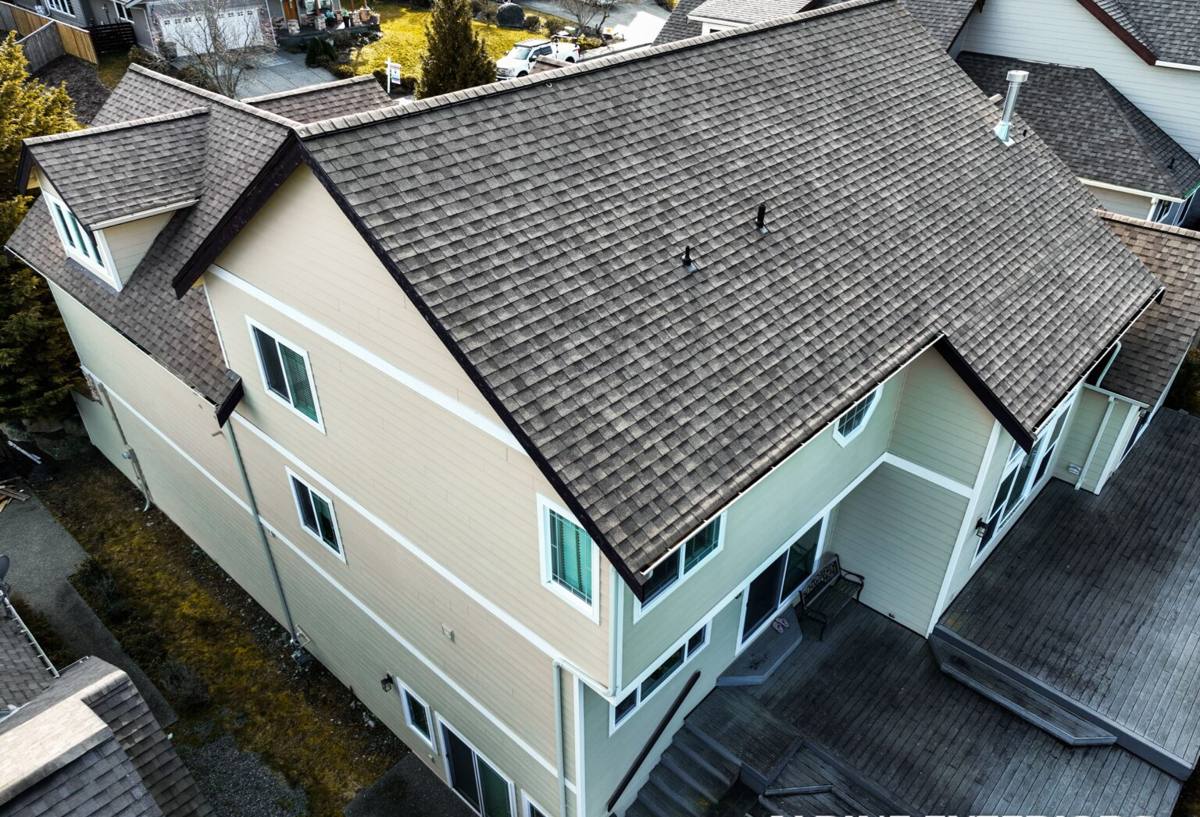
What Sumas Homes Need From a Deck
Most deck failures we get called out to inspect aren't dramatic collapses — they're slow problems that started small and got ignored. In this part of Washington, three things drive almost all of them:
- Sustained moisture. Driving rain doesn't just fall straight down — wind pushes it sideways into ledger boards, under railings, and into any gap where two pieces of material meet. Wood that can't shed water fast enough starts to hold it.
- Moss and algae growth. The long wet season here means shaded or north-facing deck sections can stay damp for weeks at a time. Moss isn't just unsightly — it holds moisture against the decking surface and turns boards slick and dangerous underfoot.
- Corrosion-prone hardware. Salt air moving inland off the Sound accelerates rust on fasteners, brackets, and connectors that aren't rated for it. A deck can look fine on top while its structural hardware is quietly failing underneath.
None of these are reasons to avoid building a deck in Sumas — they're just the design problems a deck here needs to solve. That's a matter of material selection and build detail, not luck.
Sun Exposure Varies More Than People Expect
Even within one property, a deck can have a sun-baked section and a shaded, damp corner that never fully dries out. We plan decking layout, drainage, and even railing style around those microclimates on your specific lot rather than treating the whole deck as one uniform surface.
Choosing the Right Decking Material for This Climate
There's no single "best" decking material — there's a best fit for your budget, your maintenance appetite, and how much sun or shade your deck gets. Here's how the common options actually perform in a wet, moss-prone climate like ours:
| Material | Moisture & Moss Behavior | Maintenance | Typical Lifespan |
|---|---|---|---|
| Pressure-treated wood | Absorbs water readily; needs sealing to resist moss and swelling | Annual cleaning and re-staining/sealing | 10–15 years with upkeep |
| Cedar | Naturally moisture- and insect-resistant, but still needs sealing here | Regular cleaning, periodic re-sealing | 15–20 years with upkeep |
| Composite decking | Doesn't absorb water or rot; can still grow surface moss/algae if never cleaned | Occasional washing, no sealing or staining | 25–30 years |
| PVC/capped polymer decking | Fully sealed surface, sheds water well, resists staining | Lowest — soap and water as needed | 25–30+ years |
We generally steer homeowners away from bare pressure-treated wood as a long-term surface material in shaded, moss-prone yards — not because it's a bad product, but because it demands a maintenance schedule most people don't keep up with, and the moisture-cycling that comes from skipped sealing is what leads to cupping, splitting, and eventual rot. Composite and PVC decking cost more up front but remove most of that maintenance burden, which matters in a climate that doesn't give a deck many dry weeks to catch up on care.
What a Correctly Built Deck Involves
The decking surface is the part homeowners see, but most deck problems in this climate start below it. A deck built correctly for Whatcom County weather includes:
- Proper ledger board flashing where the deck attaches to the house — this is the single most common source of hidden rot we find on older decks, since a poorly flashed ledger lets water track directly into the house rim joist.
- Joist tape or butyl flashing on top of every framing member, so fasteners don't create a path for water to sit and soak into the wood grain.
- Correctly sized and set footings below the frost line, sized for the deck's actual load, not just what's "usually done."
- Stainless or coated fasteners and structural hardware rated for exterior/coastal-influenced use, to resist the corrosion that plain galvanized hardware suffers over time in salt-influenced air.
- Deck board spacing and airflow that lets the structure dry out between rain events instead of trapping moisture underneath.
- Drainage planning so water sheds off the deck surface and away from the foundation, not pooling against the house.
None of this is visible once the deck is finished — which is exactly why it matters who builds it. A deck can look identical on the surface and have a completely different lifespan underneath, depending on whether these details were done right.
Our Process, Start to Finish
- On-site assessment. We walk your property, look at sun and shade patterns, drainage, and how the deck will tie into your home, and talk through how you actually plan to use the space.
- Design and material selection. We go over decking, railing, and structural options with honest trade-offs on cost, maintenance, and lifespan for your specific site conditions.
- Written estimate. A clear scope and price before any work starts — no surprise add-ons for things that should have been accounted for up front.
- Permitting. We handle the permit process for the build, since most deck projects in this area require one.
- Demolition or site prep. If we're replacing an existing deck, we remove it and inspect the ledger area and any framing that will be reused or tied into.
- Framing and structural work. Footings, posts, joists, ledger flashing — the part that determines how long the deck actually lasts.
- Decking, railing, and finish work. Surface materials, railings, stairs, and any trim or lighting details.
- Final walkthrough. We go over the finished deck with you, including what maintenance (if any) the material you chose will need going forward.
Problems We Commonly Find and Prevent
Deck repair and replacement calls in this area tend to fall into a short list of recurring issues:
- Rot at the ledger board from missing or failed flashing where the deck meets the house.
- Rusted or failing fasteners — especially joist hangers and structural screws that weren't rated for exterior or coastal-influenced exposure.
- Persistent moss growth on shaded boards that were never sealed or spaced properly for airflow.
- Soft or spongy framing underneath decking that still looks fine on top — usually found during a repair estimate, not something homeowners can spot themselves.
- Undersized or shallow footings on older decks that were never built to current frost-depth and load standards.
Catching these early is far cheaper than waiting for a full rebuild. If you're not sure whether your current deck has any of these issues, a straightforward inspection can usually tell you before you commit to a repair or replacement plan.
Cost Factors for a Sumas Deck Project
Every deck project is different, but the same handful of factors drive most of the price difference between jobs:
| Factor | Why It Affects Cost |
|---|---|
| Decking material | Pressure-treated wood costs least up front; composite and PVC cost more but need far less upkeep over time |
| Deck size and height | Larger decks and multi-level or elevated designs need more framing, footings, and often stairs or additional railing |
| Site access and grading | Sloped or hard-to-access yards can add time for footings and material staging |
| Railing and finish choices | Cable, glass, or composite railing systems cost more than standard wood or metal baluster railing |
| Demolition needs | Removing and disposing of an existing deck adds labor before the new build even starts |
| Permitting | Permit fees and any required engineering (for larger or elevated decks) are part of the total project cost |
We give homeowners real numbers based on their specific project during the estimate — we don't quote off a generic price-per-square-foot without seeing the site, because in this climate the framing and flashing details can change the cost as much as the decking material does.
Maintenance That Actually Protects Your Investment
Whatever material you choose, a little seasonal attention goes a long way in a climate this wet. A simple checklist we give homeowners:
- Sweep leaves and debris off the deck regularly, especially in shaded areas where moss takes hold fastest
- Wash the surface at least once or twice a year to remove algae and moss before it gets slick
- Check railings and stair connections annually for looseness
- For wood decks, inspect the sealant or stain each spring and reapply before the wet season sets in
- Keep gutters and downspouts near the deck clear so water isn't dumping directly onto or under it
- Look underneath the deck once a year for signs of moisture, soft wood, or rust at the hardware
Why Hire a Crew That Already Works in Sumas
Deck-building fundamentals are the same everywhere, but the details that make a deck last in this specific climate — flashing choices, fastener grade, spacing for airflow in shaded yards, footing depth for local frost conditions — come from building here repeatedly, not from a general contracting playbook written for a drier region. A crew that already works throughout Whatcom County has seen how decks in this area actually fail over time, and builds to prevent those specific problems from the start rather than discovering them during a repair call five years later.
If you're planning a new deck or looking to replace one that's showing its age, we're happy to come take a look and talk through what makes sense for your property. Reach out for a free, no-pressure estimate using the form below.