 Custer
 Windows Built for the Meridian Stretch of Whatcom County
Homes in and around Meridian sit in one of the tougher climate zones for exterior components on the Washington coast. You're close enough to Georgia Strait and Drayton Harbor to get salt-laden air pushing inland, far enough north to catch long stretches of driving rain off the Pacific systems, and shaded enough through the wet months that moss and algae get a real foothold on anything that stays damp. Windows take the brunt of all three. Frames corrode or swell, sealant fails at the joints, and moisture finds its way behind trim that was never flashed correctly to begin with.
This page is specifically about window replacement for Meridian-area homes — not a general overview of the service. If you're weighing whether it's time to replace, what a correct installation actually requires here, and why local experience matters more than it might in a drier climate, this is the rundown.
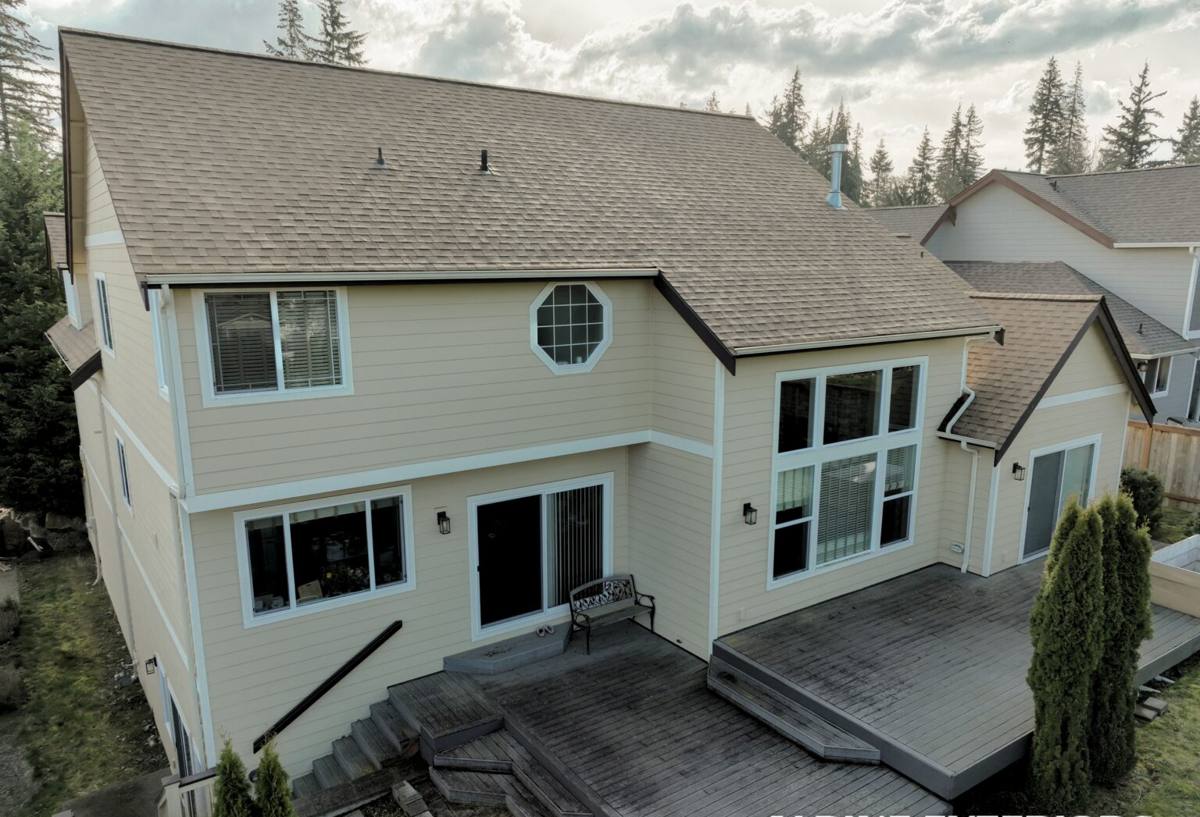
What the Local Climate Actually Does to a Window Over Time
Three conditions do most of the damage to windows in this part of Whatcom County, and they compound each other.
Salt Air
Airborne salt accelerates corrosion on aluminum and steel hardware — hinges, cranks, locking mechanisms — and it attacks lesser vinyl and metal cladding faster than it would further inland. Once corrosion starts on a hardware component, the window stops sealing tightly, and a loose seal lets in more moisture, which speeds up everything else.
Driving Rain
Wind-driven rain doesn't just fall on a window, it pushes sideways into it. That means flashing details, sill pans, and the seal between the window unit and the wall assembly matter far more here than they would in a calm, dry climate. A window that's watertight in a still rain can still leak in a wind-driven one if it wasn't installed with that in mind.
Moss and Algae Season
Long stretches of overcast, damp weather — especially on north- and west-facing walls that don't get much direct sun — let moss and algae colonize window sills, trim, and the caulk lines around frames. That growth holds moisture against wood and composite surfaces for months at a time, which is exactly the condition that causes rot and premature sealant failure.
Signs a Meridian-Area Home Needs Window Replacement, Not Just Repair
Not every window problem means a full replacement. But in this climate, certain symptoms usually mean the window has already let moisture into places you can't easily fix with caulk and a repaint.
- Fogging or a permanent haze between the panes of a double-pane window — the seal has failed and the gas fill is gone
- Soft or spongy wood at the sill or the bottom corners of the frame
- Visible gaps between the window frame and the siding or trim, especially after a windy rain
- Persistent moss or dark staining on the sill that comes back within weeks of cleaning
- Difficulty opening, closing, or locking the window — often a sign hardware has corroded
- Noticeable draft or cold spot around the frame during winter storms
- Paint or finish that keeps peeling on the interior side, which usually points to moisture intrusion from outside
If you're seeing one or two of these, a repair might buy time. If you're seeing several at once, or if the home has original windows from a build more than 20–25 years old, replacement is usually the more cost-effective call once you factor in energy loss and the risk of hidden rot behind the frame.
What a Correct Installation Involves Here
Window replacement is often sold as a product decision — which brand, which frame material. In this climate, the installation details matter just as much as the window itself. A well-made window installed without proper flashing and drainage will still leak. Here's what we consider non-negotiable on a Meridian-area job:
- Full removal and inspection of the opening. We don't install over rot or hidden damage — we remove the old unit, check the sheathing and framing underneath, and repair anything compromised before the new window goes in.
- Sill pan flashing. A sloped, sealed pan under the window directs any water that does get past the exterior seal back outside instead of into the wall cavity.
- Proper integration with the weather-resistive barrier. Flashing tape and house wrap need to be layered correctly — upper layers over lower ones — so water sheds down and out, not into the framing.
- Quality sealant at every joint, matched to the substrate and rated for exterior exposure, not a generic caulk that will crack and shrink within a couple of seasons.
- Correct shimming and fastening so the window operates smoothly and doesn't rack out of square, which is a common cause of premature seal failure.
- On-site assessment. We look at each opening, check for existing moisture or rot, and talk through material options based on your budget and the exposure of that particular wall.
- Written estimate. No pressure, no time-limited "sign today" pricing games — just a clear breakdown of what's included.
- Removal and inspection. Old windows come out, and we check the framing before anything new goes in.
- Flashing and installation. Sill pans, flashing integration, correct shimming and fastening, and quality sealant — the details covered above, done the same way every time.
- Final check and cleanup. We test operation, check the seal, and leave the site clean.
Skipping any one of these steps is how a brand-new window ends up with a moisture problem inside two or three years — and by then the damage is hidden behind trim and siding.
Choosing a Frame Material for This Climate
There's no single "best" window material — it depends on budget, maintenance appetite, and how exposed the wall is to wind-driven rain and salt air. Here's how the common options compare for homes in this area:
| Frame Material | Strengths Here | Trade-Offs Here |
|---|---|---|
| Vinyl | Budget-friendly, doesn't rot, low maintenance, decent performance against salt air | Can expand/contract with temperature swings; lower-end vinyl may discolor over time |
| Fiberglass | Very stable dimensionally, strong resistance to moisture and corrosion, holds paint well | Higher upfront cost than vinyl |
| Wood (clad exterior) | Warm interior look, good insulating properties | Exterior cladding must be well-sealed or moss, algae, and driving rain will find any gap; more maintenance-sensitive here than in a drier climate |
| Aluminum | Strong, slim sightlines | Poor insulator and more prone to corrosion from salt air unless well-treated; generally not our first recommendation this close to the water |
For most Meridian-area homes, vinyl or fiberglass strikes the right balance of upfront cost and long-term performance against salt exposure and moisture. Wood-clad windows can still work well on more sheltered walls, but we're honest about the added maintenance burden on exposures that take direct wind-driven rain — it's a trade-off, not a defect in the product, and it's worth discussing before you commit to a look you might not want to keep up with.
What Drives the Cost
Window replacement pricing varies by home, and we won't quote a number without seeing the actual openings, but these are the main factors that move the price up or down:
| Factor | Why It Matters |
|---|---|
| Number and size of openings | More windows and larger units mean more material and labor |
| Frame material | Vinyl is typically the most affordable; fiberglass and wood-clad run higher |
| Condition of the existing opening | Hidden rot or framing damage adds repair work before the new window goes in |
| Access and story height | Second-story or hard-to-reach windows take more time and equipment |
| Full-frame vs. insert replacement | Full-frame replaces down to the studs and is more thorough for older or damaged openings; insert replacement reuses the existing frame and costs less where that frame is sound |
We'll tell you honestly which approach an opening needs — we don't upsell full-frame replacement where a proper insert job will hold up fine, and we don't recommend an insert where the existing frame or sill has already taken on water damage.
Our Process for a Meridian-Area Window Job
The process is straightforward, but we don't rush the parts that determine whether the job lasts.
Why a Crew That Already Works This Area Matters
Window installation isn't a one-size-fits-all trade. A crew that mostly works drier inland regions may not think twice about flashing details that are optional there but essential here. Working regularly in Custer and the surrounding Whatcom County communities means we're used to designing for wind-driven rain, salt exposure, and a wet season that runs long — and we've seen what happens when those details get skipped, because we're often the ones called back to fix it.
That local pattern-recognition also means faster, more accurate estimates. We know what to check for in homes of a certain age or construction style in this area, and we're not guessing at how a wall assembly here typically performs against the weather it actually sees.
Get a Free, No-Pressure Estimate
If you're noticing drafts, fogged glass, sticking sashes, or moisture damage around your windows, it's worth having a local crew take a look before the next wet season. Use the form below to request a free estimate — we'll assess your specific openings and give you honest options, with no obligation.