 Custer
 Windows Built for Laurel's Weather, Not Just Installed
Laurel sits close enough to the water and low enough in the Whatcom County drainage pattern that its homes take a specific kind of beating: salt-laden air off the Strait of Georgia, driving rain that comes in sideways during winter storms, and a long stretch of the year — roughly October through April — when moss, algae, and lingering dampness sit against every exterior surface that doesn't shed water well. Windows are one of the first places that shows up. A window that's slightly out of level, under-flashed, or sealed with the wrong material will let moisture find its way into the wall cavity long before you see a stain on the drywall inside.
This page is specifically about window installation for homes in the Laurel area — not a general overview of windows everywhere. What follows is what we've found actually matters here: the flashing details, the material choices, and the installation sequencing that either hold up to this climate or fail quietly behind the trim.
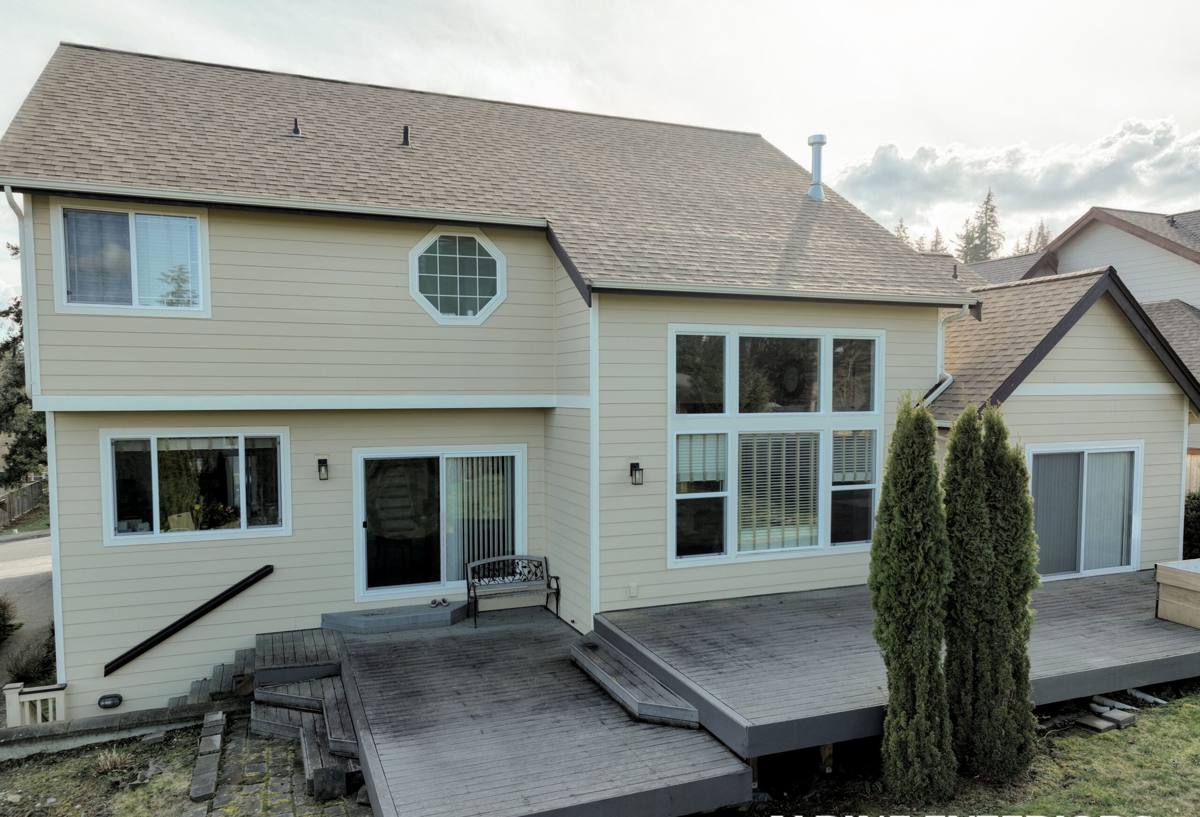
What Local Conditions Do to a Poorly Installed Window
Salt Air and Hardware Corrosion
Coastal salt air accelerates corrosion on anything metal — hinges, cranks, balance systems, and especially cheaper aluminum or unprotected steel components. Over a few years, that shows up as stiff cranks on casement windows, locks that won't seat properly, or pitting on exposed hardware. It's not usually the glass or the frame that fails first near the water — it's the moving parts.
Driving Rain and Wind-Driven Water Intrusion
Whatcom County storms don't always drop rain straight down. Wind-driven rain gets pushed sideways and upward under trim, around poorly lapped flashing, and into any gap in the weather-resistive barrier. A window opening is one of the most vulnerable spots in a wall for exactly this reason — it's a hole cut into the drainage plane, and every layer around it has to be built to shed water down and out, never in.
Moss Season and Prolonged Moisture Contact
During the wetter months, moss and algae don't just grow on roofs — they colonize window sills, trim, and any horizontal or slow-drying surface nearby. Where moss holds moisture against wood trim or an under-sealed sill for weeks at a time, rot follows. This is less about the window unit itself and more about how the surrounding trim, sill pan, and caulk lines are built and maintained.
Signs a Laurel Home's Windows Need Attention
Most window problems here develop slowly, behind the wall, before they're visible from the inside. Homeowners in Laurel should watch for:
- Soft or discolored trim or sill wood around the window frame
- Visible moss or dark staining building up on the sill or lower casing
- Drafts or a noticeable temperature difference near the window in winter
- Condensation forming between panes (a sign the seal has failed) or heavy condensation on the inside glass
- Windows that are difficult to open, close, or lock — often a sign of frame movement or hardware corrosion
- Peeling paint or bubbling on interior wall surfaces near a window
- Visible daylight or gaps around the frame from outside
Any one of these on its own isn't necessarily urgent, but a few together usually means water has been getting past the original installation for a while.
What a Correct Installation Actually Involves
Flashing Sequence
The single biggest factor in whether a window leaks isn't the window brand — it's whether the flashing was installed in the right order. Sill pan flashing goes in first to catch and direct any water that gets past the window back outside. Side flashing laps over the sill pan. Head flashing laps over the side flashing and tucks behind the weather-resistive barrier above the opening. Skip a step or install it out of sequence, and water gets trapped instead of directed out — often for years before it's noticed.
Sealing and Insulation
The gap between the window frame and the rough opening needs to be sealed for air and insulated for temperature, but not filled with the wrong material. Sealants and backer rod have to be compatible with the window manufacturer's specs, and low-expansion foam (not standard high-expansion foam) is used around the frame so it doesn't bow the unit and affect operation.
Level, Plumb, and Square
A window that's out of square binds, doesn't seal evenly against its own weatherstripping, and puts uneven stress on hardware — which, combined with salt air, shortens the life of cranks and locks considerably. Every unit gets shimmed and checked on all sides before it's fastened permanently.
Interior and Exterior Trim Detailing
Exterior trim needs a drip cap or equivalent detail above the window and back-priming or sealing on all sides — especially the bottom edge, which is what actually sits closest to standing moisture and moss growth. This is where a lot of installations cut corners, because it doesn't affect how the window looks or operates on day one.
Window Material Options for This Climate
There's no single "best" window material — the right choice depends on your home's exposure, your maintenance appetite, and your budget. Here's how the common options actually perform in a salt-air, high-rainfall environment like Laurel's:
| Material | Moisture Behavior | Maintenance | Typical Lifespan |
|---|---|---|---|
| Vinyl | Won't rot; hardware is the main wear point in salt air | Low — occasional cleaning, hardware checks | 20–30 years |
| Fiberglass | Very stable in moisture and temperature swings; resists corrosion well | Low | 30-plus years |
| Wood (clad exterior) | Good if the exterior cladding and flashing details are correct; vulnerable where cladding is compromised | Higher — sills and joints need periodic inspection | 20–30 years with upkeep |
| Aluminum | Prone to corrosion and condensation in coastal, cool-damp conditions unless thermally broken | Moderate | Varies widely by quality |
We steer most Laurel homeowners toward vinyl or fiberglass for this reason: both handle sustained damp exposure and salt air with minimal upkeep, and neither has a wood component at the sill that can hold moisture under a season of moss. Wood-clad windows can still be the right call for a specific look or a historic home — the tradeoff is more attentive maintenance on our end and yours.
Our Installation Process
- On-site assessment — we look at the existing window, the surrounding trim and siding, and the condition of the wall around the opening before quoting anything.
- Measurement and material selection — exact opening sizes, plus a conversation about material, style, and glass package based on that specific wall's sun and rain exposure.
- Removal and opening inspection — old units come out carefully so we can check the sheathing and framing underneath for hidden rot before anything new goes in. This step catches problems a lot of quotes never account for.
- Sill pan and flashing installation — built in the correct sequence for this climate, tied properly into the existing weather-resistive barrier.
- Window setting — shimmed level, plumb, and square, then fastened per manufacturer spec.
- Insulation and air sealing — low-expansion foam and appropriate sealants around the full perimeter.
- Interior and exterior trim — reinstalled or replaced with proper back-priming and a drip cap detail above the unit.
- Final check — operation, locks, and weatherstripping tested before we call it done.
Cost Factors to Expect
Every home and window count is different, so we don't publish flat pricing, but these are the factors that typically move the number:
| Factor | Why It Matters |
|---|---|
| Number and size of windows | More units or larger openings mean more material and labor |
| Material choice | Vinyl is generally the most economical; fiberglass and wood-clad cost more upfront |
| Condition of the existing opening | Hidden rot or framing damage found during removal adds repair work before the new window can go in |
| Access and home height | Second-story or hard-to-reach windows take more setup time |
| Trim and siding tie-in | Matching existing trim profiles or siding cuts adds finish work |
Why a Crew That Already Works in Laurel Makes a Difference
A window installer who mainly works inland or in drier parts of the county isn't necessarily going to default to sill pan flashing, low-expansion foam, or a drip cap detail — because in a lot of climates, skipping those steps doesn't show up as a problem for years. In Laurel, with salt air, driving rain, and a long moss season all working against a wall opening at the same time, those details are what actually determine whether the installation holds up. Working this area regularly means we're not guessing at how a given wall orientation, siding type, or trim detail will hold up here — we've already seen it.
Keeping New Windows Performing Through the Wet Season
A correctly installed window still benefits from basic upkeep, especially given how much of the year Laurel spends damp:
- Rinse salt residue off frames and glass periodically, especially on wind-exposed sides of the house
- Keep moss and debris cleared from sills and the trim directly below windows
- Check caulk lines around trim once a year and re-seal any cracked or separated sections promptly
- Operate cranks and locks periodically through the winter so hardware doesn't seize from disuse and corrosion
- Watch for condensation between panes — it's an early sign of seal failure, not just a humidity issue
None of this is complicated, but skipping it in a climate like this one is how small issues turn into trim or framing repairs a few years down the line.
If you're noticing drafts, soft trim, or windows that just don't seal like they used to, we're happy to take a look and give you a straightforward, no-pressure estimate on what correct replacement or repair would involve for your home. Use the form below to get started.