 Custer
 Siding Installation Built for Sumas Weather
Sumas sits at the edge of Whatcom County where marine air off the Salish Sea, heavy fall and winter rain, and long stretches of overcast, damp weather all combine to put real stress on a home's exterior. Salt-laden air corrodes fasteners and finishes over time, driving rain finds every gap in a poorly flashed wall, and the months of low sun and high humidity create ideal conditions for moss and algae to take hold on siding, trim, and roof lines. A siding job that looks fine the day it's finished can still fail within a few years if it wasn't built for this specific climate.
That's the lens we bring to every siding installation in Sumas: not just "does it look good going up," but "will this wall assembly still be doing its job in fifteen years of Whatcom County weather." That means the right water-resistive barrier, the right flashing details at every penetration, the right fastening schedule, and a siding product engineered to handle sustained moisture exposure without swelling, rotting, or losing its finish.
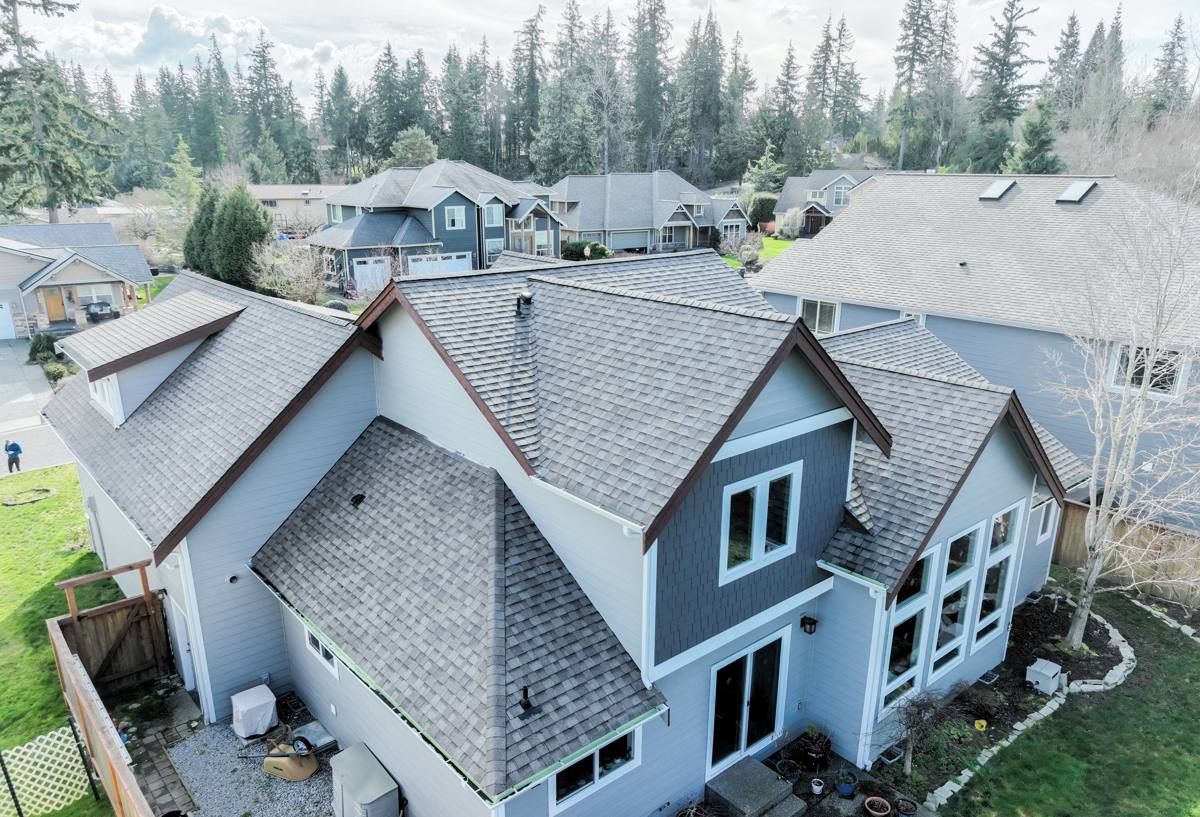
What Sumas Homes Actually Need From Their Siding
Moisture Management First
More siding failures in this area come from water getting behind the cladding than from the cladding material itself wearing out. Correct installation starts with a continuous, properly lapped weather-resistive barrier, flashed window and door openings, and drainage paths that let any moisture that does get behind the siding find its way back out instead of sitting against the sheathing. Skip these steps and even a premium siding product will eventually let water into the wall assembly.
Resistance to Moss and Algae
Whatcom County's long damp season means anything organic-friendly on a wall surface — wood fiber, certain coatings, porous finishes — becomes a host for moss and algae growth. A siding installation for Sumas needs a product and finish that resists that growth on the surface rather than absorbing moisture and feeding it.
Fasteners and Hardware That Won't Corrode
Salt air travels further inland than people expect, and corroding fasteners are one of the quieter ways a siding job fails early — streaking, staining, and eventually loose panels. Every fastener, flashing, and piece of trim hardware we use is chosen to hold up to that exposure, not just to pass a quick visual inspection on installation day.
Why We Install James Hardie Fiber Cement — and Nothing Else
We made a decision as a company to install only James Hardie fiber cement siding, and we stand behind it on every job in Sumas. Fiber cement is non-combustible, dimensionally stable, and doesn't absorb water the way wood-based or wood-alternative products can — which matters directly in a climate defined by driving rain and a long wet season. James Hardie's ColorPlus factory finish is baked on under controlled conditions, which holds up better against UV, moisture, and moss growth than field-applied paint, and it's backed by a real transferable warranty.
We're not going to tell you every other siding product is worthless — vinyl, engineered wood, and other fiber cement brands all have a place in the market and each has genuine strengths. But after years of installing and repairing siding in this climate, we standardized on Hardie because it's the product we trust to still be doing its job on a Sumas home fifteen and twenty years from now, with the least maintenance burden in between. If you want the full breakdown of how Hardie compares to specific alternatives, we cover that in detail on our other pages — this page is about what correct installation of it looks like.
What a Correct Installation Actually Involves
| Step | Why It Matters |
|---|---|
| Tear-off and sheathing inspection | Old siding comes off and the sheathing underneath gets checked for rot or soft spots before anything new goes on — covering a problem doesn't fix it. |
| Weather-resistive barrier | A continuous, properly lapped barrier is the last line of defense if water gets past the siding itself. |
| Flashing at every penetration | Windows, doors, vents, and outlets are the most common places water gets behind siding if flashing is skipped or done wrong. |
| Proper starter strip and clearances | Correct gaps at the bottom of the wall and around trim let water drain instead of wicking up into the siding. |
| Fastening per manufacturer spec | Hardie siding has specific nailing patterns and fastener types — installing it like a different product voids the warranty and shortens its life. |
| Caulking and sealant at joints | Sealed correctly, joints stay watertight through years of driving rain without cracking or pulling away. |
| Final inspection and cleanup | Every seam, corner, and trim piece gets checked before we call the job done. |
Our Process for a Sumas Siding Project
Free On-Site Estimate
We start by walking the exterior with you, looking at the current siding, trim, and any problem areas — moss buildup, staining, soft spots, or gaps that suggest water intrusion. We'll give you an honest read on whether it's a full replacement, a partial re-side, or repairs.
Scope and Product Selection
We help you choose the right James Hardie plank profile, exposure, and color line for your home, and we lay out exactly what's included — tear-off, house wrap, flashing, trim, and finish work — so there's no ambiguity about scope before work starts.
Installation
Tear-off, sheathing check, weather barrier, flashing, and siding installation to manufacturer spec, in that order. We don't skip the barrier and flashing work to save a day — it's the part of the job you won't see once the siding's up, and it's the part that determines whether the wall stays dry for the next twenty years.
Walkthrough
Before we consider the job finished, we walk it with you, point out anything worth knowing for upkeep, and make sure you're satisfied with the finished work.
Signs a Sumas Home Needs New Siding
- Visible moss or algae growth that comes back quickly after cleaning
- Soft spots, warping, or bubbling in the siding surface
- Cracked, peeling, or chalky paint that keeps needing repainting
- Staining or streaking that suggests water is tracking behind the siding
- Gaps opening up at seams, corners, or trim boards
- Rising energy bills that point to a wall assembly no longer sealing well
- Visible rot at the base of walls or around window and door trim
Any one of these on its own might be minor. Several together, especially after a wet Whatcom County winter, usually means the siding is past patching and into replacement territory.
Cost Factors for a Sumas Siding Job
| Factor | How It Affects the Job |
|---|---|
| Home size and wall complexity | More square footage and more corners, dormers, and trim details mean more labor and material. |
| Tear-off vs. installing over existing siding | Full tear-off costs more up front but lets us inspect and fix sheathing issues that a recover would hide. |
| Siding profile and exposure | Different Hardie plank widths and textures have different material and labor requirements. |
| Color line (ColorPlus vs. primed for field paint) | Factory-finished ColorPlus costs more up front but resists moss, fading, and moisture better long-term. |
| Extent of moisture or rot damage found | Repairing damaged sheathing or framing found during tear-off adds cost but prevents a bigger problem down the line. |
| Trim and detail work | Corner boards, window trim, and fascia work all add to scope beyond the flat wall area. |
We give straight, itemized estimates so you can see exactly what's driving the number — not a single lump figure with no explanation.
Why It Matters That We Already Work in Sumas
A crew that's worked siding jobs across Whatcom County knows the local building patterns, the way moisture moves through walls in this climate, and what inspectors around here expect to see. That's not something you get from a contractor who mostly works somewhere drier or milder. We've seen what happens when siding gets installed without the moss and moisture considerations this area demands — and we build every job to avoid it, not to just get through the install.
Working locally also means we're not disappearing after the job is done. If a question comes up two years down the road, we're still in the area and still reachable.
Keeping Your Siding Looking Right After Installation
- Rinse siding annually to keep moss and algae from establishing, especially on shaded or north-facing walls
- Keep gutters clear so water isn't overflowing directly onto siding runs
- Trim back vegetation that keeps siding shaded and damp
- Check caulking at trim and penetrations every couple of years and touch up as needed
- Address any small chips or damage promptly rather than letting moisture get a foothold
James Hardie siding, installed correctly and given basic upkeep, is built to handle this climate with far less maintenance than most alternatives — but "installed correctly" is doing a lot of that work, which is why the installation details matter as much as the product itself.
If your Sumas home's siding is showing signs of wear, or you're planning ahead for a replacement, we're happy to come take a look and give you a straightforward, no-pressure estimate using the form below.