 Custer
 Why Ferndale Roofs Take a Different Kind of Beating
Ferndale sits close enough to the water that salt air is part of daily life on a roof, not an occasional visitor. Add Whatcom County's driving rain — the kind that comes in sideways off a windstorm rather than straight down — and a moss season that stretches through most of the fall, winter, and spring, and you've got three separate forces working on the same roof at the same time. None of them alone is dramatic. Together, over a few years, they're what turns a small storm event into a repair that should have been caught months earlier.
Salt-laden air accelerates corrosion on exposed fasteners, flashing edges, and metal drip edge faster than it would inland. Wind-driven rain finds every lifted shingle tab and every gap in a flashing lap and pushes water sideways and uphill, not just down. And moss holds moisture against the roofing material long after a storm has passed, which means storm damage in Ferndale doesn't always show up right after the storm — it often shows up weeks later, as a soft spot or a stain that started with wind lift and got worse under a mat of wet moss nobody had cleared.
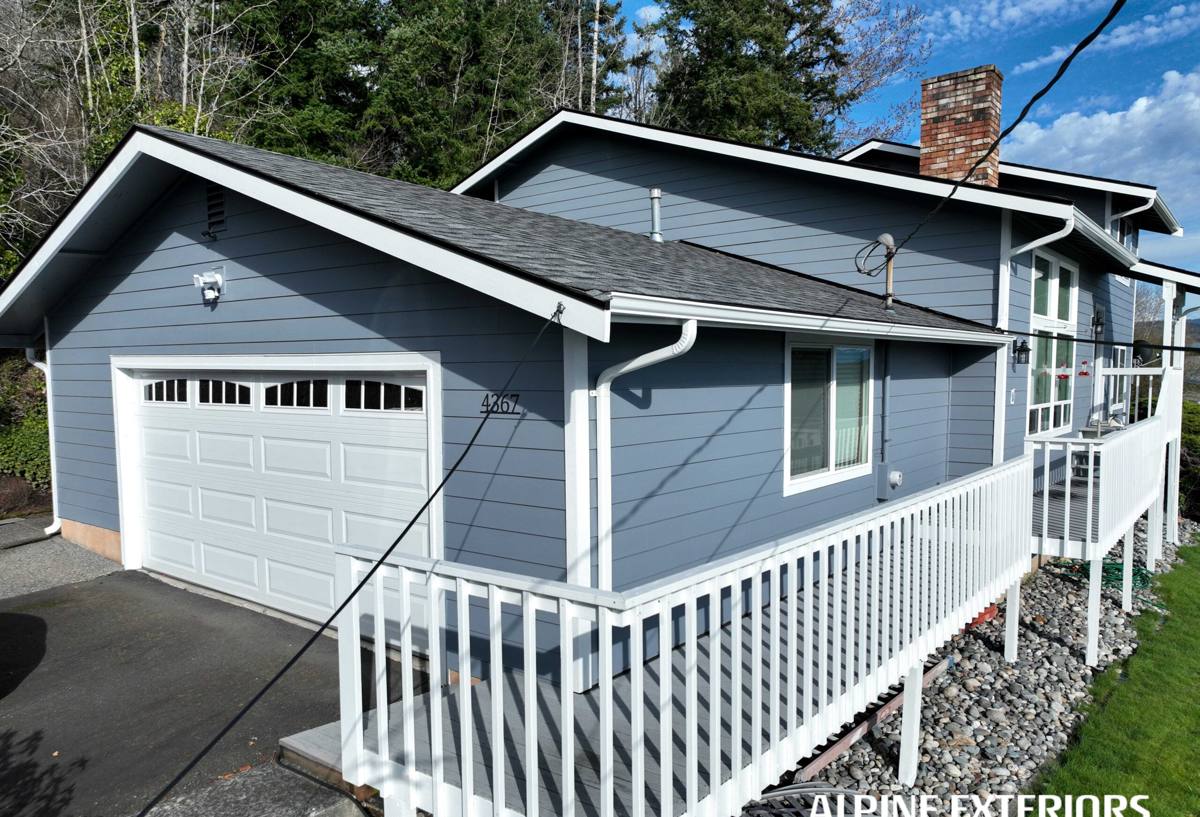
What Counts as Storm Damage (and What Doesn't)
Not every roof problem after a windstorm is "storm damage" in the way an insurance adjuster or an honest contractor would use the term, and it matters to be clear about the difference before any repair or claim gets started.
Genuine storm damage
- Shingles or shakes torn loose, lifted, or blown off entirely
- Flashing bent, torn, or separated from the roof deck around chimneys, vents, or valleys
- Punctures or gouges from wind-thrown branches or debris
- Fascia or gutter sections torn loose, which can pull roofing edges with them
- Sudden active leaks that started during or right after a specific wind or rain event
Wear that gets mistaken for storm damage
- Granule loss and curling from age, which a storm just finishes off
- Moss-driven rot that's been building for seasons and finally lets go under wind load
- Corroded fasteners backing out gradually rather than being blown out
The distinction matters because it affects both the right repair and whether an insurance claim is realistic. We'll tell you honestly which category your roof falls into rather than calling everything storm damage just to make a claim easier.
Signs You Need a Storm Damage Roof Repair
Most homeowners don't get on their own roof after a storm, and they shouldn't. Here's what you can check safely from the ground or from inside the attic that usually signals it's time for someone to take a closer look:
- Shingles or shake pieces in the yard, gutters, or against the house after a windy night
- Visible gaps, curling, or a shingle that looks a different color or angle than the ones around it
- New water stains on ceilings or upper walls, especially near chimneys or where two roof planes meet
- Daylight visible through the roof deck from inside the attic
- Metal flashing that looks bent, lifted at an edge, or missing altogether around vents and the chimney
- Sagging or soft-feeling spots on the roof surface, viewed from a distance
- Gutters pulling away from the fascia or hanging at a different angle than before
Any one of these on its own might be minor. A few of them together after a specific storm is worth a proper inspection before the next rain event finds the gap.
What a Correct Storm Damage Repair Actually Involves
A storm damage repair done right is not just nailing the loose shingle back down. It's a sequence, and skipping steps is exactly how the same leak comes back six months later.
1. Full inspection, not just the obvious spot
Wind damage rarely stays in one tidy area. We check the whole roof plane, the flashing details, and the attic side for moisture — because the leak you can see is sometimes fed by a lifted tab two feet away, not the one that's obviously missing.
2. Temporary protection first, if needed
If there's an active leak or exposed deck, that gets covered before anything else — a tarp or temporary seal to stop water intrusion while the permanent repair is scheduled and materials are matched.
3. Matching materials, not just "close enough"
Shingle color, profile, and exposure vary between manufacturers and even between production runs. A patch that doesn't match won't just look wrong — mismatched material can behave differently under wind and rain, which defeats the point of the repair.
4. Flashing gets rebuilt, not just re-sealed
Caulk over a torn flashing seam is a stopgap, not a repair. Correct storm damage work re-laps or replaces the flashing itself at chimneys, valleys, and vent penetrations so water sheds the way it's supposed to, especially given how much sideways-driven rain this area sees.
5. Fastener and deck check
Given the salt air issue, we look at fastener condition, not just whether the shingle is nailed down. Corroded nails that backed out partway are a repeat-failure risk even after the visible damage is patched.
Cost Factors on a Storm Damage Repair
Every roof and every storm event is different, so we won't quote a number without seeing the roof — but these are the factors that actually move the price, in order of how much they typically matter:
| Factor | Why It Matters |
|---|---|
| Extent of the damage | A few shingles and a flashing lap is a different job than a full section blown off or deck exposed |
| Roofing material | Composition shingle, cedar shake, and metal all repair differently and use different labor and material costs |
| Access and roof pitch | Steeper roofs and harder-to-reach areas add time and safety equipment regardless of the damage size |
| Hidden moisture or rot | If moss or a slow leak got in before the storm finished the job, deck repair adds to the scope |
| Material matching | Older or discontinued shingle lines sometimes require sourcing a close match rather than an exact one |
| Insurance involvement | Documentation for a claim doesn't add much cost but does add a step to the process |
As a rough range, a straightforward wind-damage patch — a handful of shingles and one flashing detail — is a different scale of job than deck replacement under a moss-damaged section, so we'd rather look at the actual roof than throw out a number that doesn't apply to your situation.
Our Process, From Call to Cleanup
- Assessment. We look at the roof, the attic side where accessible, and talk through what you've noticed since the storm.
- Honest scope. We tell you what's storm damage, what's pre-existing wear, and what we'd recommend fixing now versus watching.
- Documentation. If you're filing an insurance claim, we document the damage clearly enough to support it.
- Temporary protection if there's active exposure, before the permanent repair is scheduled.
- Repair. Matched materials, rebuilt flashing where needed, and a fastener check — not just a patch over the visible spot.
- Cleanup. Old material, nails, and debris cleared from the yard and gutters, not just off the roof.
Insurance Claims: What to Know Going In
Wind and storm damage is one of the more straightforward categories for a homeowner's insurance claim, but a few things are worth knowing before you call your adjuster. Insurers generally want to see that the damage traces to a specific storm event, not gradual wear — which is part of why we're careful about that distinction ourselves. Photos and a written scope from a contractor help, but they don't replace the adjuster's own inspection. And timing matters: a leak that's allowed to sit for weeks after a storm because a claim is pending can turn into a secondary water-damage issue that complicates the original claim. If you're not sure whether your damage is claim-worthy, we can tell you honestly rather than pushing you toward filing something an adjuster is likely to deny.
Why a Crew That Already Works Ferndale Matters
Storm damage repair isn't just a general roofing skill — it's a local one. A crew that works Ferndale and the surrounding Whatcom County area regularly knows which flashing details tend to fail first in this specific combination of salt air and wind-driven rain, and which ones hold up. That's not something you get from a roofing manual; it's from seeing the same failure points on similar homes, storm after storm.
There's also a practical response-time argument. After a real windstorm moves through, demand for roof repair spikes across the whole region at once. A contractor already working in and around Ferndale doesn't have to drive in from somewhere unfamiliar with the area's roofing profiles, permit norms, or common construction styles — which usually means a faster, more accurate assessment and less guesswork on material matching.
Keeping the Repair From Becoming a Repeat Job
A correct storm damage repair should hold — but Ferndale's climate doesn't stop working on a roof just because the repair is done. A few habits keep the same section from failing again:
- Clear moss buildup before it mats down and holds moisture against the repaired area
- Keep gutters clear so wind-driven rain has somewhere to go instead of backing up under an edge
- Have flashing details checked during routine maintenance, not just after the next storm
- Watch for early granule loss or fastener corrosion on the rest of the roof, since salt air affects the whole surface, not just the storm-damaged section
If you've got roof damage from a recent storm, or you're just not sure whether what you're seeing needs attention now or can wait, we're happy to take a look. Fill out the form below for a free, no-pressure estimate — we'll give you a straight answer about what's actually going on with your roof.