 Custer
 Why Lynden Decks Wear Out Faster Than the Brochures Suggest
Lynden sits inland from the coast, but it still lives inside Whatcom County's marine-influenced weather pattern — long wet stretches from fall through spring, humid summer mornings, and enough shaded, damp ground around most homes to keep moss and algae in business year-round. Add in the salt-tinged air that drifts in off the Strait on windy days and settles into anything with exposed metal, and you've got a climate that's genuinely hard on outdoor wood structures. A deck that would last two decades in a dry inland state can start failing structurally in half that time here if it wasn't built with this climate in mind.
Most of the deck problems we get called out for in Lynden aren't cosmetic. They're moisture that got trapped somewhere it shouldn't have — under flashing that was never installed, in a ledger board attached straight to siding, or in joists that never had a drainage gap underneath the decking. By the time it shows up as soft wood or a spongy step, the damage has usually been building for years.
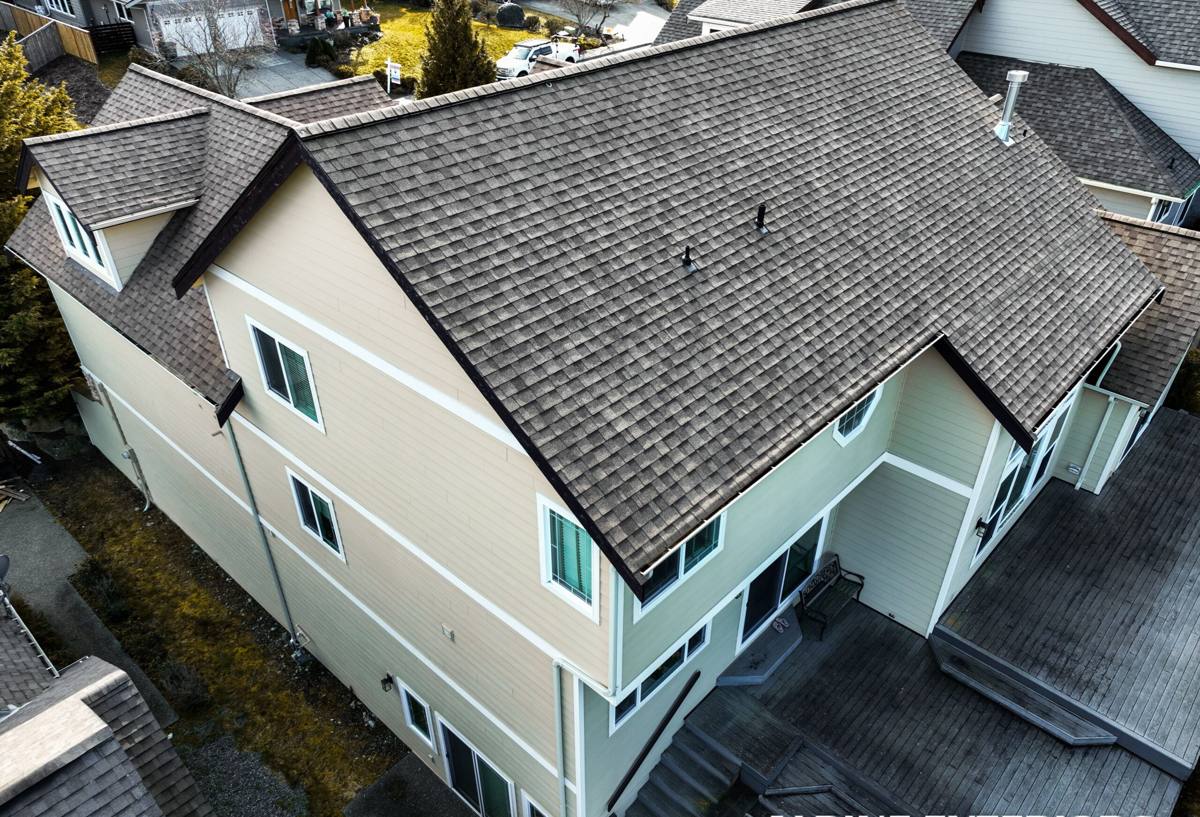
Signs a Lynden Deck Needs Replacing, Not Just Repairing
Homeowners often call about a repair and end up needing a full replacement once we're underneath the boards. Here's the honest breakdown of what tips a deck from "fixable" to "start over":
- Soft or spongy decking in multiple areas, not just one board
- Rot or discoloration at the ledger board where the deck meets the house
- Posts that wobble or footings that have shifted or heaved
- Rust streaking from fasteners, a sign moisture has been sitting on the metal for a long time
- Persistent green or black staining that comes back within weeks of cleaning
- Gaps or separation where the deck framing meets the house
One or two of these can sometimes be repaired in isolation. Several at once usually means the whole system — framing, flashing, and decking — has been absorbing water for a long time, and patching it just delays a bigger job.
What a Correct Deck Replacement Actually Involves
Structural Framing and Footings
Everything above the frame is only as good as what's underneath it. We check footing depth and condition against current code requirements, confirm joist spacing is right for the decking material going on top, and use fasteners and hardware rated for exterior, high-moisture use. In a climate this wet, undersized or corroding hardware is one of the most common causes of early failure — it's cheap to skip and expensive to ignore.
Ledger Board and Flashing — the Part That Actually Matters Most
If there's one detail that determines whether a Lynden deck lasts 10 years or 30, it's how the ledger board is flashed where it attaches to the house. This is the single most common point of hidden rot we find on older decks in this area, because water running down the siding has nowhere to go but into the wood if the flashing wasn't done correctly — or wasn't done at all. A correct install uses proper metal flashing, self-adhering waterproof membrane behind it, and a clear drainage path so water sheds away from the house instead of pooling against it.
Decking Material and Ventilation
We also build in a real gap between the deck framing and the ground or crawlspace below, so air can move and moisture doesn't just sit and stagnate. This one detail has a lot to do with how fast moss and mildew take hold on the underside of a deck, which is invisible from above but eventually shows up as soft joists.
Choosing the Right Decking Material for This Climate
There's no single "best" decking material — there's a best fit for how much upkeep you're willing to do and how much you want to spend upfront versus over time. Here's how the common options actually compare for a wet, moss-prone climate like Whatcom County's:
| Material | Moisture Behavior | Maintenance | Typical Lifespan Here |
|---|---|---|---|
| Pressure-treated wood | Absorbs moisture; needs sealing to resist it | Annual cleaning and re-sealing recommended | 10-15 years with upkeep |
| Cedar | Naturally rot-resistant but still absorbs water over time | Periodic sealing/staining to maintain appearance and protection | 15-20 years with upkeep |
| Composite decking | Doesn't absorb water into the board itself | Occasional washing; no sealing or staining | 25-30+ years, warranty-backed |
| PVC/capped polymer | Fully moisture-resistant surface | Lowest maintenance of the group | 25-30+ years, warranty-backed |
Wood costs less upfront and has a natural look plenty of homeowners still prefer. Composite and PVC cost more initially but skip the annual sealing cycle that wood needs to hold up in this much rain — over a 20-year span, the maintenance savings often narrow the total cost gap more than people expect. We'll walk through the honest trade-offs for your specific deck and budget rather than push one option across the board.
Our Deck Replacement Process in Lynden
1. On-Site Assessment
We look at the existing structure from the ground up — framing, footings, ledger attachment, and the condition of the current decking — and tell you plainly what's salvageable versus what isn't. No inflating the scope of work to pad the job.
2. Permitting
Deck replacements of most sizes require a permit in Whatcom County jurisdictions. We handle that paperwork and build to current code, including guardrail height, stair geometry, and footing requirements — details that matter both for safety and for resale down the road.
3. Demolition and Framing
Old decking and, where needed, old framing comes out. We rebuild the structural frame to current standards, correct any undersized footings, and install proper ledger flashing before a single deck board goes down.
4. Decking Installation
Whichever material you've chosen goes on with attention to fastening pattern, board spacing for drainage and expansion, and clean edge and stair details.
5. Final Walkthrough
We walk the finished deck with you, point out anything you should know about care going forward, and answer questions before we consider the job done.
Moss, Mold, and Keeping a New Deck Looking New
A properly built deck handles moisture at the structural level, but surface care still matters, especially through Whatcom County's long moss season. A few habits go a long way toward protecting the investment:
- Sweep debris off the deck regularly — trapped leaves and needles hold moisture against the surface
- Rinse or gently wash the deck a couple times a year to keep algae and moss from establishing
- Keep gutters and downspouts clear so runoff isn't dumping directly onto or near the deck
- Trim back overhanging branches to let more light and air reach shaded sections
- Check and re-seal wood decking on the schedule the manufacturer or installer recommends
- Look underneath the deck once a year for early signs of moisture buildup on framing
Why Hiring a Crew That Already Works in Lynden Matters
A deck built to a generic national spec sheet isn't necessarily built for this specific climate. Crews who work Whatcom County regularly know which flashing details actually hold up against this much sustained rain, how footing depth needs to account for local soil and frost behavior, and which materials handle a long moss season without turning into a slip hazard. That local pattern recognition is the difference between a deck that needs attention again in five years and one that doesn't.
It also matters for the boring-but-important stuff: knowing the local permitting process, understanding inspection expectations, and being reachable if a question comes up after the job is done rather than being three counties away.
Cost Factors for Deck Replacement in Lynden
Every deck is different, but the price of a replacement is generally driven by a handful of factors:
- Size and shape of the deck, including multiple levels or built-in features like stairs
- Decking material selected — wood, composite, or PVC
- Condition of the existing framing and footings, and how much of it needs to be rebuilt versus reused
- Height off the ground and any guardrail or stair code requirements that apply
- Site access for equipment and material delivery
Rather than quote a generic range that doesn't reflect your actual deck, we'd rather come look at it and give you real numbers based on what's actually there.
If your deck in Lynden is showing its age or you're planning ahead before winter rains set back in, we're happy to come take a look and give you a straightforward, no-pressure estimate — just fill out the form below.