 Custer
 Building Decks That Hold Up in Sumas's Climate
A deck in Sumas has to earn its keep through a lot more weather than most homeowners think about when they're picking out railing style or decking color. Whatcom County sits close enough to the water and the border lowlands that homes here deal with driving rain for months at a time, damp air that never fully clears, and a moss season that can stretch from fall through spring. A deck built without that reality in mind will look fine for a year or two and then start showing problems — soft spots, black staining, boards that cup or split, fasteners that bleed rust through the finish.
We build decks for homes in and around Sumas the way we'd want one built for our own house in this same weather: with drainage, ventilation, and material choices treated as structural decisions, not cosmetic ones. Framing that sheds water instead of trapping it, hardware rated for wet coastal-adjacent conditions, and a decking surface chosen because it actually performs here — not just because it looked good in a showroom.
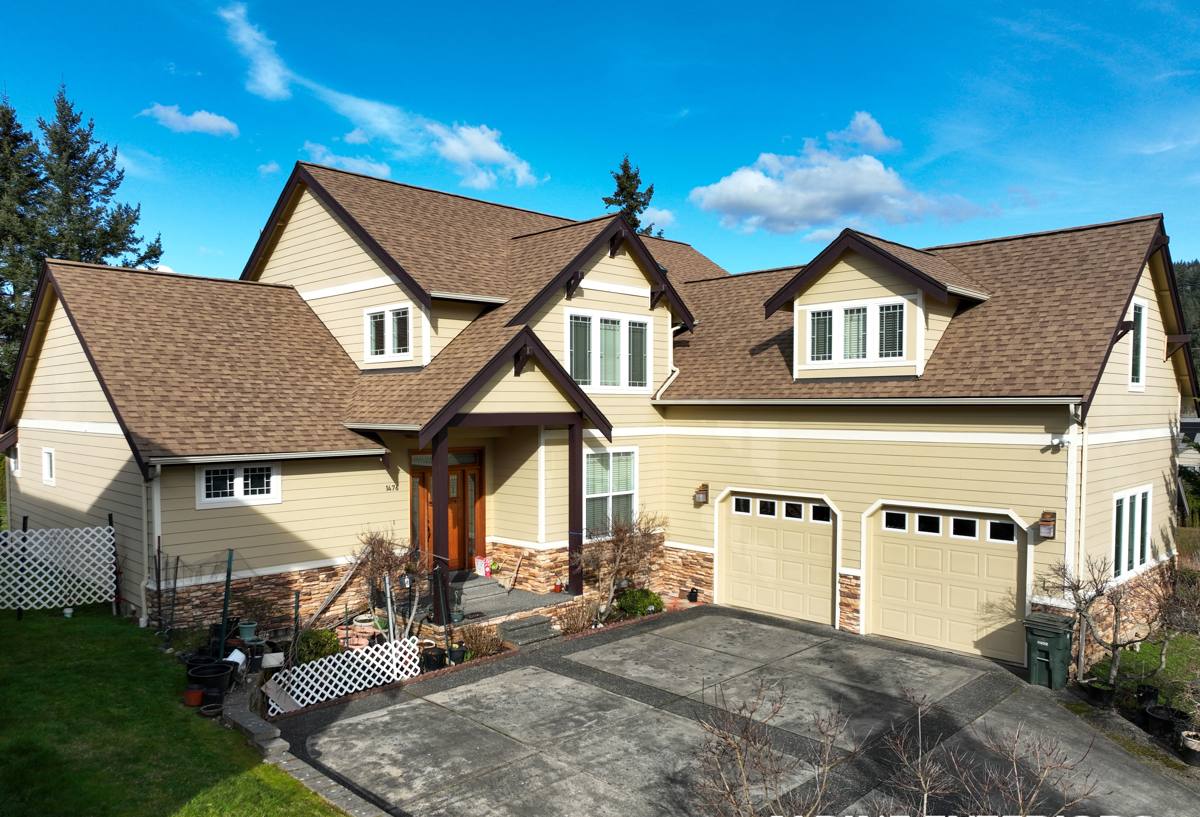
What Sumas Homes Need From a Deck
Most of the deck problems we get called out to fix in this part of Whatcom County trace back to the same handful of causes, and all of them are climate-driven.
Moisture That Doesn't Let Up
Driving rain doesn't just fall straight down — wind pushes it sideways under railings, into ledger connections, and between boards that are spaced too tight. A deck built for a drier climate, with standard spacing and no real drainage plan, ends up holding water in exactly the spots where wood rot and hardware corrosion start.
A Long Moss and Algae Season
Shaded decks, or decks under trees, stay damp long enough for moss and algae to take hold on almost any surface — wood, composite, even sealed concrete. Moss holds moisture against the deck surface, which accelerates decay in wood and can leave organic staining on composite decking that's hard to fully remove. Surfaces with poor drainage or the wrong grain orientation collect it faster and hold it longer.
Salt-Influenced Air
Whatcom County's proximity to the water means metal hardware, fasteners, and railing components are exposed to more corrosive air than an inland deck would see. Fasteners and connectors that aren't rated for this exposure can start rusting within a couple of seasons, which weakens the connections that hold the whole structure together long before the decking itself wears out.
Choosing the Right Decking Material
There's no single "best" decking material — there's a best material for a given deck's sun exposure, budget, and how much upkeep the homeowner actually wants to do. Here's how the common options hold up in Sumas's conditions specifically.
| Material | How It Handles Wet, Mossy Conditions | Maintenance Load | Typical Lifespan Here |
|---|---|---|---|
| Pressure-treated wood | Performs well if sealed and maintained; absorbs moisture if finish is neglected | Annual cleaning and re-sealing recommended | 15-20 years with upkeep |
| Cedar | Naturally rot-resistant, but still needs finish maintenance in this much rain | Sealing every 1-2 years | 15-25 years with upkeep |
| Composite decking | Doesn't rot or absorb water, but can hold surface moss/algae if shaded and not cleaned | Periodic washing, no sealing needed | 25-30+ years |
| PVC decking | Fully moisture-resistant, sheds water well, resists staining | Occasional washing | 25-30+ years |
For decks with heavy shade or tree cover — common on wooded Sumas lots — we lean toward composite or PVC decking because they don't give moisture anywhere to soak in, even when moss does grow on the surface. For sunnier, more open lots, a well-sealed wood deck is still a solid, less expensive option, as long as the homeowner is realistic about the maintenance schedule.
Why We're Selective About Certain Products
Not every decking product on the market gets our recommendation for this area. Some lower-grade composite boards have a manufacturing structure that traps moisture internally rather than shedding it, which becomes a problem in a climate where boards rarely get a long stretch of time to fully dry out. We stick to composite and PVC lines with a track record of solid moisture performance and warranty backing, and we're upfront with homeowners about that trade-off rather than installing something cheaper that we know will cause callbacks in a few years.
Framing and Substructure — Where Most Deck Failures Start
The decking surface gets all the attention, but the framing underneath is what actually determines how long a deck lasts in this climate. We treat a few things as non-negotiable on every deck we build:
- Ledger board flashing that properly directs water away from the house band board, not just a bead of caulk
- Joist tape or a comparable moisture barrier on top of every joist, so fastener penetrations don't become entry points for rot
- Stainless steel or coated corrosion-resistant hardware throughout, given the salt-influenced air in this part of the county
- Proper joist spacing and blocking sized for the actual decking material being installed, not a generic minimum
- Post bases that keep wood posts elevated off concrete, so they're not sitting in standing water after a heavy rain
- Adequate under-deck ventilation and grading so water has somewhere to go instead of pooling underneath
A deck can look identical from the top down whether the framing underneath was done right or not — and that's exactly why it matters. Framing failures don't usually show up for a few years, which is long enough for a corner-cutting install to pass the initial walkthrough.
Our Deck Building Process
1. On-Site Assessment
We look at sun exposure, tree cover, drainage slope, and how the deck ties into the house before we talk materials. A shaded, low-lying deck and a sun-exposed, elevated one need different approaches even on the same street.
2. Design and Material Selection
We walk through decking, railing, and fastener options with the homeowner, being straightforward about cost, appearance, and how much maintenance each choice actually requires — not just the upfront price.
3. Permitting
Most deck projects that involve a structural attachment to the house or exceed a certain height require a permit through the applicable local jurisdiction. We handle that process as part of the job so homeowners aren't left tracking it down themselves.
4. Framing Build-Out
This is where the moisture-management details above get built in — flashing, joist protection, corrosion-resistant hardware, and proper drainage — before a single deck board goes down.
5. Decking, Railing, and Finish Work
Board spacing is set to allow for expansion, contraction, and drainage rather than a tight, uniform look that traps water. Railings and stairs are installed to code, and any wood surfaces get their first coat of finish before the job is called done.
6. Final Walkthrough
We go over the finished deck with the homeowner, including a basic rundown of what maintenance the specific materials chosen will need going forward.
Railings, Stairs, and Code Requirements
Railing height, baluster spacing, and stair geometry aren't optional style choices — they're governed by building code, and inspectors in this region check them closely, particularly on elevated decks. Beyond meeting code, railing hardware is one of the first things to show corrosion in salt-influenced air if the wrong fasteners or connectors are used, so we spec railing systems the same way we spec framing hardware: for this climate, not just for looks.
Maintenance in a Long Moss Season
Whatever material a Sumas deck is built from, moss and algae are going to test it every year the deck sits under any shade. A few habits go a long way toward protecting the investment:
- Sweep debris and organic buildup off the deck surface regularly, especially in fall and through the wet winter months
- Wash the deck at least once a year with a cleaner appropriate to the material — pressure washing wood too aggressively can damage the grain
- Keep gutters and downspouts clear so runoff isn't dumping directly onto or under the deck
- Trim back overhanging branches to cut down on shade and falling debris where practical
- Check fastener heads and railing connections annually for early rust staining
- Re-seal wood decking on the schedule the finish product calls for — don't wait for it to look obviously worn
Why Hire a Crew That Already Works in Sumas
A deck built to a generic national spec sheet is not the same as a deck built for Whatcom County's specific combination of rain, shade, and salt-influenced air. Crews who work this area regularly know which details actually matter here — the flashing details, the hardware grade, the drainage slope — because they've seen what happens on decks where those details got skipped. That local track record is worth more than a lower bid from a crew that's never had to account for a Sumas moss season.
If you're planning a new deck or need an honest assessment of an existing one, we're glad to take a look and talk through what your home and lot actually need. Reach out for a free, no-pressure estimate using the form below.