 Custer
 Roof Repair Around California Creek: A Different Set of Conditions
California Creek runs through a low-lying, tree-shaded stretch of rural Whatcom County just outside Custer, and homes along it deal with a roofing environment that's a step harder on materials than a typical open, sun-exposed lot. Mature tree cover keeps roof planes shaded and damp longer after a storm, the creek corridor itself holds humidity close to the ground, and the area still sits well within reach of the salt-laden air that moves in off the Salish Sea on winter systems. None of that means a roof here is doomed to fail early — it means a roof repair done right in this specific setting looks a little different from a repair on a dry, open-field property a few miles inland.
We work roofs, siding, and exteriors across this corner of Whatcom County, and California Creek is one of the areas where we see the clearest pattern: roofs that look fine from the driveway but are holding moisture damage under shaded valleys, around chimney flashing, or at the eaves where debris from overhanging trees collects. This page is specifically about roof repair for that kind of property — not a full re-roof, and not generic roofing advice — because the diagnosis and the fix both change when shade, moisture, and salt exposure are all working against the roof at the same time.
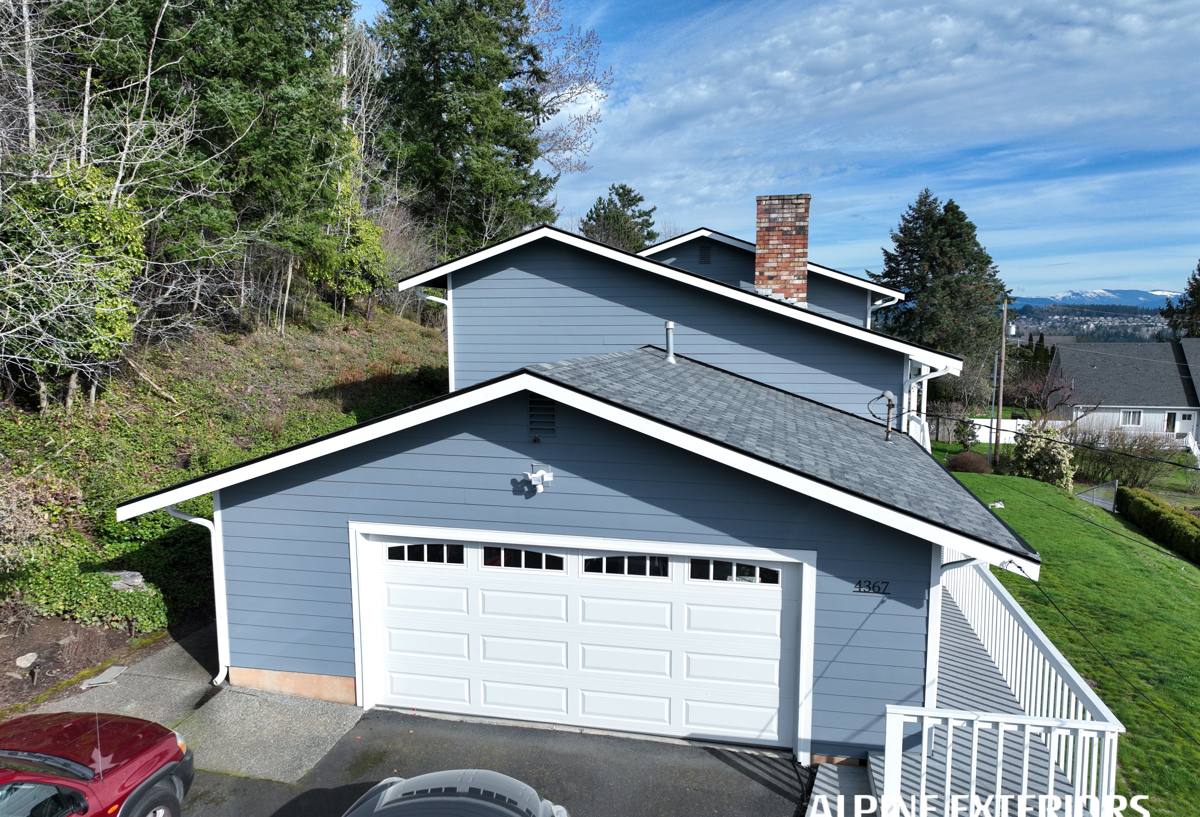
What Shade, Salt Air, and Rain Do to a California Creek Roof
Extended Moss and Moisture Retention
Tree cover along the creek keeps large sections of many roofs out of direct sun for most of the day, sometimes for entire slopes on north- and east-facing planes. A roof that stays shaded doesn't dry out between rain events the way an open, sun-exposed roof does, and that extra dwell time is exactly what moss and algae need to establish. Once moss takes hold in a valley or along a shaded ridge, it holds water against the roofing surface, works under shingle tabs and lap seams, and can lift material enough to let water past the surface layer long before a homeowner sees a stain on the ceiling.
Driving Rain and Wind-Driven Moisture
Storms moving in off the water don't always drop rain straight down. Wind pushes it sideways into valleys, around vent pipes and chimneys, and up under flashing that's lapped correctly for vertical rain but not for a sideways push. On a property with mature trees nearby, that wind-driven rain also carries small debris — needles, leaves, twigs — that collects in valleys and behind chimneys, creating small dams that hold water right where flashing details are most likely to be marginal.
Salt Air and Metal Component Corrosion
Custer and the surrounding area, including California Creek, sit close enough to the Salish Sea that salt-laden air reaches roofs here during winter weather, even on properties that don't have a water view. Salt exposure accelerates corrosion on exposed fasteners, flashing, and any metal roofing components that aren't rated for a marine-influenced environment. A repair that reuses degraded fasteners or unrated flashing metal because it's faster or cheaper tends to fail again within a few years in this specific combination of salt air and sustained moisture.
Why Tree-Shaded, Creekside Roofs Fail Differently
On most repair calls in this area, the roofing material itself — the shingles, the metal panels, the shakes — usually isn't the root problem. The failure almost always traces back to one of a handful of specific spots where shade and moisture concentrate:
- Valleys where moss and organic debris build up and hold water against the roofing surface
- Chimney and vent pipe flashing that was lapped for straight-down rain but not for wind-driven moisture
- Eaves and gutters clogged with needles and leaves, causing water to back up under the roof edge
- Fasteners and flashing showing early corrosion from sustained salt-air exposure
- Shaded north- or east-facing slopes with moss growth well beyond what a sun-exposed slope on the same roof shows
A repair that only addresses the visible symptom — patching a shingle where a stain appeared inside — without checking these underlying spots tends to come back as a callback within a season or two. A correct repair traces the water back to where it's actually getting in, which is often several feet from where the interior damage shows up.
What a Correct Roof Repair Actually Involves Here
A roof repair on a California Creek property isn't just swapping out a damaged shingle or squeezing sealant into a gap. Done right, it's a diagnostic process first and a repair second:
- Trace the leak to its actual source, which often means checking the roof deck and attic from the inside as well as the surface from outside, since water can travel along rafters or underlayment before it shows up as a ceiling stain.
- Clear and assess valleys, eaves, and flashing for moss, debris buildup, and any organic staining that indicates sustained moisture, not just a one-time leak.
- Check fastener and flashing condition for salt-air corrosion, since a repair that leaves degraded metal in place next to new material is a short-term fix at best.
- Remove and replace damaged material back to sound decking, not just over the visible damage, so the repair ties into underlayment and structure that's actually dry.
- Re-flash and re-seal correctly for wind-driven rain, with lap direction and overlap sized for sideways-moving water, not just vertical rainfall.
- Check ventilation in the repaired section, since trapped moisture in a shaded attic bay is often part of why that spot failed in the first place.
Repair Types and What Drives Their Cost
Every repair is different, but most calls in this area fall into a handful of categories. What actually drives the cost isn't just square footage — it's how much of the surrounding structure has already absorbed moisture and how many separate problem spots exist on one roof.
| Repair Type | Typical Cause Here | Main Cost Driver |
|---|---|---|
| Localized shingle or panel replacement | Wind damage, isolated moss lift, impact from falling branches | Number of courses affected and matching existing material |
| Valley re-flashing | Debris buildup and moss holding water against valley metal | Whether decking underneath is dry or needs replacement |
| Chimney or vent pipe flashing repair | Wind-driven rain past flashing lapped only for straight rain | Accessibility and whether counter-flashing needs full rebuild |
| Eave and fascia repair | Clogged gutters backing water up under the roof edge | Extent of rot in fascia or sheathing before repair began |
| Deck repair with re-roofing of a section | Long-term moisture intrusion finally reaching plywood decking | Square footage of decking that needs replacement, not just surface material |
A repair caught early — before moisture reaches the roof deck itself — is almost always a fraction of the cost of one where the decking underneath has softened. That's the single biggest reason we push for an actual diagnostic look rather than a quick patch when something looks off.
Our Process for a California Creek Roof Repair
We approach a repair call on this stretch the same deliberate way every time, because guessing at the cause on a shaded, moisture-prone roof almost always leads to a repeat call:
1. On-Site Inspection, Inside and Out
We look at the roof surface, but we also check the attic and roof deck from inside when access allows, since staining or damp insulation inside often points to a leak location well away from where the interior stain shows up.
2. Honest Diagnosis
We tell you what we found, what's causing it, and what it actually takes to fix it correctly — including if the underlying decking needs attention beyond the surface repair. We don't inflate a simple fix into a bigger job, and we don't downplay one that genuinely needs more than a patch.
3. Repair to the Root Cause
We fix the source of the water intrusion, not just the spot where damage became visible. That often means re-flashing a valley or chimney correctly for wind-driven rain rather than just resealing the surface symptom.
4. Materials Suited to This Exposure
Fasteners, flashing, and sealants used in the repair are selected for salt-air and sustained-moisture exposure, not generic minimum-code hardware, so the repair holds up under the same conditions that caused the original failure.
5. A Clear Explanation of What to Watch
Before we leave, we tell you what to keep an eye on — a gutter that tends to clog faster because of nearby trees, a shaded slope that may need moss treatment on a regular cycle, or anything else specific to that roof.
Repair or Replace? An Honest Read for This Kind of Property
Not every roof problem on a California Creek property calls for full replacement, and we don't default to recommending one just because the roof is older. What actually matters is how much of the roof deck has taken on moisture, how many separate problem areas exist, and how many prior repairs the roof has already had. A single valley or flashing failure on an otherwise sound roof is a straightforward repair. A roof with moss-related damage spread across multiple shaded slopes, a deck with soft spots in more than one location, or a history of repeat leaks in different spots each season is usually more honestly addressed by weighing replacement rather than adding another patch to a roof that's telling you it's near the end of its service life. We'll walk you through what we actually find and let you make that call with real information, not a sales pitch pointed at whichever option pays better.
Signs a Roof Repair Shouldn't Wait
- Moss buildup in valleys or on shaded slopes that keeps returning shortly after cleaning
- Granules collecting in gutters, especially near downspouts serving shaded roof sections
- Water staining on interior ceilings, particularly near chimneys or exterior walls under trees
- Visible rust or corrosion on flashing, fasteners, or metal vent stacks
- Gutters or downspouts that overflow during moderate rain because of debris buildup
- Soft spots or give underfoot when walked on shaded or low-lying roof sections
- Daylight or damp insulation visible from inside the attic
Any one of these is worth a look before the next wet season. Caught early, most of these are a contained repair. Left through another winter of driving rain and shade-retained moisture, several of them turn into deck damage that costs considerably more to fix.
Why a Crew That Already Works California Creek Matters
A roof repair on a shaded, creekside property calls for judgment that a one-size-fits-all approach doesn't cover. Knowing that a north-facing slope under mature trees needs a different moss-management conversation than a sun-exposed section of the same roof, that valley flashing here needs sizing for wind-driven rain rather than straight rainfall, and that fasteners exposed to this area's salt air need a different spec than inland hardware — that's knowledge built from working roofs in this specific setting repeatedly, not from a general roofing checklist. A crew that's already familiar with how California Creek's shade, terrain, and exposure interact also spots the early warning signs faster during an inspection, because we know where to look first on this kind of property instead of starting from scratch on every call.
If you've got a leak, storm damage, or a roof that just doesn't look right on a California Creek property, we're glad to take a look and give you an honest, no-pressure read on what it actually needs. Reach out using the form below for a free estimate.