 Custer
 What Ferndale's Climate Actually Does to Siding
Ferndale sits close enough to Georgia Strait and Bellingham Bay that homes here deal with a mix of coastal and inland weather in the same year. Salt-laden air moves in off the water, driving rain arrives sideways during fall and winter storms, and a long stretch of overcast, damp months keeps exterior surfaces wet for days at a time. That combination is harder on siding than a simple "it rains a lot in Washington" description suggests.
Salt air accelerates corrosion on fasteners, flashing, and any metal trim that isn't rated for coastal exposure. Driving rain doesn't just wet the surface of a wall — wind pressure pushes water sideways and upward, testing every seam, lap, and penetration in the siding system. And Whatcom County's moss season, which can run from early fall well into spring, means anything that stays damp and shaded — north-facing walls, areas under trees, spots with poor airflow — becomes a growing surface for moss and algae if the material and installation don't account for it.
None of this is unique to Ferndale specifically, but it's more pronounced here than in drier parts of the county further from the water. Siding that's marginal in a sheltered inland lot can fail years earlier on a Ferndale property with more wind-driven rain and salt exposure.
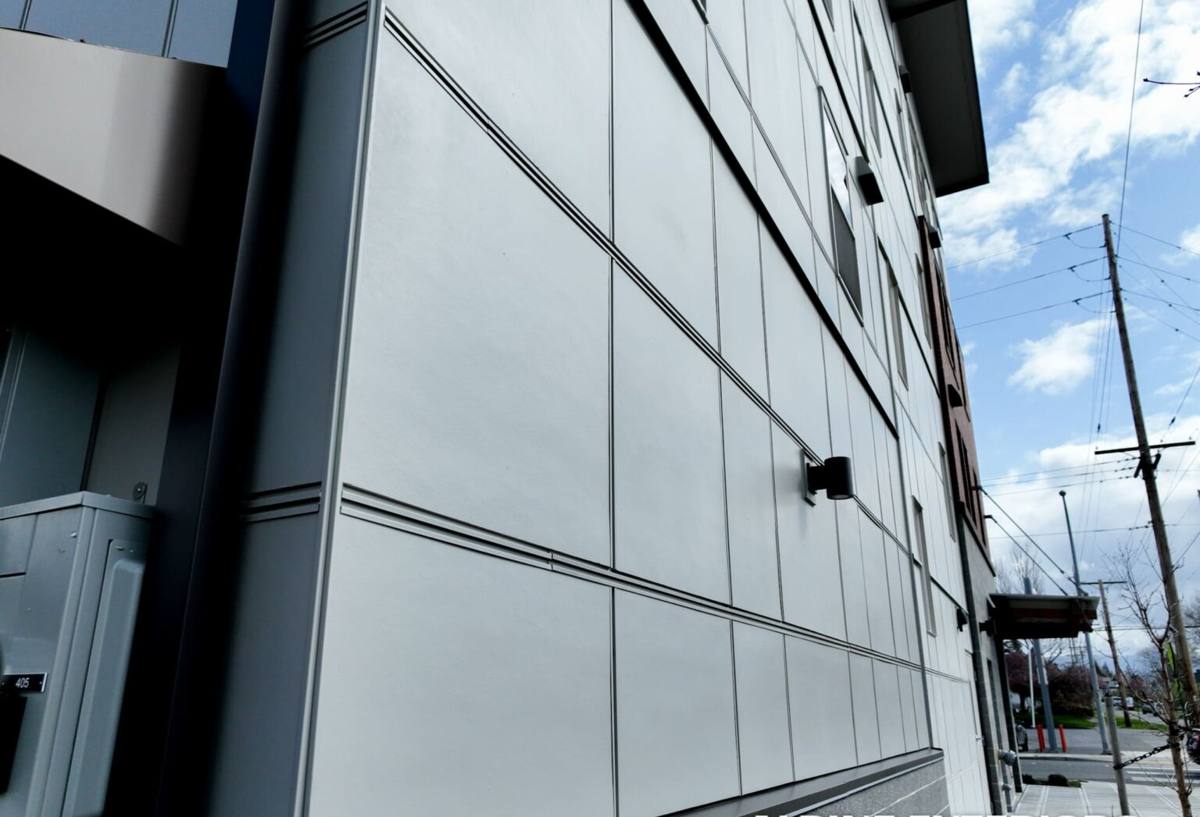
Why the Product You Choose Matters More Here
In a mild, dry climate, a wider range of siding products can perform acceptably for a while. In a climate that combines moisture, wind, and salt air, the gap between a well-engineered product and a budget one shows up faster — as swelling, delamination, fastener corrosion, moss growth, or paint failure. This is why we standardized our installations on James Hardie fiber cement siding and don't install vinyl, LP SmartSide, Cemplank, Allura, primed spruce, or cedar. Each of those products has legitimate uses and reasonable installers who stand behind their work. We simply concluded, after years in this climate, that fiber cement — specifically Hardie's engineered products — gives Ferndale homeowners the best long-term performance for the money, and we'd rather install one product exceptionally well than spread ourselves across several.
Fiber cement doesn't absorb water into a wood substrate the way engineered wood products can, doesn't expand and contract with humidity the way vinyl does, and doesn't require the same ongoing paint maintenance that primed spruce or cedar demand. It's also non-combustible, which matters given Whatcom County's dry summer wildfire risk in addition to its wet winters — a detail that gets less attention than the moisture story but is part of why we consider it the more complete choice.
How the Common Alternatives Hold Up in This Climate
| Material | Performance in salt air & driving rain | Moss/algae resistance | Ongoing maintenance |
|---|---|---|---|
| James Hardie fiber cement | Engineered for wet, coastal-influenced climates; resists moisture-driven damage when installed to spec | Factory ColorPlus finish resists staining better than bare wood or primed products | Occasional washing; no repainting on ColorPlus finishes |
| Vinyl siding | Can warp or loosen under sustained wind-driven rain and temperature swings; seams are vulnerable points | Moss and algae grow readily on textured vinyl surfaces | Low, but panels can crack or fade and are hard to color-match when replaced |
| LP SmartSide / engineered wood | Wood-based substrate is more vulnerable to sustained moisture exposure at cut edges and seams | Requires diligent caulking and paint upkeep to resist moss and rot | Regular paint and caulk maintenance to protect the substrate |
| Cedar / primed spruce | Natural wood is highly moisture-reactive; performs best with rigorous, frequent maintenance | Prone to moss, mildew, and graying without consistent care | High — refinishing, sealing, and moss treatment on a recurring schedule |
What a Correct Installation Involves
The siding material is only part of the story. Most premature siding failures we see in this area trace back to installation shortcuts, not the product itself. A correct James Hardie installation in a climate like Ferndale's includes several details that are easy to skip and expensive to fix later:
Weather Barrier and Drainage Plane
A properly installed weather-resistive barrier behind the siding, with a drainage gap where the wall assembly calls for one, gives any water that gets past the siding a path to drain out instead of sitting against the sheathing. Given how much wind-driven rain Ferndale walls face, this layer is doing real work, not just meeting code minimums.
Flashing at Every Penetration
Windows, doors, vents, hose bibs, light fixtures — every penetration through the siding is a potential entry point for water. Correct flashing detail at each one, integrated properly with the weather barrier, is what actually keeps water out over the life of the siding, especially on walls that take direct rain exposure.
Fastener Selection and Placement
Salt air corrodes the wrong fasteners over time. Using fasteners rated for the exposure, placed according to Hardie's fastening schedule rather than "close enough," is a detail that doesn't show on day one but matters a great deal by year ten.
Proper Clearances
Siding installed too close to grade, decks, roofs, or hardscaping traps moisture against the bottom edge of the panels. Maintaining the manufacturer's minimum clearances is one of the simplest things to get right and one of the most commonly ignored on rushed jobs.
Caulking and Joint Treatment
Butt joints, trim intersections, and other seams need to be treated according to spec — not just caulked over as a catch-all. Over-reliance on caulk instead of proper flashing and lap details is a common shortcut that fails first in wind-driven rain.
Our Process for Ferndale Homes
We approach every Ferndale project the same methodical way, adjusted for the specific exposure of that home's site — a wall facing open water frontage or prevailing wind gets different attention than a sheltered wall under mature trees.
- On-site assessment: We walk the exterior, check existing siding condition, note moisture or moss patterns, and identify wind and rain exposure by wall.
- Substrate inspection: Once old siding comes off, we check the sheathing and framing underneath for hidden water damage before anything new goes up.
- Weather barrier and flashing: We install or verify the drainage plane and flash every penetration before the first piece of siding goes on.
- James Hardie installation to manufacturer spec: Correct fastening, clearances, and joint treatment, using the HZ5 product line engineered for this climate zone.
- Trim, caulking, and finish detail: Clean lines at corners, windows, and transitions, with attention to the details that determine long-term water resistance.
- Final walkthrough: We review the completed work with the homeowner and explain basic care going forward.
Signs a Ferndale Home May Need New Siding
Because moisture problems in this climate often develop behind the siding before they're visible on the surface, it helps to know what to watch for:
- Soft or spongy spots when you press on the siding, especially near the bottom edges
- Persistent moss or dark streaking that returns quickly after cleaning
- Visible warping, buckling, or gaps opening up at seams
- Peeling or bubbling paint, particularly on wood-based or primed products
- Rising energy bills that suggest the wall assembly is no longer performing as insulation
- Rot or discoloration around window and door trim
Why Hiring a Crew That Already Works Ferndale Matters
Whatcom County's building requirements, wind exposure categories, and typical wall assemblies vary somewhat between a sheltered lot and one with open exposure toward the water. A crew that regularly works Ferndale and the surrounding Custer area already understands the local exposure conditions, the moss patterns on north-facing walls, and how to sequence work around the region's rainy stretches without rushing details to beat weather. That local familiarity translates into fewer surprises during installation and a wall assembly that's actually built for the conditions it will face, not a generic install.
Cost Factors to Expect
Every home is different, but the main variables that affect the cost of a Ferndale siding installation are consistent from project to project.
| Factor | Why it affects cost |
|---|---|
| Home size and wall complexity | More square footage and more corners, dormers, and trim details mean more labor and material |
| Existing siding removal and substrate condition | Hidden moisture damage found under old siding may require sheathing repair before new siding goes on |
| Siding profile and ColorPlus finish selection | Different Hardie profiles and factory finish options carry different material costs |
| Site accessibility and exposure | Walls with heavy wind or rain exposure may warrant additional flashing and drainage detail |
| Trim, fascia, and accessory work | Coordinating siding with trim, fascia, and soffit replacement adds scope but improves the finished result |
Maintaining Hardie Siding After Installation
One advantage of a correctly installed James Hardie system is how little ongoing maintenance it demands compared to wood-based or vinyl alternatives. A yearly rinse to clear off salt residue, pollen, and early moss growth, along with a visual check of caulking at trim and penetrations, is generally enough to keep the siding performing as designed through Ferndale's wet winters and drier summers.
If you're weighing a siding replacement or repair on a Ferndale home, we're happy to take a look and walk you through what your specific walls need — no pressure, no obligation. Reach out for a free estimate using the form below.