 Custer
 Window Replacement Built for Lynden's Weather, Not Just Its Homes
Lynden sits close enough to the water and to open farmland that its houses take weather from two directions: salt-laden air moving in off the Strait and Puget Sound, and the driving, sideways rain that comes with Pacific storm systems rolling through Whatcom County. Add in a moss season that can run half the year on shaded north and west walls, and you have a climate that is genuinely hard on window frames, sills, and the seals around them. A window that would last decades in a drier inland climate can start failing here in half that time if it wasn't installed with this specific weather in mind.
This page is about one job, in one area: replacing windows on homes in and around Lynden and Custer. Not a general overview of window replacement everywhere — what actually goes wrong with windows here, what a correct replacement job looks like, and why local experience matters more than most homeowners realize until they've lived with a bad install.
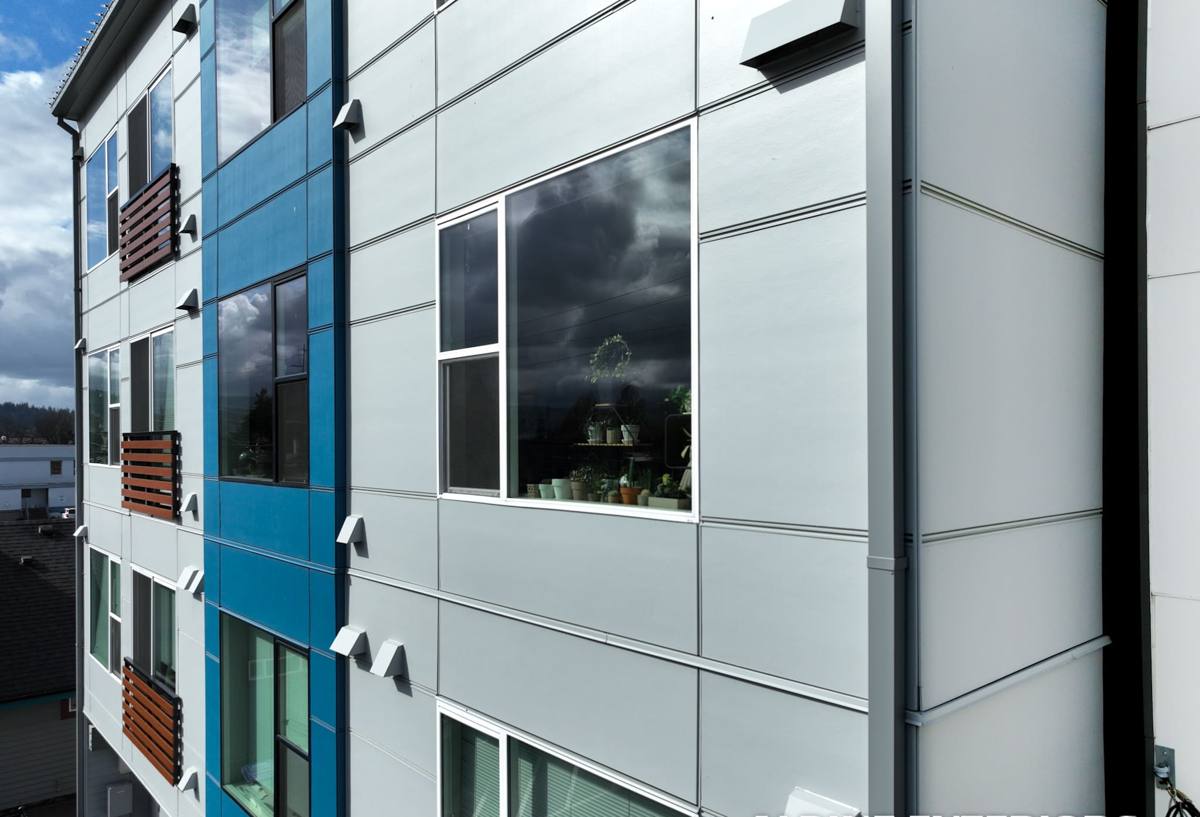
How This Climate Attacks a Window
Every window failure we see out here traces back to one of three things: moisture getting past the seal, salt accelerating corrosion on hardware and frames, or moss and organic growth holding water against wood and trim longer than it should sit there.
Salt Air and Hardware Corrosion
Locks, hinges, and balance hardware that aren't rated for coastal exposure start showing pitting and stiffness years before the glass or frame itself is a problem. Once hardware seizes or corrodes, homeowners often force windows open and closed, which stresses the frame and breaks the seal faster.
Driving Rain and Wind-Driven Water
Rain that falls straight down is forgiving. Rain that comes in sideways during a windstorm tests every seam, flashing detail, and sealant bead around a window. A window that's watertight in a light shower can still leak during a real Whatcom County blow if the flashing wasn't done correctly the first time.
Moss and Prolonged Moisture Contact
On shaded sides of a house, moss and algae hold moisture against sills, trim, and lower sashes for months at a stretch. Wood components rot from the inside out under that kind of sustained dampness, and even vinyl and composite materials can trap water behind them if the surrounding trim isn't sealed and drained properly.
Signs a Lynden or Custer Home Needs Window Replacement
Most homeowners don't notice window failure until it's visible — but by then, moisture has usually already reached the framing behind the window. Watch for:
- Fogging or a permanent haze between panes of double-glazed windows (a broken seal, not a cleaning issue)
- Soft or spongy wood at the sill or lower frame corners
- Visible moss, black staining, or dark streaking at the base of the window or on the trim below it
- Drafts or a noticeable temperature difference near the window even when it's fully closed and locked
- Hardware that's stiff, corroded, or won't latch tight anymore
- Peeling paint or bubbling on interior trim near the window, which usually means moisture is already inside the wall cavity
- Noticeably higher heating bills in a room compared to the rest of the house
Any one of these can be a minor fix. Two or three together, especially on an older single-pane or early-generation double-pane window, usually means replacement is the more honest answer than another repair.
What a Correct Window Replacement Job Actually Involves
The window unit itself is maybe a third of what determines whether the job holds up. The rest is what happens around it — the parts a homeowner can't easily inspect once the trim is back on.
Full-Frame vs. Insert (Pocket) Replacement
An insert replacement drops a new window into the existing frame, which is faster and less invasive, but only makes sense if the existing frame is still sound and properly flashed. A full-frame replacement removes the old unit down to the rough opening, which is more work but is often the right call on older homes here, since it's the only way to actually inspect and correct flashing and framing that's been exposed to decades of driving rain and moisture.
Flashing and Water Management
Correct flashing directs water that gets behind the siding back out, rather than letting it pool at the sill. This is the single most common point of failure we find on redo jobs — a previous installer caulked the gaps instead of properly flashing them, which looks fine for a year or two and then fails once sealant ages and cracks.
Air and Vapor Sealing
Low-expansion foam and proper interior air sealing keep conditioned air in and moisture out, without over-filling the cavity and bowing the frame — a mistake that causes windows to operate poorly for the life of the installation.
Sill Pans and Drainage
A sill pan under the window gives any water that does get past the exterior seal a way out instead of a place to collect. On a re-side or full-frame job, this is inexpensive to add and one of the best long-term investments against the kind of prolonged dampness moss season creates.
Choosing a Frame Material for This Climate
There's no single "best" window material — the right choice depends on budget, the home's exposure, and how much long-term maintenance you're willing to take on. Here's how the common options actually perform in a coastal Whatcom County climate:
| Frame Material | Moisture & Salt Air Behavior | Maintenance | Typical Fit |
|---|---|---|---|
| Vinyl | Won't rot or corrode; performs well against salt air and rain | Low — occasional cleaning | Most homes; best value for full-home replacement |
| Fiberglass | Excellent moisture and temperature stability; very stable in swings between wet and dry | Low | Homes wanting a higher-end, longer-lifespan option |
| Wood / Wood-clad | Attractive but vulnerable where cladding is breached; needs a sound exterior clad or paint system to keep moisture out | Higher — periodic inspection and upkeep of exterior finish | Historic or architecturally specific homes where appearance is the priority |
| Aluminum | Conducts cold and can promote condensation;厚 coastal salt exposure requires a quality finish to resist corrosion | Moderate | Less common for residential use in this climate |
Our standard recommendation for most Lynden and Custer homes is a quality vinyl or fiberglass unit, because both hold up against salt air and repeated wetting without the ongoing upkeep that wood cladding demands in a climate that rarely gives it a long dry stretch to recover in.
Our Process for a Lynden or Custer Window Replacement
- On-site assessment — we look at every window being considered, check the framing, sills, and existing flashing, and identify which units need full-frame replacement versus insert replacement.
- Honest scope and quote — a written estimate covering the window units, installation method, and any flashing, trim, or sill repair the job needs — no surprise add-ons discovered mid-job because a step was skipped in the estimate.
- Removal and inspection — old units come out carefully so we can see the actual condition of the rough opening, not just assume it's fine.
- Correction of any hidden damage — rotted framing or compromised sheathing gets replaced before a new window ever goes in. Installing a new window into a damaged opening just delays the same failure.
- Installation with proper flashing and sealing — sill pans, flashing tape, and correctly sequenced water management, then the window is set, shimmed, and sealed to manufacturer spec.
- Interior and exterior finish work — trim, caulking, and paint or stain matched to the home so the finished window looks original to the house.
- Final walkthrough — every window operates smoothly, locks properly, and is inspected for a tight seal before we consider the job done.
What Drives the Cost
Every home is different, but the same handful of factors move the price up or down on most Lynden and Custer jobs:
| Factor | Why It Matters |
|---|---|
| Insert vs. full-frame replacement | Full-frame costs more up front but is often necessary where old flashing or framing is compromised |
| Frame material | Vinyl is typically the most budget-friendly; fiberglass and wood-clad cost more |
| Number of windows and access | Second-story or hard-to-access windows take more labor time |
| Hidden rot or framing repair | Not knowable until the old window is out — this is why a thorough estimate flags likely risk areas up front |
| Trim and finish work | Matching existing trim profiles or repainting adds time versus a straightforward swap |
We'd rather walk a homeowner through these factors honestly during the estimate than give a number that doesn't hold up once the old window comes off the wall.
Why It Matters That We Already Work in Lynden and Custer
A window installer who mostly works drier inland climates can put in a technically fine window that still fails here within a few years, simply because the flashing and sealing details that matter in Whatcom County weren't part of their normal routine. A crew that regularly works Lynden and Custer homes already knows which sides of a house take the worst of the driving rain, how much moss buildup to expect on shaded walls, and which older flashing details from past decades tend to fail first. That's not a marketing point — it's the difference between a window that holds up through twenty Pacific Northwest winters and one that needs attention again in five.
If your windows are showing any of the signs above, or you're just planning ahead for a home in Lynden or Custer, we're happy to take a look and give you a straightforward, no-pressure estimate — use the form below to get started.