 Custer
 Siding Replacement in Meridian: Built for This Corner of Whatcom County
Homes in the Meridian area take a steady beating from weather that doesn't let up for long. Salt-laden air drifts in off the water and settles on everything, wind-driven rain finds its way into gaps that would stay dry in a drier climate, and a long, damp moss season keeps roofs, siding, and trim wet for months at a time. None of this is unusual for Whatcom County — it's just the price of living where we live. But it means siding here has to work harder than siding almost anywhere else in the country, and a lot of the siding installed on homes in this area over the past few decades wasn't built with that reality in mind.
This page is about one thing: replacing siding on a Meridian home the right way, with a product and installation method suited to salt air, driving rain, and moss, not just whatever was cheapest or fastest to install at the time. We work this area regularly out of our home base in Custer, and the patterns we see on siding failures here are consistent enough that we can usually tell what's wrong with a wall before we ever touch a pry bar.
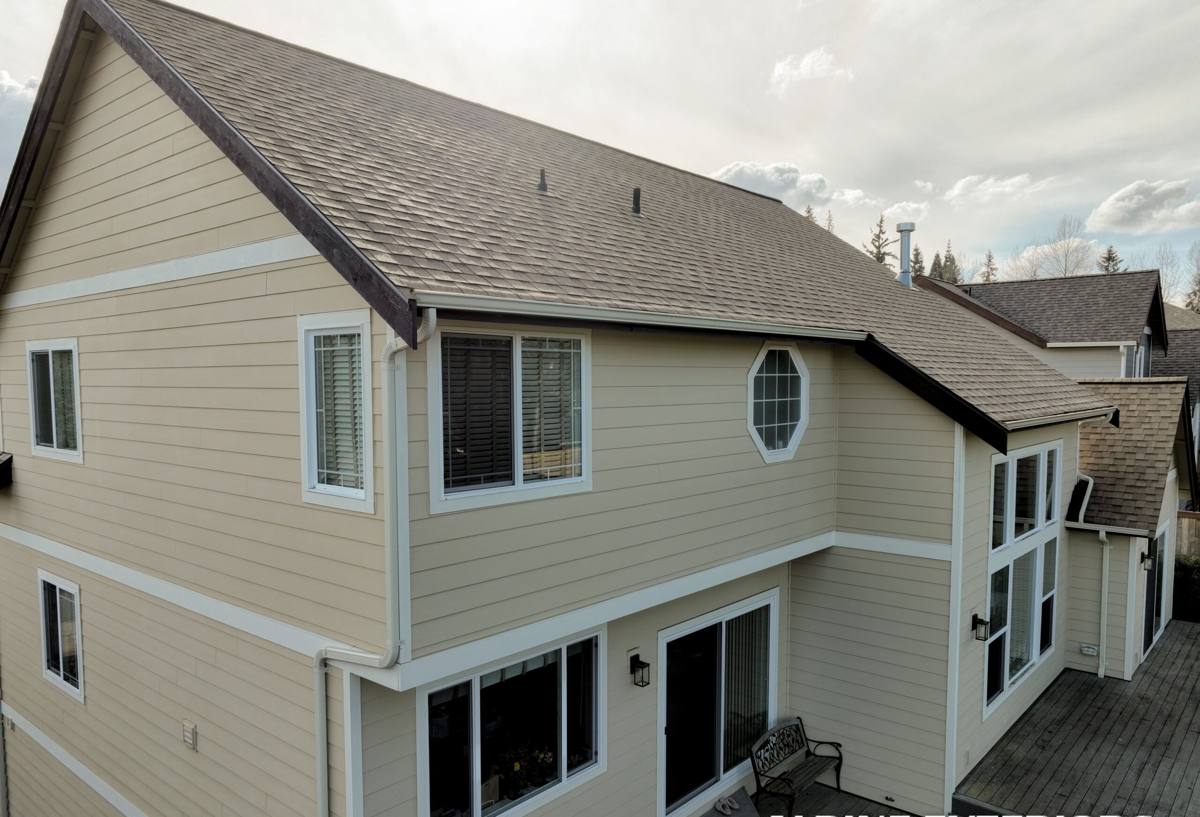
Signs Your Meridian Home Is Ready for New Siding
Siding rarely fails all at once. It shows warning signs first, and catching them early is the difference between a straightforward replacement and a job that also has to deal with rotted sheathing or framing underneath. Walk your exterior and look for these:
- Soft or spongy spots when you press on the siding, especially near the bottom courses and around windows and doors
- Paint that keeps failing within a year or two of repainting, even with quality paint
- Visible cracking, warping, or buckling panels or boards
- Persistent moss or dark streaking that comes back within weeks of cleaning
- Gaps opening up at seams, corners, or trim joints
- A musty smell along interior walls that back up to exterior siding
- Siding that's pulling away from the wall or has visible fastener corrosion (rust streaks around nail heads)
- Any history of water stains inside near exterior walls, even if they've since dried
If you're seeing two or more of these, it's worth having someone look at the wall assembly, not just the surface. Cosmetic problems and structural moisture problems can look similar from ten feet away.
Why the Climate Here Wears Siding Down Faster
Salt Air and Corrosion
Whatcom County's proximity to saltwater means airborne salt is a constant, low-level presence, even on homes that aren't right on the shoreline. Salt is hygroscopic — it pulls moisture out of the air and holds it against whatever surface it lands on. On siding, that means longer wet-dry cycles than an inland home would see. On fasteners, trim screws, and any exposed metal flashing, it accelerates corrosion. A lot of the "mystery" rust streaking homeowners see running down their siding is exactly this: a fastener that wasn't rated for the exposure, corroding from the inside out.
Driving Rain and Water Intrusion
Rain that falls straight down is fairly easy for siding to shed. Rain that comes in sideways, driven by wind off open water or farmland, is a different problem — it gets pushed up under laps, into seams, and around penetrations that were only ever designed to handle vertical water flow. Over enough seasons, that's how water finds its way behind siding that looks fine from the street. Once it's behind the cladding, the water-resistive barrier and flashing details are what actually keep it out of the wall — the siding itself is really just the first layer of a system.
Moss and Trapped Moisture
The long moss season here isn't just a cosmetic nuisance. Moss holds water against the siding surface far longer than bare material would stay wet on its own, which extends every wet-dry cycle and gives any weak point in the siding or its finish more time to fail. It's especially aggressive on north-facing and shaded walls, on horizontal trim surfaces, and anywhere debris collects, like inside corners and behind shrubs planted too close to the house.
What a Correct Siding Replacement Actually Involves
A siding replacement is not just swapping old boards for new ones. Done right, it's a chance to fix the water-management system behind the siding — which, on an older Meridian home, is often more overdue for attention than the siding itself. A correct job includes:
- Full tear-off and inspection of the sheathing underneath, so any rot, soft spots, or existing damage gets caught and repaired before new siding goes on, not sealed in behind it
- A continuous water-resistive barrier (house wrap or equivalent) installed with proper laps, shingle-style, so water sheds down and out rather than working its way in
- Correct flashing at every window, door, and penetration — this is where the majority of hidden leaks originate, and it's the detail that's easiest to shortcut
- Proper fastening — the right fastener type, length, and spacing for the specific siding product and wall condition, driven correctly (not overdriven, not underdriven)
- Correct clearances at the ground, roofline, and any deck or patio surface, so siding isn't sitting in standing water or trapped against soil
- Rain-screen or drainage considerations where the wall assembly calls for it, so any moisture that does get behind the siding has a path to drain and dry
Skip any one of these and you can end up with siding that looks new for a few years and then fails from behind — which is a much more expensive problem to fix than replacing tired-looking boards.
Why We Install Only James Hardie Fiber Cement
We don't install vinyl, LP SmartSide, primed wood, cedar, or other fiber cement brands. That's a deliberate standard, not a lack of options. Given what this climate does to siding, we settled on one product line that consistently holds up to it, and we'd rather do that one thing well than offer a menu of products with different long-term track records.
James Hardie fiber cement is non-combustible, which matters given wildfire smoke and ember exposure across the Pacific Northwest in recent years. It doesn't absorb water the way wood-based products can, so it doesn't swell, rot, or provide the same food source for moss and fungal growth. Hardie's ColorPlus finish is baked on at the factory under controlled conditions, rather than field-applied paint, which gives it better adhesion and color retention through repeated wet-dry cycles than site-painted siding typically manages. Hardie also makes climate-engineered product lines — including versions formulated for wetter, more humid regions like ours — and backs installations with a strong, transferable warranty when the work is done to their specifications.
None of that means fiber cement is maintenance-free or magic. It still needs to be installed correctly, caulked and painted at trim and cut edges per manufacturer instructions, and kept clear of standing moisture and vegetation contact. But it gives a Meridian home a real head start against salt air, driving rain, and moss compared to products that depend more heavily on paint film or moisture-sensitive substrates to stay protected.
Our Siding Replacement Process
Every home is different, but the sequence we follow stays consistent:
- On-site assessment. We walk the exterior, check problem areas you've flagged, and look for signs of hidden moisture damage before quoting anything.
- Written estimate. You get a clear scope of work and pricing before any tear-off starts — no surprise change orders for things we could have caught up front.
- Tear-off and sheathing inspection. Old siding comes off in sections so we can inspect and repair the wall underneath as we go, rather than all at once at the end.
- Water-resistive barrier and flashing. This is the step that determines how the wall performs for the next 30-plus years, and we don't rush it.
- Hardie installation. Panels, planks, or shingles installed to manufacturer fastening and clearance specs, with attention to how each wall faces prevailing wind and rain.
- Trim, caulking, and touch-up painting at cut edges and joints per Hardie's application requirements.
- Final walkthrough. We go over the finished job with you before we consider it done.
Cost Factors for Siding Replacement in Meridian
Every quote is specific to the house, but the same handful of factors drive most of the variation we see on Meridian projects:
| Factor | Why It Affects Cost |
|---|---|
| Extent of hidden damage | Rotted sheathing or framing found during tear-off adds repair work beyond the siding itself |
| Home size and wall complexity | More corners, gables, and dormers mean more cutting, flashing, and labor time |
| Siding profile chosen | Lap, shingle, and panel Hardie products differ in material and install time |
| Trim and accessory scope | Full trim replacement costs more than reusing sound existing trim |
| Access and site conditions | Steep grades, tight lot lines, or limited staging area add labor time |
| Existing siding removal | Multiple layers of old siding or hazardous materials (like old asbestos siding) add disposal steps |
As a general rule, a full tear-off replacement costs more than a re-side over existing siding — but on a home already showing moisture problems, skipping the tear-off just hides the issue instead of fixing it, which ends up costing more later.
Why Hiring a Crew That Already Works This Area Matters
A crew that's replaced siding across Whatcom County season after season knows which wall orientations in this area take the worst of the driving rain, which older homes tend to have moisture issues hiding behind the siding before anyone even mentions it, and how aggressively moss needs to be accounted for in flashing and clearance details. That's not something you get from a general handyman or a crew based hours away that occasionally picks up a job here. It shows up in small decisions — an extra course of flashing tape, a slightly different clearance at grade, catching a soft spot in the sheathing before it's covered up — that don't cost much more to get right the first time but cost a lot to fix later.
It also means someone local who stands behind the warranty, both Hardie's product warranty and our own workmanship, and who's still around to answer the phone if a question comes up five years after the job is done.
Caring for Your Siding After It's Replaced
New siding still needs basic upkeep to get its full lifespan out of this climate. Rinse it periodically to keep salt residue and grime from building up. Keep gutters clear so water isn't dumping down the wall face. Trim back vegetation so leaves and branches aren't holding moisture against the siding or feeding moss growth. Watch caulked joints and touch-up paint at cut edges over the years, and address any gaps before they become water pathways. None of this is heavy maintenance — it's the kind of periodic attention that lets a correctly installed Hardie system go the distance in a climate that doesn't give siding many breaks.
If your Meridian home is showing signs of tired siding, or you just want an honest read on what shape your walls are in, we're happy to take a look. The estimate is free, there's no pressure attached to it, and you'll get a straight answer about what your home actually needs — just fill out the form below to get started.