 Custer
 Lynden's Climate Puts Windows to the Test
Lynden sits close enough to the water and to the open farmland north of Custer that its homes take a specific kind of weather beating: salt-laden air drifting in off the Strait, driving rain that comes in sideways more often than straight down, and a moss season that seems to stretch longer every year. None of that is dramatic on its own, but it adds up. A window that's installed correctly in this part of Whatcom County can handle decades of that pattern without complaint. A window that's installed even slightly wrong — a missing flashing lap, a bead of sealant asked to do a job it was never designed for — starts failing quietly, usually behind the trim where you can't see it until the wall material tells on it.
We work on homes in and around Lynden regularly, which matters more than it might sound like. Window installation isn't just a product you buy and screw into a hole; it's a system of flashing, drainage, and sequencing that has to match how water actually moves on a house in this specific climate. That's the difference between a window that lasts and one that becomes a repeat service call.
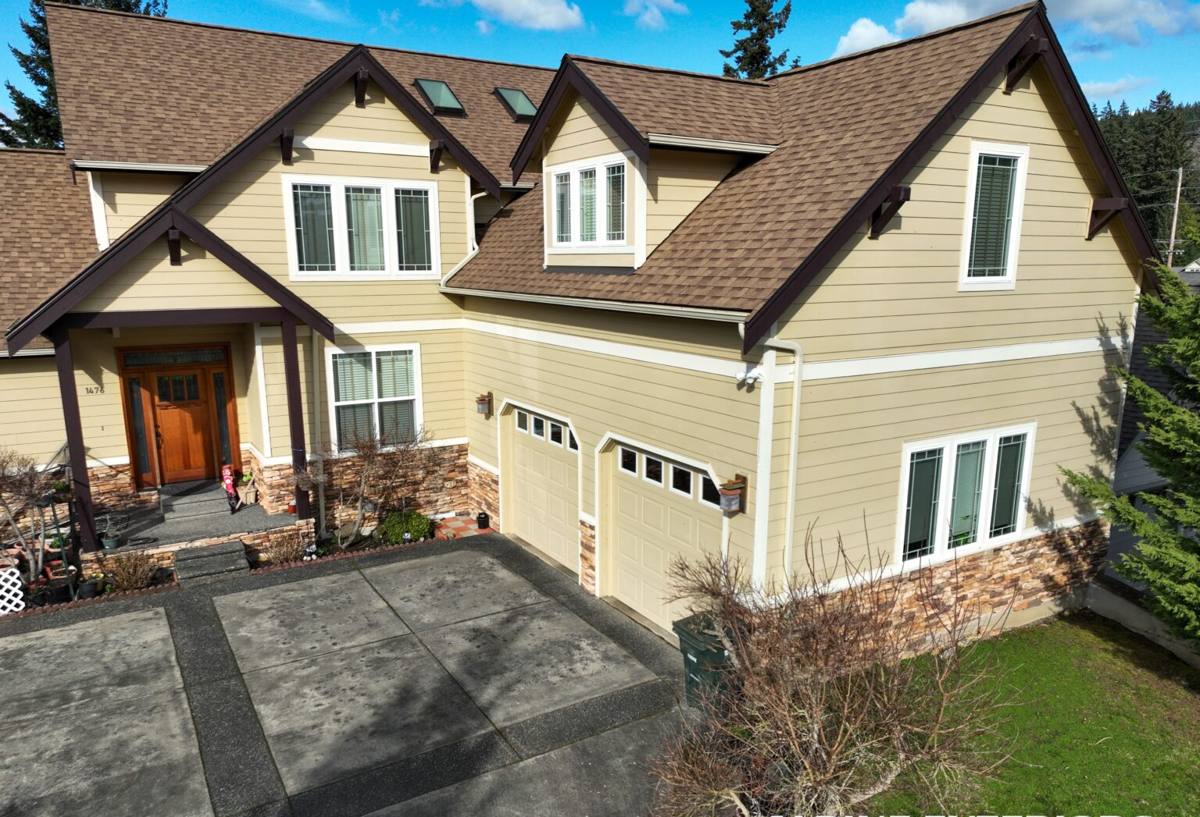
How Coastal Whatcom County Weather Wears Down Windows
Salt Air and Hardware
Homes closer to the water deal with airborne salt that settles on everything, including window hardware, screen frames, and exposed fasteners. Over time it accelerates corrosion on lower-grade hardware and can dull finishes faster than a homeowner further inland would ever notice. It's not a reason to panic about any one window brand — it's a reason to pay attention to hardware quality and finish when you're choosing a unit.
Driving Rain and Wind-Driven Moisture
Rain that comes in at an angle behaves differently than a straight downpour. It gets pushed up under sills, into corner joints, and behind trim that wasn't lapped correctly. A window opening built for wind-driven rain needs proper head flashing, sill pans that slope water back out, and weather-resistive barrier integration that respects gravity and lap order — every layer overlapping the one below it, never the reverse.
Moss, Shade, and Prolonged Dampness
A long moss season means more months where wood trim, sills, and even window frames stay damp longer than they would in a drier climate. That extended dampness is what breaks down poorly sealed joints and untreated wood components over the years. It's less about any single storm and more about cumulative exposure.
Signs a Lynden Home's Windows Need Attention
- Fogging or a hazy film between panes of a double- or triple-pane unit — a sign the seal has failed
- Soft or discolored trim and sill wood, especially on north- and west-facing walls
- Visible daylight or a noticeable draft around the sash even when the window is latched
- Difficulty opening, closing, or latching windows that used to operate smoothly
- Paint or caulk that's cracked, peeling, or pulling away from the frame
- A musty smell near a window opening, which can point to moisture getting behind the wall
- Visible corrosion or stiffness in hardware, hinges, or locks
Any one of these on its own might be minor. Several together, especially on the weather-facing side of the house, usually means it's time to have someone look at the whole opening, not just the glass.
What a Correct Window Installation Actually Involves
The Opening Comes First
Before a new window ever goes in, the rough opening has to be checked and prepped: squared, sound, free of rot, and properly wrapped with a weather-resistive barrier that ties into the rest of the wall's drainage plane. Skipping this step and just fitting a new window into an old, unchecked opening is one of the most common ways a window installation fails early — and it's invisible from the outside until it isn't.
Flashing Sequence
Sill pan first, sloped to shed water outward. Side flashing next, lapped over the sill pan. Head flashing last, lapped over the side flashing and integrated with the barrier above it. That order isn't a preference — it's how water is forced to run out instead of in. Reverse any step and you've built a shelf for water to collect on instead of a path for it to leave.
Sealant Is a Backup, Not the Plan
Caulk and sealant are meant to be a secondary barrier, not the primary defense against wind-driven rain. A window installed with good flashing and a bad bead of caulk will still perform. A window installed with poor flashing and a great bead of caulk is running on borrowed time, because sealant degrades, shrinks, and gets brittle years before flashing does — and driving rain finds that gap.
Fastening, Shimming, and Insulation
The window has to be shimmed square and plumb, fastened per the manufacturer's schedule, and the gap between the frame and rough opening filled with a low-expansion foam or backer rod rated for windows — not construction-grade foam that can bow the frame and cause the sash to bind.
Choosing Materials for This Climate
| Frame Material | How It Handles This Climate | Trade-offs |
|---|---|---|
| Vinyl | Won't rot or corrode from salt air; good moisture tolerance | Frame color/finish choices are more limited; quality varies a lot by manufacturer |
| Fiberglass | Very stable in temperature swings and damp conditions; strong long-term performance | Higher upfront cost than vinyl |
| Wood (clad exterior) | Warm interior look; exterior cladding protects the wood from direct weather | Any exposed or damaged wood is vulnerable in a long wet season; needs attentive upkeep |
| Aluminum | Strong and low-maintenance structurally | Conducts heat/cold and can corrode faster near salt air without a quality finish |
We don't push one material as universally "best" — we walk through what a given home's exposure, budget, and maintenance appetite actually call for. A window on a sheltered, south-facing wall doesn't need the same spec as one facing open weather on the water side of the property.
Our Process for a Lynden Window Installation
- On-site assessment: we check existing openings, look for hidden moisture or rot, and measure for accurate ordering
- Product selection: we go over frame material, glass package, and hardware options based on the wall's actual sun and weather exposure
- Opening prep: remove old units carefully, inspect framing, repair any rot or damage found before anything new goes in
- Flashing and barrier integration: sill pan, side flashing, head flashing, tied into the existing weather-resistive barrier in the correct lap order
- Set, shim, and fasten: window is leveled, squared, and secured per manufacturer spec
- Insulate and seal: low-expansion foam or backer rod at the gap, sealant as the backup layer, not the only layer
- Interior and exterior trim: finished out to match the home, with attention to paint or caulk lines that will hold up to the weather
- Final walkthrough: operation checked on every window, and we point out anything homeowners should keep an eye on going forward
What Affects the Cost of a Window Installation
| Factor | Why It Matters |
|---|---|
| Number and size of openings | More or larger windows mean more material and labor |
| Frame material | Vinyl, fiberglass, and clad wood carry different price points |
| Condition of existing openings | Rot or framing damage found during removal adds repair work before the new window can go in |
| Glass package | Double- vs. triple-pane and low-E coatings affect both price and energy performance |
| Access and site conditions | Second-story or hard-to-reach openings take more time and equipment |
| New construction vs. replacement | Retrofitting into an existing wall involves more careful integration than a new opening |
We give straightforward numbers based on what we actually find at the house — not a phone estimate that changes the moment we open the wall.
Maintenance That Extends the Life of the Installation
- Rinse accumulated salt film off frames and hardware a couple of times a year, especially on wind-exposed sides
- Check and refresh exterior caulk lines before they crack open, not after
- Keep gutters and downspouts clear so runoff isn't sheeting directly across window heads
- Clean weep holes on the sill so trapped water has somewhere to drain
- Knock back moss and organic buildup on nearby siding and trim before it holds moisture against the window opening
- Operate every window at least occasionally through the year so hardware doesn't seize
Why a Crew That Already Works Lynden Makes a Difference
Window installation is one of those jobs where local, hands-on experience shows up in details a general contractor from outside the area might not think to check. A crew that's already worked on homes in Lynden and around Custer knows which wall orientations tend to take the worst of the driving rain, how far the salt air's effects typically reach inland, and how long moss and shade problems have to run before they become a framing issue instead of a cosmetic one. That's not something you can read off a spec sheet — it comes from doing the work in this specific stretch of Whatcom County, house after house, season after season.
It also means someone who's still local and reachable if a question comes up two years after the install, not a crew that worked the area for one season and moved on.
If you're weighing whether your windows need attention, or you're ready to move forward with new ones, we're happy to come take a look. A free, no-pressure estimate gets you a straight answer on what your home actually needs — just fill out the form below.