 Custer
 Roofs in Sandy Point Work Harder Than Most
Sandy Point sits right up against the water in Whatcom County, and that location shapes everything about how a roof ages here. Homes get a steady dose of salt-laden air off the Strait, wind-driven rain that finds its way under loose or aging flashing, and long stretches of gray, wet weather that keep roof surfaces damp for months at a time. None of that is unique to any one house — it's the baseline for the whole area. A roof repair here needs to account for all three, not just patch whatever is leaking today.
We're a Custer-based crew, and Sandy Point is one of the areas we're in regularly. That matters more than it sounds like it should, and we'll get into why further down. First, let's talk about what actually goes wrong with roofs out here and what a repair should actually involve.
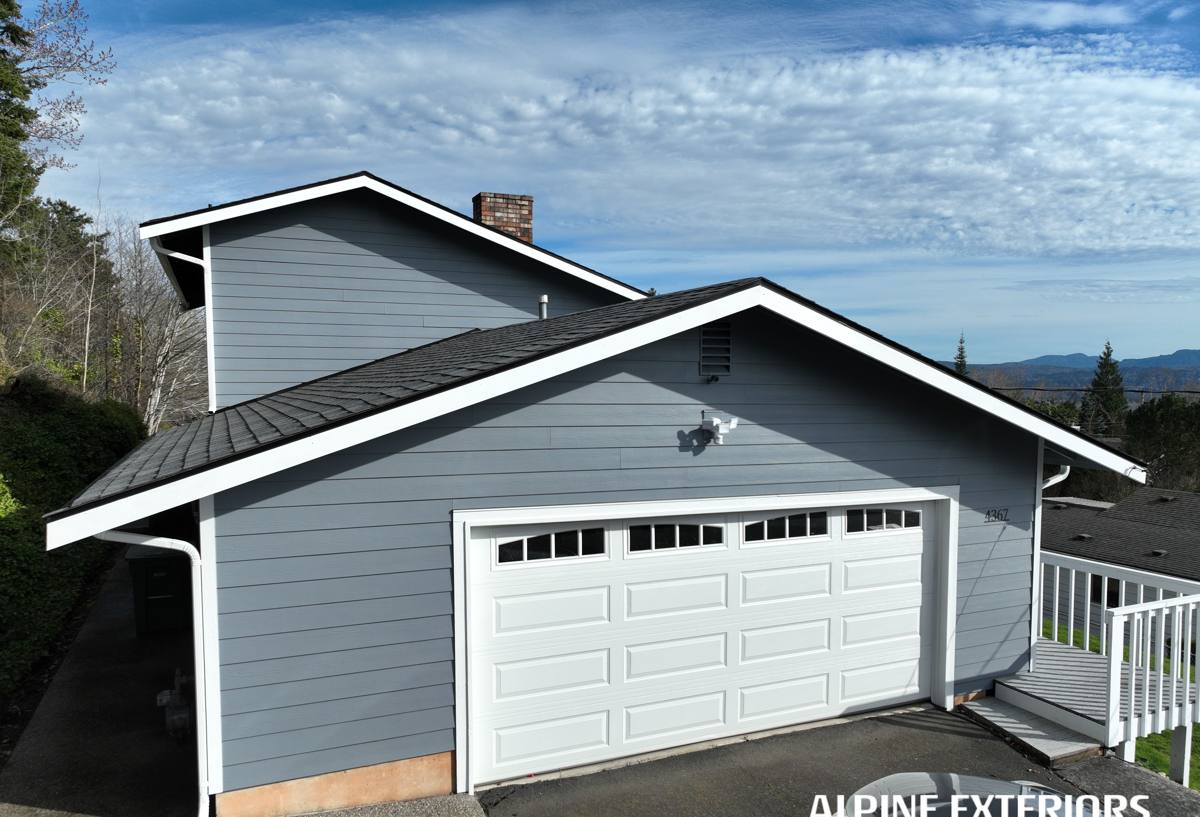
What Actually Wears Out a Sandy Point Roof
Moss and Sustained Moisture
Whatcom County's moss season is long — mild temperatures and near-constant moisture from fall through spring give moss everything it needs to take hold, especially on north-facing slopes and anywhere tree cover keeps shingles from drying out between rains. Moss itself doesn't just sit on top of a roof; it lifts shingle edges as it grows, holds water against the surface, and works its way toward the granule layer and eventually the felt or synthetic underlayment underneath. By the time moss is visible from the ground, it's usually been doing damage for a while.
Salt Air and Metal Components
Salt air accelerates corrosion on anything metal — flashing, fasteners, gutter hardware, roof vents, and any exposed nail heads. A fastener that would last decades inland can start showing rust streaks and weakening well before that near open water. Once a nail or flashing seam corrodes, it stops sealing the way it was designed to, and that's a direct path to a leak.
Wind-Driven Rain
Rain that comes in sideways off the water behaves differently than a straight-down downpour. It gets pushed up under shingle tabs, into flashing laps, and around any penetration — vent pipes, chimneys, skylights — that wasn't sealed with that kind of exposure in mind. A roof that would hold up fine a few miles inland can leak in the same storm if it's facing open water and wasn't detailed for wind-driven conditions.
What a Correct Repair Actually Involves
A roof repair that's done right starts with figuring out why the roof failed, not just where. Patching the spot where water is showing up inside the house without finding the actual entry point is one of the most common ways a "repaired" roof leaks again within a year or two — often because water travels along the underlayment or decking before it shows up somewhere else entirely.
A proper repair typically includes:
- An inspection of the surrounding area, not just the leak point — moss and wind-driven rain damage rarely stay confined to one spot
- Checking flashing at every penetration and transition near the problem area: vents, chimneys, valleys, and roof-to-wall junctions
- Assessing the decking underneath for soft spots or rot before any new material goes down over it
- Matching shingle or metal material as closely as possible so the repair doesn't stand out or age differently than the rest of the roof
- Confirming attic or roof ventilation isn't part of the problem — poor airflow traps moisture and speeds up rot and moss growth from underneath
Skipping any of these steps is how you end up paying for the same repair twice.
How We Handle a Repair, Start to Finish
We keep the process straightforward because most homeowners don't want a runaround — they want to know what's wrong, what it costs, and what happens if we find more once we're up there.
- Inspection. We look at the roof itself, not just the spot you're worried about, and check attic access where possible for signs of moisture that haven't shown up on the ceiling yet.
- Honest diagnosis. We tell you what's actually failing — moss undermining shingles, corroded flashing, wind-driven rain intrusion, or something else — and why, in plain terms.
- Written estimate before any work starts. No surprise add-ons once we're on the roof unless we find something that genuinely wasn't visible beforehand, and we'll walk you through that before touching it.
- The repair itself. Matched materials, proper flashing detail for this area's wind and rain exposure, and decking replacement if rot is found — not covered over.
- Cleanup and a final look. We clear debris, old moss and material, and check the repair against the rest of the roof before we call it done.
Repair or Replace? How to Tell the Difference
Not every roof problem in Sandy Point needs a full replacement, and not every leak is fixable with a simple patch. The honest answer usually comes down to how much of the roof's remaining service life is left and how widespread the damage already is.
| Sign | Usually Points To |
|---|---|
| Isolated leak near one penetration or valley | Repair — localized flashing or sealant failure |
| Moss confined to shaded sections, shingles otherwise intact | Repair plus moss removal and treatment |
| Multiple leaks in different areas of the roof | Sign of broader wear — worth a full evaluation |
| Soft or spongy decking found under more than one section | Often replacement, since decking issues tend to spread |
| Roof is 18–25+ years old with widespread granule loss | Repair may be short-term; replacement likely more cost-effective long term |
We'll tell you straight if a repair makes sense or if you're better off putting that money toward a replacement instead. A repair on a roof that's genuinely at the end of its life isn't a favor to you — it's just delaying a bigger bill.
Materials and Trade-Offs Worth Knowing
For most Sandy Point repairs, matching the existing roofing material — usually architectural asphalt shingle — is the right call, since mixing materials on one slope creates its own maintenance and appearance issues down the line. Where flashing is involved, we favor corrosion-resistant metal detailed with enough overlap and sealant to handle wind-driven rain, rather than a minimal patch that technically covers the gap but doesn't account for water pushed sideways in a storm.
On moss-prone sections, we'll talk through options like zinc or copper strips that discourage regrowth versus periodic treatment and removal. Neither is a permanent fix — moss returns wherever shade and moisture stick around — so we're upfront that this is ongoing maintenance, not a one-time cure. We won't oversell a moss treatment as a permanent solution, because in this climate, it isn't.
Maintenance Checklist for Sandy Point Homeowners
A few habits go a long way toward avoiding emergency repairs between our visits:
- Clear moss and debris from north-facing and shaded roof sections at least once a year
- Keep gutters and downspouts clear so water isn't backing up under the roof edge
- Trim back branches that keep sections of the roof shaded and damp longer than the rest
- Check attic ventilation isn't blocked by insulation, especially before winter
- Have flashing around chimneys, vents, and skylights checked every couple of years — these are the first spots to fail near open water
- Don't ignore small ceiling stains — they rarely stay small in a climate this wet
Why a Local Crew Matters for This Kind of Work
Roof repair in Sandy Point isn't the same job as roof repair a few miles inland, and a crew that doesn't work this area regularly can miss that. We already know which details fail first out here — the flashing patterns that hold up against wind-driven rain, how fast moss comes back on a shaded slope this close to the water, and which fasteners and metals actually last against salt air instead of just looking fine for the first year.
That familiarity also means fewer surprises for you. We're not learning Custer-area weather patterns on your roof, and we're not far away if a repair needs a follow-up check after the next storm. For a coastal Whatcom County property, that local track record is worth as much as any material we put on the roof.
If you've got a leak, visible moss damage, or just want an honest read on where your roof stands, we're glad to come take a look. Reach out for a free, no-pressure estimate using the form below.