 Custer
 What Whatcom County Weather Does to a Lynden Roof
Lynden sits inland from the water compared to some of our other Whatcom County service areas, but it still gets the same marine air moving through the Nooksack Valley — damp, mild, and persistent for most of the year. That combination of salt-tinged coastal air, long stretches of driving rain, and short winter daylight is exactly what wears a roof down faster here than it would in a drier climate. It's not usually one dramatic storm that causes the damage homeowners call us about. It's wind-driven rain finding a weak spot that's been building for a season or two, then a windstorm finishing the job.
The other factor that's easy to underestimate is moss. Whatcom County's moss season runs long — shaded, north-facing roof sections and anything under overhanging trees can stay damp for months at a stretch. Moss doesn't just look bad; it holds water against the shingle surface, works its way under tabs and shakes, and lifts material just enough for wind and rain to get underneath during the next storm. A roof that looks intact from the ground can already have compromised spots by the time a storm event pushes water through.
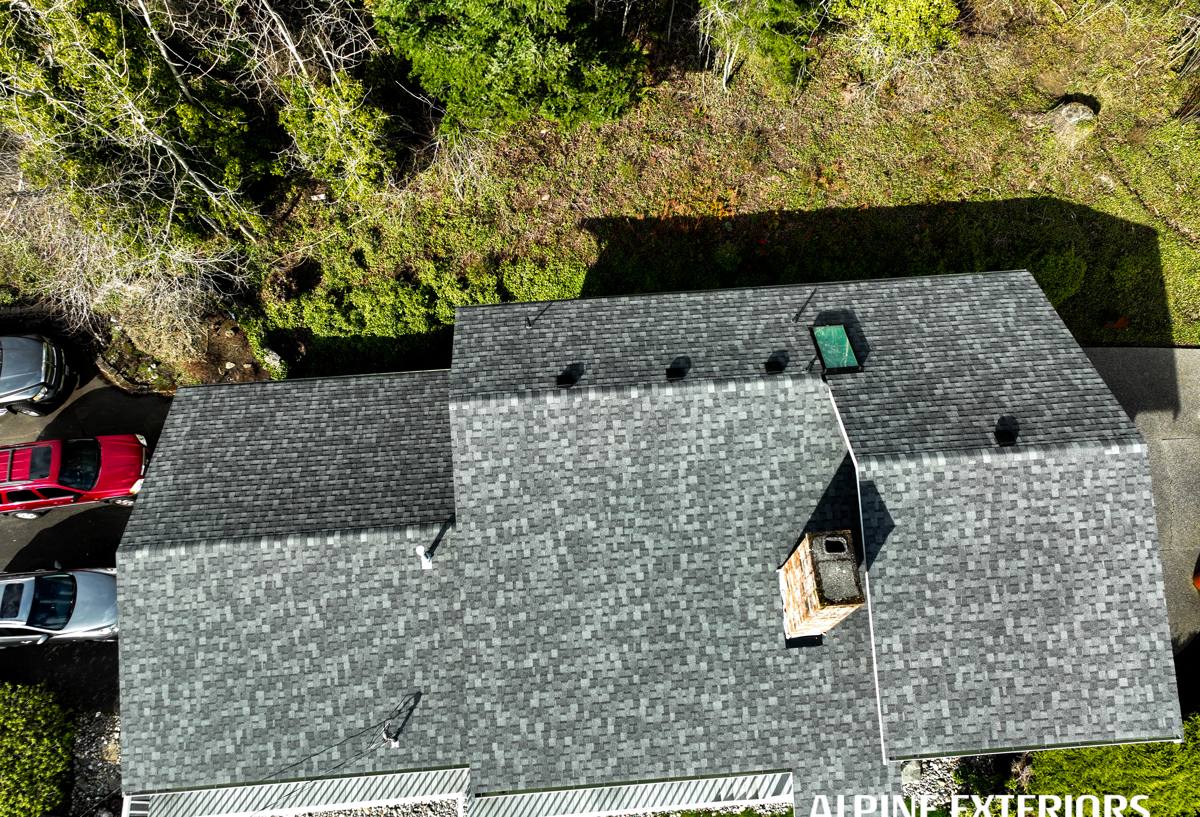
Recognizing Storm Damage Before It Becomes a Bigger Repair
Most storm damage doesn't announce itself with an obvious hole. It shows up as small warning signs that homeowners notice but don't always connect to the roof. After any significant wind or rain event, it's worth walking the property and checking for the following:
- Shingles that are curled, cracked, creased, or missing altogether, especially on the side of the roof that faces prevailing wind
- Granules collecting in gutters, downspouts, or at the base of downspouts after rain
- Soft or spongy spots when you press on the roof deck from the attic side
- New water stains, discoloration, or a musty smell in the attic or on ceilings below the roof line
- Thick moss or algae buildup along ridges, valleys, or shaded slopes, especially where it's started to lift shingle edges
- Bent, loose, or separated flashing around chimneys, skylights, and roof vents
- Dents or dislodged panels on metal roofing or gutters from wind-blown debris
- Ridge caps that look uneven, lifted, or are missing sections
Any one of these on its own might not be urgent. Several together, or any sign of active water intrusion, means it's time to get someone up there before the next storm makes it worse.
Why Waiting Costs More Here Than Elsewhere
Because Whatcom County rarely gets a long dry stretch to let a damaged roof "air out," a small breach tends to stay wet longer and spread further into the decking and framing than the same damage would in a drier region. A repair that would have been a single afternoon's work if caught early can turn into a deck replacement and interior repair if it sits through a couple more storm systems.
What a Correct Storm Damage Repair Actually Involves
A proper storm damage repair is more than swapping out the shingles that are visibly missing. Done right, it includes:
- Confirming the full extent of the damage — checking beyond the obvious spot, since wind and water travel under the roof surface
- Inspecting the decking for soft or delaminated sheathing that needs to be cut out and replaced, not just covered over
- Checking underlayment condition in the surrounding area, not just directly under the damaged shingles
- Verifying flashing and sealant at any penetration near the repair — chimneys, vents, skylights — since these are common secondary leak points after a storm
- Matching materials as closely as possible to the existing roof so the repair blends in and performs consistently with the rest of the field
- Addressing the moisture source, whether that's moss buildup, poor attic ventilation, or a drainage issue that made the area vulnerable in the first place
Skipping any of these steps is how a homeowner ends up paying for the same repair twice — once now, and again in a year or two when the underlying cause resurfaces.
Our Storm Damage Repair Process
We keep the process straightforward so you know what's happening at each stage:
- Inspection. We walk the roof and check the attic, looking for both the visible damage and any secondary signs of moisture.
- Written scope. You get a clear explanation of what's damaged, what needs to be repaired, and what we recommend versus what's optional.
- Documentation. If you're filing an insurance claim, we photograph and note the damage in a way that supports your claim.
- Tear-out. We remove only the damaged materials, checking the decking underneath as we go.
- Deck repair. Any soft or compromised sheathing gets replaced — this isn't something to shortcut in our climate.
- Underlayment and flashing. We install appropriate underlayment and correct any flashing issues in the repair area.
- Material installation. New shingles or roofing material go in, matched to your existing roof as closely as possible.
- Final check and cleanup. We walk the repair with you, clean the site, and flag anything else worth keeping an eye on, like moss growth nearby.
Repair or Replace? How We Help You Decide
Not every storm-damaged roof needs a full replacement, and we won't recommend one unless it's genuinely the better value for you. The decision usually comes down to a few honest factors:
| Factor | Leans Toward Repair | Leans Toward Replacement |
|---|---|---|
| Age of roof | Under 10-12 years, in otherwise good condition | Near or past its expected service life |
| Extent of damage | Isolated to one area or slope | Spread across multiple slopes or the whole roof |
| Moss/algae history | Minor, manageable with cleaning and treatment | Long-term buildup that's degraded shingles broadly |
| Number of past repairs | First or second repair on this roof | Repeated patch jobs in different spots over the years |
| Decking condition | Sound, dry sheathing under the damaged section | Widespread soft or rotted decking found during inspection |
When a roof is genuinely repairable, we'll say so — a repair that solves the actual problem is a better outcome for you than an unnecessary replacement.
Storm Damage and Insurance Claims
Many storm-related roof repairs in this area do get covered by homeowner's insurance, but coverage depends on your specific policy and the cause of the damage. A few things help the process go smoother:
- Document damage as soon as it's safely possible after the storm, including photos of any debris or fallen limbs involved
- Get an inspection promptly — most policies have a window for reporting claims, and delayed reporting can complicate coverage
- Ask your contractor for a written, itemized scope that matches what an adjuster will look for, not just a verbal estimate
- Be cautious of anyone pushing a full replacement before an adjuster has even seen the roof — the honest scope should drive the recommendation, not the other way around
We provide documentation that supports your claim, but the claim itself is between you and your insurer. We're happy to meet an adjuster on-site if that's helpful.
Materials and Trade-Offs Worth Knowing About
For storm and moss exposure like Lynden gets, we lean toward algae-resistant shingle options where a full replacement is on the table, since they hold up longer against the kind of persistent dampness this area sees. We also pay close attention to underlayment quality and coverage at eaves, valleys, and any area prone to wind-driven rain — these details matter more here than in drier climates, even though ice damming itself is uncommon this close to the coast.
Some traditional materials that look appealing, like untreated cedar shake, come with a higher maintenance burden in a climate this wet — more frequent moss removal, more sensitivity to installation quality, and less forgiving warranty terms if maintenance lapses. That's not a knock on the material itself; it's why we set clear expectations up front about what a given roofing choice will actually require from you over time, so there are no surprises a few years in.
Why a Crew That Already Works in Lynden Matters
A roofing crew that works this part of Whatcom County regularly knows which roof orientations take the worst of a given windstorm, how fast moss regrows on a shaded slope here versus a sunnier one, and what a normal amount of wear looks like on a Lynden roof versus actual storm damage. That local familiarity means fewer surprises during inspection and a repair scope that reflects how this climate actually behaves — not a generic checklist. It also means a faster response when a storm has just come through and water is already getting in, which matters more than almost anything else in preventing a small repair from turning into a much bigger one.
If your roof took a hit in a recent storm, or you've noticed the kind of moss buildup and wear that this climate causes over time, we'd rather take a look now than have you wait until it's an emergency. Request a free, no-pressure estimate using the form below and we'll get a real assessment on the calendar.