 Custer
 Deck Repair Built for Nooksack's Climate, Not a Generic Fix
Nooksack sits close enough to the water and low enough in the valley that decks here take a beating most drier regions never see. Between the salt air drifting in off the Strait, the driving rain that blows sideways during winter storms, and a moss season that can run from October clear through April, a deck in this part of Whatcom County ages differently than one in Spokane or even Bellingham's drier pockets. We repair decks in Nooksack and the surrounding Custer area on a regular basis, and the failures we see are consistent enough that we can usually tell you what's wrong before we even get a ladder out.
This page is specifically about deck repair — fixing what's already built, not building new. If your deck is structurally sound but showing its age, or if you've noticed a soft spot, a wobble, or staining you don't like the look of, this is the service that addresses it.
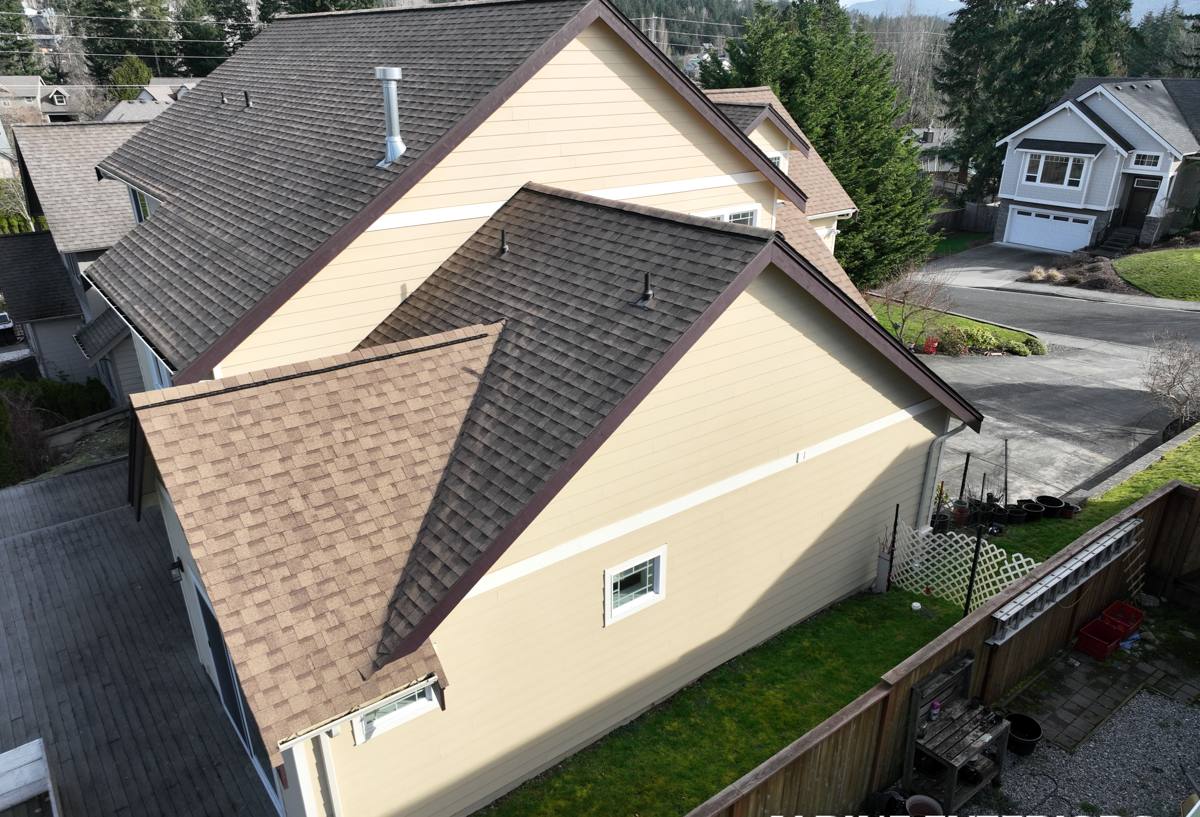
Why Decks in This Area Fail Faster Than People Expect
Salt Air and Metal Fasteners
Coastal moisture carries salt, and salt accelerates corrosion in any fastener that isn't rated for it. Older decks — especially anything built before coated or stainless hardware became standard practice — often have nails, screws, and joist hangers that have been quietly rusting for years. Rust doesn't just look bad; it weakens the connection between boards and framing, which is exactly the kind of failure you don't want to discover by stepping on it.
Driving Rain and Water Intrusion
Rain that falls straight down mostly sheds off a deck surface the way it's supposed to. Rain that comes in sideways — which is common here during winter fronts — finds its way into gaps, under flashing, and along ledger boards where the deck attaches to the house. That's the single most common source of hidden rot we find: not the visible deck boards, but the ledger connection and the framing directly behind it.
Moss, Algae, and a Slippery Surface
A long, damp moss season means organic growth gets a real foothold on any horizontal wood or composite surface that doesn't dry out quickly. Beyond the slip hazard, moss and algae hold moisture against the decking material, which speeds up wood decay and can stain or degrade composite surfaces over time if left unaddressed.
What a Nooksack Deck Repair Actually Involves
Every repair starts with an honest structural check, not just a look at the surface. We're checking:
- Ledger board attachment and flashing where the deck meets the house
- Joists and beams for soft spots, splitting, or rot — especially near ground contact or under high-traffic areas
- Post bases and footings for movement, rot, or inadequate drainage
- Fastener condition, including hidden hardware like joist hangers and structural screws
- Railing posts and connections for looseness or rot at the base
- Surface boards for cupping, splintering, or fastener pop
- Stair stringers and treads, which take disproportionate wear and weather exposure
From there, the scope of the repair depends on what we find. Some jobs are a handful of board replacements and re-fastening. Others involve rebuilding a ledger connection properly with correct flashing, or sistering new lumber alongside a compromised joist rather than replacing the whole structure. We don't push a full rebuild when a targeted repair will hold up — but we also won't patch over a structural issue just to make a job cheaper up front.
Common Repair Scenarios We See in This Area
| Symptom | Likely Cause | Typical Fix |
|---|---|---|
| Soft or spongy decking | Trapped moisture, wood rot beneath the surface | Board replacement, sometimes joist inspection/sistering |
| Deck feels loose where it meets the house | Failed or missing ledger flashing, corroded lag bolts | Ledger reattachment with proper flashing and hardware |
| Wobbly or leaning railings | Rotted post base or loosened connection | Post replacement or reinforcement at the base |
| Green or black film on the surface | Moss and algae growth from prolonged dampness | Cleaning, plus addressing drainage or shade issues if recurring |
| Rust streaks around fasteners | Non-coated hardware corroding from salt-laden moisture | Fastener replacement with corrosion-resistant hardware |
| Gaps opening between boards | Wood shrinkage/movement from repeated wet-dry cycles | Board tightening, re-spacing, or selective replacement |
Repair vs. Replacement: How We Make the Call
Homeowners often assume a deck with visible problems needs to be torn out and rebuilt. That's rarely true. The framing — the joists, beams, and posts — is usually the most expensive part of a deck, and if it's structurally sound, there's no reason to replace it just because the surface boards or railings are past their prime.
Here's the general logic we use:
- Isolated rot or damage (a few boards, one post, a section of railing) — repair, not replacement
- Rot concentrated at the ledger or a load-bearing beam — targeted structural repair, still short of full replacement in most cases
- Rot spread across multiple framing members, or a deck built without proper flashing from the start — this is where replacement starts to make more financial sense than chasing repairs
- Cosmetic wear with no structural issues — cleaning, board replacement, and refinishing rather than any structural work at all
We'll tell you plainly which category your deck falls into. If a repair is the honest answer, that's what we'll recommend — a full rebuild isn't automatically the "safer" choice, and we're not going to sell you one you don't need.
Our Process for Deck Repair Work
1. On-Site Inspection
We walk the deck, check the framing where accessible, and probe suspect areas — particularly the ledger, post bases, and any spots where staining or softness suggests trapped moisture.
2. Clear Scope and Straight Talk on Cost
Before any work starts, you'll know what we found, what we recommend fixing, and roughly what that involves. If we find something during the work that changes the scope — which does happen once boards come up and framing is exposed — we tell you before proceeding, not after.
3. The Repair Itself
We match materials appropriately: pressure-treated lumber for framing repairs, corrosion-resistant fasteners throughout (this matters more here than in drier inland areas), and decking material that's a reasonable match to what's already there, or an upgrade if you'd rather move away from the original material.
4. Final Check
Before we consider the job done, we check that railings are solid, boards are properly fastened, and any flashing work is sealing the way it should. A deck repair that doesn't hold up through the next wet season isn't a finished job.
Why a Crew That Already Works Nooksack Matters
Deck repair isn't just carpentry — it's carpentry that has to survive this specific climate. A contractor unfamiliar with the area might use standard fasteners where coated or stainless hardware is warranted, or miss that a ledger flashing detail needs to be more robust here than it would in a drier climate. Working regularly in Custer, Nooksack, and the rest of Whatcom County means we're not guessing about how salt air and driving rain affect wood, hardware, and flashing over time — we see the results of that exposure on a routine basis, on decks of all ages and conditions.
It also means practical things: we know the area, we're not driving in from out of county for a small repair, and we can usually get out to look at a problem without a long wait.
Maintaining a Deck After Repair
A repaired deck lasts longer with a little seasonal attention, especially given the moss and moisture load in this area:
- Sweep debris off the surface regularly, especially in fall when leaves and needles trap moisture against the boards
- Clean moss and algae off before they get established — it's far easier to prevent buildup than remove it once it's set in
- Check railings and stair connections once or twice a year for looseness
- Keep gutters and downspouts clear so runoff isn't draining directly onto or under the deck
- Reseal or refinish wood decking on the schedule appropriate to the product — this varies by material, but neglecting it shortens the life of any repair
Get an Honest Look at Your Deck
If your deck in Nooksack or elsewhere around Custer has a soft spot, a wobble, visible rot, or you just want a professional opinion before it becomes a bigger problem, we're glad to come take a look. The estimate is free, there's no pressure to do more work than the deck actually needs, and you'll get a straight answer about what's going on and what it would take to fix it. Use the form below to get started.