 Custer
 Why Ferndale Roofs Wear Differently
Ferndale sits close enough to the water and to Whatcom County's marine weather patterns that roofs here take a different kind of beating than roofs thirty miles inland. Salt-laden air off the Strait works on exposed metal — flashing, fasteners, vents, valleys — faster than it does in drier climates, corroding anything that isn't rated for coastal exposure. Add in driving rain that comes sideways during winter storms, and you've got water finding its way into laps and seams that would stay dry in a straight-down rain. Then there's moss. Whatcom County's combination of shade, moisture, and mild temperatures gives moss a long growing season — often nine or ten months out of the year on north-facing slopes — and moss doesn't just look bad. It holds moisture against the roofing material, lifts shingle edges, and works its way under flashing over time.
None of this means Ferndale roofs are doomed to fail early. It means a roof here needs to be built, sealed, and ventilated with that combination of exposures in mind from day one — not patched later once the moisture damage has already started.
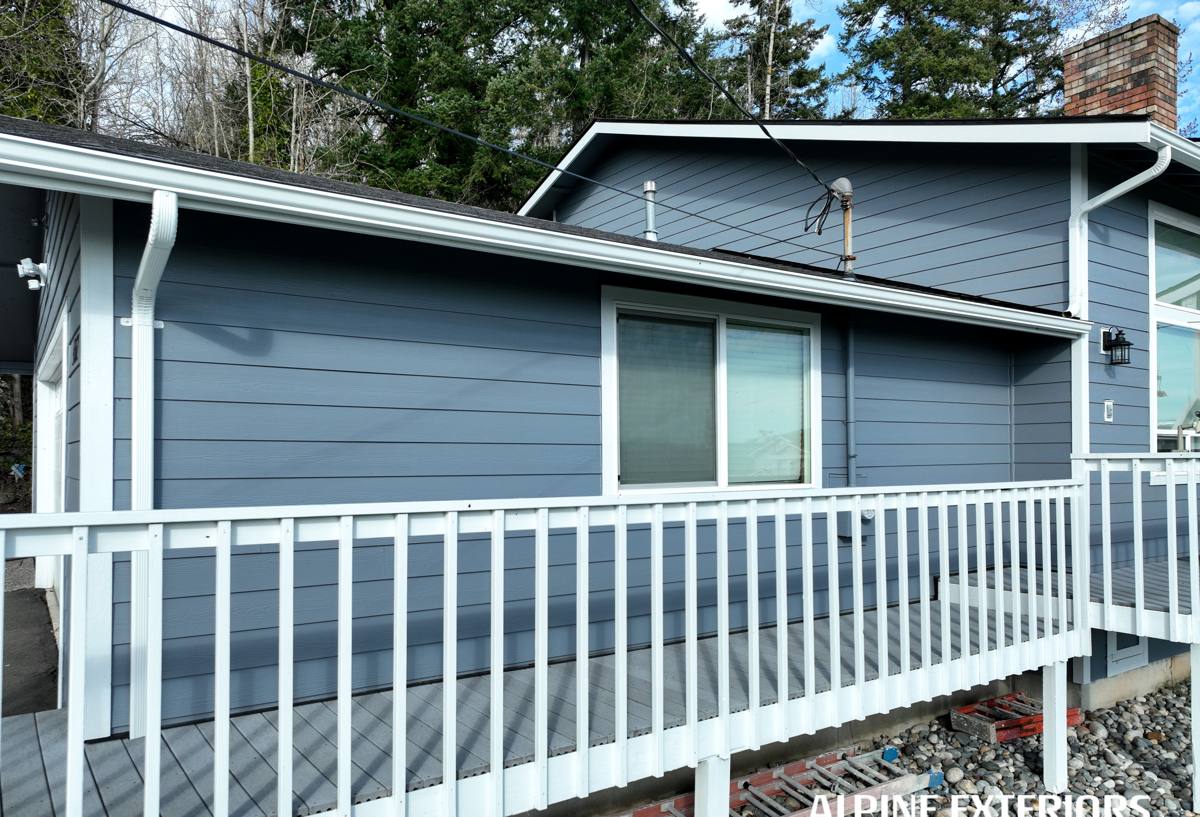
Signs a Ferndale Roof Needs Replacement, Not Another Repair
A lot of roofs get patched two or three times before anyone steps back and asks whether the whole system has reached the end of its service life. Here's what usually tips that decision:
- Granule loss heavy enough that you can see bare asphalt in valleys or on south- and west-facing slopes
- Moss established at the shingle tabs, not just on the ridge — this usually means moisture has already been sitting under the shingle
- Shingles curling, cupping, or cracking, especially on older three-tab roofing
- Soft or spongy decking felt underfoot during inspection, a sign water has reached the plywood
- Leaks that show up in more than one spot, or leaks that keep reappearing near the same repair
- A roof that's 20+ years old with the original underlayment and flashing still in place
One or two of these on their own might still be repairable. Several together, especially with a roof already past the 20-year mark, usually means repair costs start adding up toward what a full replacement would run — without solving the underlying moisture problem.
What a Correct Roof Replacement Actually Involves
Tear-Off and Deck Inspection
A proper replacement starts with a full tear-off down to the decking, not a layover. That's the only way to actually see the plywood or OSB underneath and find soft spots, rot, or delamination before they're covered up again. Any damaged decking gets replaced — this is one of the most common places a rushed job cuts corners, because it's invisible once the new roof is on.
Underlayment and Water Protection
Given how much wind-driven rain this area sees, underlayment choice matters more here than it would somewhere drier. Self-adhered ice-and-water membrane belongs in valleys, around penetrations, and along eaves — the spots most likely to see wind-driven water get forced backward under the shingle line.
Ventilation
A roof that isn't ventilated correctly traps moisture in the attic, which condenses, drips back down, and rots decking from underneath — the same failure mode as a leak, just coming from the wrong direction. Balanced intake at the eaves and exhaust at the ridge keeps that moisture moving out instead of sitting.
Flashing Details
Given the salt air issue, flashing material and fastener choice matter. Corrosion-resistant metal at valleys, chimneys, skylights, and wall intersections isn't an upsell — it's what keeps those details from failing years before the field shingles do.
Material Options for This Climate
There's no single "best" roofing material for every house — it depends on budget, roof pitch, and how much moss maintenance a homeowner wants to sign up for long-term. Here's how the common options stack up against the conditions Ferndale roofs actually face:
| Material | Moss/Moisture Resistance | Salt Air Durability | Typical Lifespan |
|---|---|---|---|
| Standard 3-tab asphalt | Lower — flatter profile holds debris and moisture longer | Fair, if flashing and fasteners are rated for it | 15–20 years |
| Architectural (laminate) asphalt | Better — thicker profile sheds debris more readily | Fair to good, depending on fastener spec | 25–30 years |
| Metal (standing seam or panel) | Very good — smooth surface resists moss anchoring | Good to excellent with the right coating/gauge | 40–50+ years |
| Synthetic/composite shake | Good — but installation quality matters more than with asphalt | Fair to good | 30–40 years |
We'll walk through these trade-offs against your actual roof — pitch, sun exposure, tree cover — rather than push one product for every house. A steep, shaded north slope that grows moss aggressively is a different conversation than a sunny, open south slope on the same house.
Our Process, Start to Finish
- On-site inspection. We look at the roof from the ground and from the roof itself — attic ventilation, decking condition where accessible, flashing, and current moss/moisture damage.
- Written estimate. Material options, scope, and a clear price — no vague allowances that turn into surprise change orders mid-job.
- Scheduling around weather. We watch the forecast and stage materials so tear-off and dry-in happen inside the same weather window whenever possible.
- Tear-off and deck repair. Old roofing comes off, decking gets inspected and repaired as needed, and we don't leave a torn-off roof exposed overnight without protection.
- Underlayment, flashing, and ventilation installed correctly — not just fast.
- Final walkthrough so you can see the finished work and ask questions before we consider the job done.
Why a Crew That Already Works Ferndale Matters
A roofing crew based here in Custer and already working Ferndale regularly isn't a marketing line — it changes practical things about the job. We know which permitting steps Whatcom County and local jurisdictions expect, so paperwork doesn't stall the schedule. We're familiar with the narrower streets and driveway access common in some Ferndale neighborhoods, which affects how we stage dumpsters and material delivery without blocking a household's whole day. And because we're not driving in from Seattle or another region for a one-off job, we're around after the install if a question comes up during the first heavy storm season — not just during the sale.
That local familiarity also shows up in smaller decisions: which moss-preventive strip products actually hold up under this area's rainfall, which flashing metals are worth the upcharge given the salt air, and which roof shapes on Ferndale homes tend to develop ice-dam-style backups during a cold snap even though hard freezes here are rare.
What Roof Replacement Costs Depend On
We won't put a number on your roof without seeing it, but the honest range for a full residential roof replacement in this region generally lands somewhere between a few thousand dollars for a small, simple asphalt roof and well into five figures for a large or complex metal roof. What moves the number:
| Factor | Why It Matters |
|---|---|
| Roof size and pitch | More square footage and steeper pitches mean more material, labor time, and safety setup |
| Number of existing layers | Tearing off two layers of old roofing costs more than tearing off one |
| Decking condition | Rot or soft spots found during tear-off mean plywood replacement, which isn't always visible from the ground beforehand |
| Material choice | Asphalt, metal, and synthetic shakes carry very different material and labor costs |
| Ventilation and flashing upgrades | Bringing an older roof's ventilation up to a proper standard adds scope but pays off in roof lifespan |
| Access | Steep sites or tight driveways can add setup time and equipment cost |
After the New Roof Goes On
A correctly installed roof still benefits from basic upkeep in this climate — moss and moisture don't stop trying just because the roof is new. A simple maintenance routine goes a long way:
- Clear gutters and downspouts at least twice a year, more often if you're under trees
- Check for early moss growth each spring and treat it before it spreads across a slope
- Trim back overhanging branches that keep a section of roof shaded and damp
- Walk the yard after major windstorms and look up for missing or lifted shingles
- Have the attic ventilation checked every few years, not just the shingles themselves
None of this requires getting on the roof yourself — most of it is a five-minute visual check from the ground, plus keeping gutters clear.
If your Ferndale roof is showing its age or you just want an honest opinion on what shape it's really in, we're happy to take a look. The estimate is free, there's no pressure attached to it, and you'll get a straight answer either way — use the form below to get started.