 Custer
 Decks Built for Everson's Weather, Not Just Its Views
Everson sits in the Nooksack River valley, and that location shapes what a deck has to survive here. Winters bring long stretches of steady, driving rain. Summers are mild but humid. Shade from mature trees and the valley's general dampness keep moss and algae active for much of the year, even on structures that look dry from the porch. Add in Whatcom County's marine-influenced climate — the same weather system that pushes salt-tinged air and near-constant moisture across the region — and you have conditions that are hard on any outdoor structure, especially one built from stacked, fastened wood sitting a few feet off the ground.
A deck that's designed for a drier climate, or built the same way you'd build one in Spokane or Boise, will show problems in Everson faster than it should: soft spots near the ledger board, green film on the walking surface by late fall, fasteners that bleed rust streaks into the decking, and railings that loosen because the posts were never properly isolated from ground moisture. None of that is inevitable. It's a function of how the deck was framed, flashed, fastened, and finished — and that's where the real work of a custom deck happens, long before anyone notices the boards.
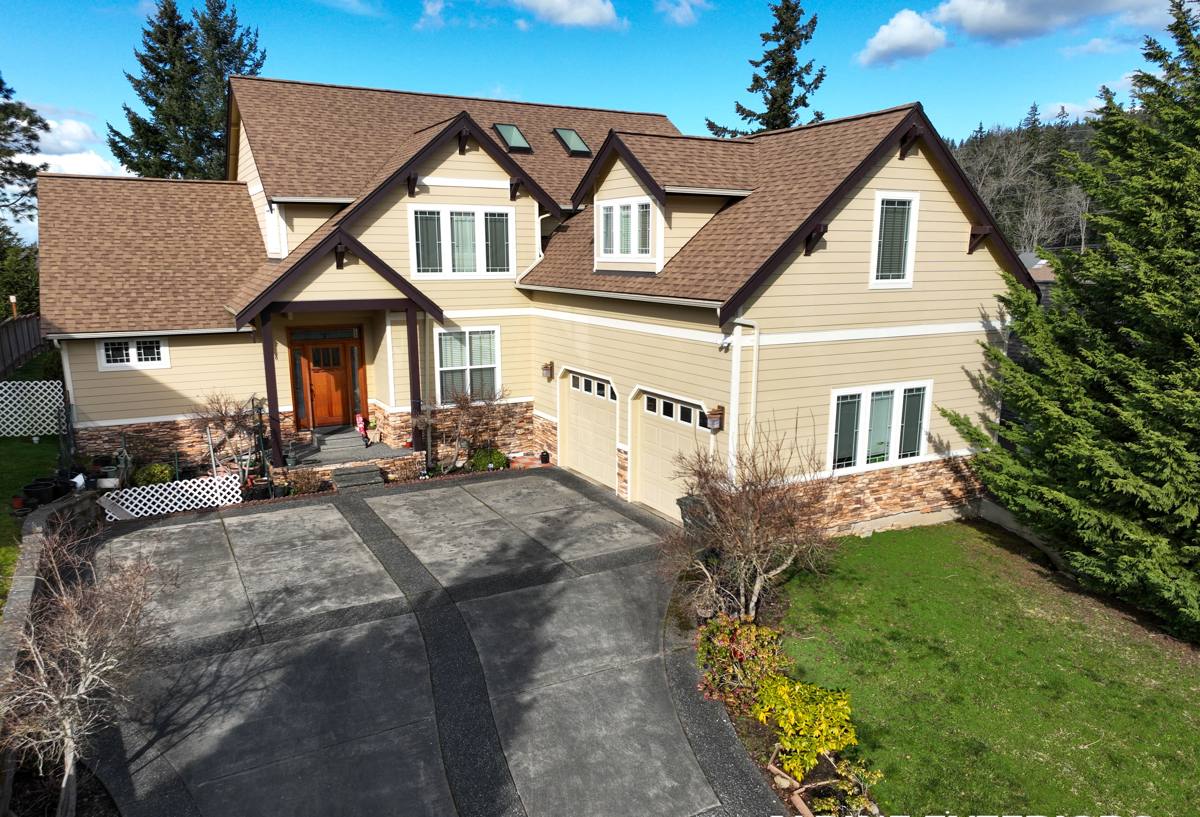
What a Correctly Built Deck Involves Here
"Custom" doesn't just mean a non-standard shape or a nicer railing. In this climate, it means every component is chosen and installed with moisture management as the starting point, not an afterthought. A deck that's built right for Everson accounts for:
- How water sheds off the deck surface and away from the house foundation
- How the ledger board (where the deck attaches to your home) is flashed to keep water out of the wall assembly
- What sits between fasteners, framing, and moisture — coated or stainless hardware versus standard fasteners
- How much airflow exists underneath the deck to let framing dry out between rain events
- Whether the decking material itself sheds moss and mildew or holds onto it
Skipping any one of these doesn't cause an immediate problem. It causes a slow one — rot that starts inside a joist, a ledger connection that fails quietly over several winters, or a walking surface that's slick with algae every morning from October through April. Those are the failures we build against from day one.
Framing and Substructure: The Part You Don't See
The framing is what determines whether a deck lasts 10 years or 30. In a wet climate, three things matter more than they would somewhere dry:
Ledger Attachment and Flashing
The ledger board — the piece bolted to your house that the deck hangs from — is the single most common source of hidden water damage on older decks. Proper flashing (typically a metal flashing cap combined with a waterproof membrane behind it) keeps rain from working its way behind the siding and into the rim joist. This is not a place to save money or skip a step; it's the connection point where a deck failure can turn into a house repair.
Footings and Post Bases
Footings need to be set below frost depth and sized for the soil conditions on your lot — river-valley properties can have variable soil density depending on how close you are to the Nooksack floodplain. Posts should sit on top of the concrete on a proper post base, never buried directly in it or resting on grade, so water doesn't wick straight up into the wood.
Ventilation Underneath
Framing that never gets a chance to dry out stays wet longer after every storm, which is exactly the environment moss, mildew, and rot organisms want. Deck height, joist spacing, and any skirting design all affect how much air moves underneath — we plan for airflow, not just for how the underside looks.
Decking Material Options for Everson Homes
There's no single "best" decking material — there's a best material for your budget, your maintenance appetite, and how much shade and moss exposure your yard actually gets. Here's how the common options compare in this climate:
| Material | Moss/Mildew Behavior | Maintenance | Typical Lifespan Here |
|---|---|---|---|
| Pressure-treated wood | Needs regular cleaning and sealing to resist growth | Annual cleaning, resealing every 2-3 years | 15-20 years with upkeep |
| Cedar | Naturally resistant but still needs sealing in shaded spots | Cleaning plus periodic finish renewal | 15-25 years with upkeep |
| Composite (capped) | Sheds moss/mildew far better; still needs washing | Occasional washing, no sealing/staining | 25-30+ years |
| PVC decking | Very low moisture absorption, easiest to keep clean | Occasional washing | 25-30+ years |
Composite and PVC products cost more up front, but in a climate where moss and algae are a year-round concern, the lower maintenance burden is a real, honest trade-off worth weighing — not just a sales pitch. Wood decking still has a place, especially where homeowners want the natural look or a lower initial cost, but it's an honest commitment to ongoing cleaning and sealing that composite doesn't require. We'll walk through what fits your budget and how much upkeep you actually want to take on.
Railings, Fasteners, and Corrosion
Fasteners are a small detail that causes a disproportionate number of deck problems in wet regions. Standard zinc-coated screws and nails corrode faster in persistently damp wood, and once they start rusting, they weaken and stain the surface around them. We use fasteners rated for ground-contact or wet-use applications — typically stainless steel or heavy-duty coated hardware — matched to whatever decking and framing material is going in. Hidden fastener systems, where available, also reduce the number of exposed screw heads that can trap water and start rust streaks on composite or wood boards.
Railings deserve the same attention. Metal railing components and post hardware need to be corrosion-resistant, and any wood posts should be isolated from standing water at the base rather than sitting flush on a wet surface.
Moss, Mildew, and Long-Term Deck Care
Even a well-built deck needs some seasonal attention in this climate — the goal of good construction is to reduce how much work that upkeep takes, not eliminate it entirely. A practical maintenance routine for an Everson deck looks like this:
- Sweep debris and leaves off the surface regularly, especially in fall — trapped organic matter is what feeds moss growth
- Wash the deck surface at least once or twice a year with a deck-safe cleaner to remove algae film before it gets slick
- Check gaps between boards periodically to make sure they haven't filled with debris that blocks drainage
- Inspect the ledger flashing and any visible fasteners once a year for early rust or gaps
- For wood decking, plan on resealing or restaining on the schedule your finish product recommends — don't wait until it visibly fails
- Trim back overhanging branches where possible to cut down on shade and leaf litter that keep boards damp longer
None of this is complicated, but it does need to actually happen. A deck that gets ignored for several years in this climate will show it — mostly in the form of moss buildup and slick spots — well before there's any structural concern.
Our Process for a Custom Deck Project in Everson
Every property is different, but the sequence we follow stays consistent:
- On-site assessment — we look at your home's ledger connection point, the yard's drainage and shade patterns, soil conditions, and how the deck will be used before talking materials.
- Design and material selection — we walk through decking, railing, and framing options against your budget and how much maintenance you want to take on long-term.
- Permitting — we handle the permit application and inspection scheduling required for Whatcom County and the local jurisdiction covering your property.
- Framing and flashing — footings, posts, ledger flashing, and joist layout get built to hold up under this region's rain load, not just to pass a quick inspection.
- Decking and railing installation — surface material and rail systems go in with corrosion-resistant hardware and attention to drainage and gap spacing.
- Final walkthrough — we go over basic care for your specific decking material so you know what upkeep actually looks like.
Permits and Code Considerations
Most deck projects in Whatcom County — including those attached to a house or elevated more than a modest height above grade — require a building permit and inspections at key stages, particularly footings and framing before the decking goes on. Requirements can vary depending on your specific parcel and whether you're inside city limits or unincorporated county land near Everson. We handle this as part of the project rather than leaving it to the homeowner, because a deck built without the right permits and inspections can create real problems later — at resale, with insurance, or simply with the county if the work is ever flagged.
Why It Matters to Hire a Crew That Already Works in Everson
Deck construction that ignores regional climate isn't obviously wrong on installation day — it looks fine, it passes a casual glance, and the framing is hidden under decking within a week. The problems show up two, five, or ten years later, when the shortcuts that made sense in a drier climate start costing homeowners real money in this one. A crew that regularly builds and repairs decks around Whatcom County has already seen which ledger connections fail first, which fastener choices hold up, and which decking materials actually resist the moss and mildew this valley produces. That experience shows up in the parts of the deck you'll never see once it's finished — and in how long it lasts before you're calling anyone back out.
If you're planning a new deck or replacing one that's showing its age, we're happy to take a look and talk through what makes sense for your property. Reach out for a free, no-pressure estimate using the form below.