 Custer
 Building a Deck That Actually Holds Up in Cherry Point
Cherry Point sits close enough to the water that salt air is part of daily life, not an occasional nuisance. Add in the driving rain that comes off the Strait, and a moss season that can stretch from October well into spring, and you've got a set of conditions that will find every weak point in a deck within a few years if the build doesn't account for them. A deck that would hold up fine in a drier inland town can start showing corrosion, soft spots, and slick, moss-covered boards here far sooner than most homeowners expect.
This page covers what a deck built for Cherry Point actually needs — the materials, the fasteners, the framing details, and the maintenance realities — so you know what to ask for whether you're planning a new deck, replacing an old one, or just trying to figure out why the one you have isn't aging well.
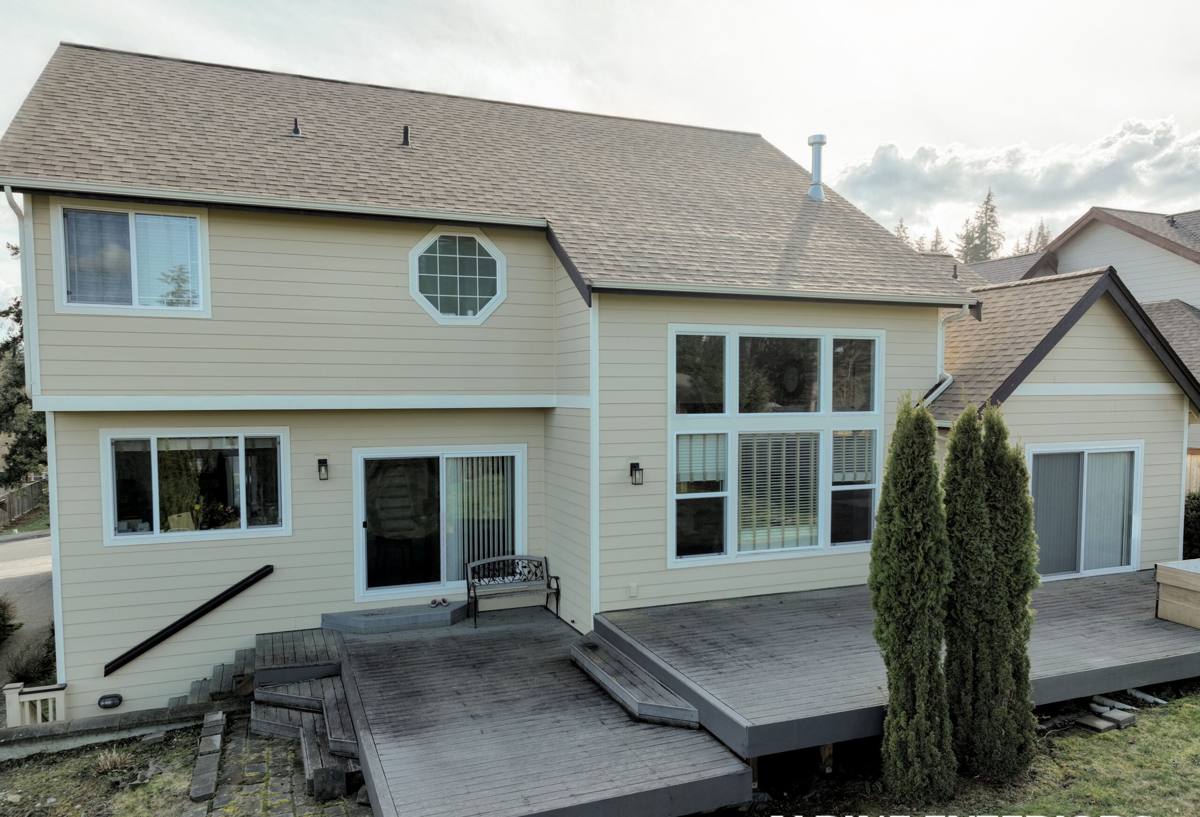
What Cherry Point's Conditions Do to a Deck Over Time
Three things drive most of the deck problems we see in this part of Whatcom County:
Salt Air
Airborne salt doesn't need direct ocean spray to do damage — it travels on the wind and settles on every exposed surface, including fasteners, connectors, and metal flashing. Standard hardware that would last decades elsewhere can start rusting and losing strength in a fraction of that time near the water. This matters most at structural connection points, which is exactly where you don't want hidden corrosion.
Driving Rain
Wind-driven rain hits decks and ledger boards at an angle, not straight down, which means water gets pushed into joints, seams, and fastener holes that a calmer rain would never reach. Over time this drives rot into framing that looks fine from the top.
The Long Moss Season
Shaded decks, north-facing decks, and anything under tree cover can stay damp for months at a stretch. That constant moisture is exactly what moss and algae need to establish, and once they take hold on decking boards or stair treads, they turn a walking surface into a genuine slip hazard, not just a cosmetic problem.
Decking Material: What Performs Here vs. What Struggles
There's no single "best" decking material — the right choice depends on your budget, how much upkeep you're willing to do, and how exposed your specific site is to sun, shade, and wind. Here's how the common options actually perform under Cherry Point conditions:
| Material | Salt Air Resistance | Moss/Algae Behavior | Maintenance |
|---|---|---|---|
| Pressure-treated fir/hem-fir | Fair — needs sealed cuts and coated fasteners | Prone to moss in shaded areas without regular cleaning | Annual cleaning, re-sealing every 2-3 years |
| Cedar | Good natural resistance, but fasteners must be corrosion-rated | Still needs periodic cleaning; ages to gray without sealant | Moderate — sealant/stain every 2-3 years |
| Composite decking | Excellent — won't rot or corrode itself | Can still grow surface algae in damp shade; texture matters for slip resistance | Low — periodic washing, no sealing/staining |
| PVC decking | Excellent — fully synthetic | Similar to composite; smooth-finish boards can be slicker when wet | Low — washing only |
Composite and PVC decking generally make the most sense for full-sun or wind-exposed sites near the water, since they sidestep the wood-rot side of the equation entirely. Wood decking can still be the right call on shadier, more sheltered lots, or when it fits the look of the house better — but it needs a maintenance commitment that composite doesn't. What matters more than the decking surface itself, in our experience, is what's underneath it — and that's where most deck failures actually start.
Framing and Substructure: Where Decks Actually Fail
Homeowners tend to focus on the decking boards because that's what they see and walk on, but the framing underneath is what determines whether a deck is safe. In a marine climate like this one, we pay particular attention to:
Ledger Attachment
The ledger board — where the deck attaches to the house — is the single most safety-critical connection on the whole structure. It needs proper flashing to keep water from tracking behind it into the house framing, and it needs fasteners rated for the exposure it's going to see, not the cheapest option that happened to be in stock.
Post Bases and Beam Connections
Metal post bases, hangers, and structural screws are all points where salt-driven corrosion shows up first. We use stainless steel or heavy hot-dip galvanized hardware rated for coastal/treated-lumber contact, not standard zinc-coated hardware that's fine inland but degrades faster here.
Joist Spacing and Airflow
Tighter joist spacing and proper underdeck airflow both help lumber dry out between rain events instead of staying saturated, which slows both rot and moss growth on the framing itself.
Fasteners and Flashing: The Details That Determine Lifespan
This is the part of a deck build that's easy to cut corners on because it's invisible once the project is done — and it's exactly where cutting corners costs the most later. For Cherry Point projects, that means:
- Stainless steel or coated structural screws at all load-bearing connections, not standard deck screws
- Self-adhering flashing tape at the ledger and any deck-to-house transition
- Corrosion-rated joist hangers and post caps, sized correctly for the lumber they're holding
- Sealed end cuts on any pressure-treated framing member that gets field-cut
- Gapped decking boards to allow drainage and drying, sized appropriately for the material
None of this is unusual or exotic — it's standard good practice. But it costs more up front than the minimum-code approach, and it's the reason two decks that look identical on the day they're finished can age completely differently five years later.
How We Approach a Cherry Point Deck Project
Our process is the same whether you're building new, replacing an aging deck, or extending an existing one:
- Site assessment. We look at sun/shade exposure, wind direction, drainage, and how close the deck will be to salt-laden air, since that shapes both material and hardware recommendations.
- Material and layout discussion. We walk through the decking, framing, and hardware options honestly, including trade-offs in cost and maintenance, so you're choosing with full information — not just picking whatever's cheapest.
- Permitting. Most decks above a certain height or attached to the house require a permit through Whatcom County. We handle that process so it doesn't fall on you.
- Demolition (if replacing). We remove old decking and inspect the framing underneath before deciding what can be reused and what needs to go.
- Framing and structural work. Ledger flashing, corrosion-rated hardware, and correct joist spacing all get handled at this stage — the part of the job you won't see once it's finished but will rely on for decades.
- Decking installation. Boards go down with proper gapping and fastening for the material chosen.
- Final walkthrough. We go over the finished deck with you, including what maintenance it will need and roughly how often.
Moss, Slips, and Ongoing Maintenance
Even a well-built deck in Cherry Point needs some seasonal attention because of how long the ground stays damp here. A few realities worth planning for:
Shaded and north-facing sections of a deck will collect moss faster than sunnier areas, regardless of decking material. A simple annual cleaning — sweeping off debris and washing with an appropriate deck cleaner — goes a long way toward preventing buildup from ever becoming a slip hazard. Wood decks need that cleaning plus periodic sealing or staining to keep water from soaking into the boards. Composite and PVC decks skip the sealing step but still benefit from a wash-down, especially on shaded stair treads where texture matters most for footing.
If you're seeing moss return within just a few weeks of cleaning, that's usually a sign of a drainage or airflow problem underneath the deck rather than something wrong with the surface material — worth having looked at rather than just cleaning more often.
Permits and Whatcom County Requirements
Deck projects in unincorporated Whatcom County — which covers Cherry Point — typically require a building permit when the deck is attached to the house, elevated above a certain height, or involves structural changes. Requirements can vary based on the specifics of your property and existing structure. We handle the permit process as part of the project so you're not left navigating it alone, and so the finished deck is inspected and documented correctly.
What to Check Before You Hire Anyone for Deck Work Here
Whether you go with us or another contractor, these are the things worth confirming before work starts on a Cherry Point deck:
- Hardware and fasteners are specified as corrosion-rated for coastal/marine exposure, not just standard exterior-grade
- Ledger flashing is included in the scope, not treated as optional
- The contractor is pulling the required Whatcom County permit, not skipping it
- You get a clear answer on decking material trade-offs, not just a single option pushed on you
- Joist spacing and framing details are spelled out, not left vague
Why Local Experience Matters for This Job
A deck built to a generic inland spec will often look fine for the first year or two in Cherry Point — the problems that salt air, driving rain, and moss cause tend to show up gradually, not immediately. That's part of why it's worth working with a crew that's already dealt with these conditions on other decks in the area, rather than learning the hard way on yours. We've seen which hardware holds up here and which doesn't, which decking materials handle shade and moss well, and where ledger and framing details actually matter versus where they're just extra cost. That experience shapes every recommendation we make, not just the sales pitch.
If you're planning a new deck, replacing one that's showing its age, or just want an honest read on what a deck at your property would need, we're happy to take a look and put together a free, no-pressure estimate — just fill out the form below.