 Custer
 Blaine's Siding Takes a Different Kind of Beating
Blaine sits about as close to the water and the border as a Whatcom County home can get, and that location comes with a specific set of siding problems. Salt-laden air off the Strait of Georgia and Semiahmoo Bay works its way into seams, fasteners, and any exposed edge. Driving rain off the water hits siding sideways instead of straight down, which means water finds gaps that would stay dry in a more sheltered inland yard. And the long gray stretch from fall through spring gives moss and algae months to colonize north-facing walls and anything shaded by trees or a neighboring structure. None of this means Blaine siding fails faster across the board — it means specific spots fail faster, and a repair that doesn't account for why the damage happened in the first place tends to come back within a couple of years.
This page is about siding repair specifically — patching, resealing, replacing damaged sections, and fixing the underlying causes — not full re-siding. If your siding is sound overall but has isolated problem areas, repair is usually the right call, and doing it correctly the first time matters more in Blaine's climate than almost anywhere else in the county.
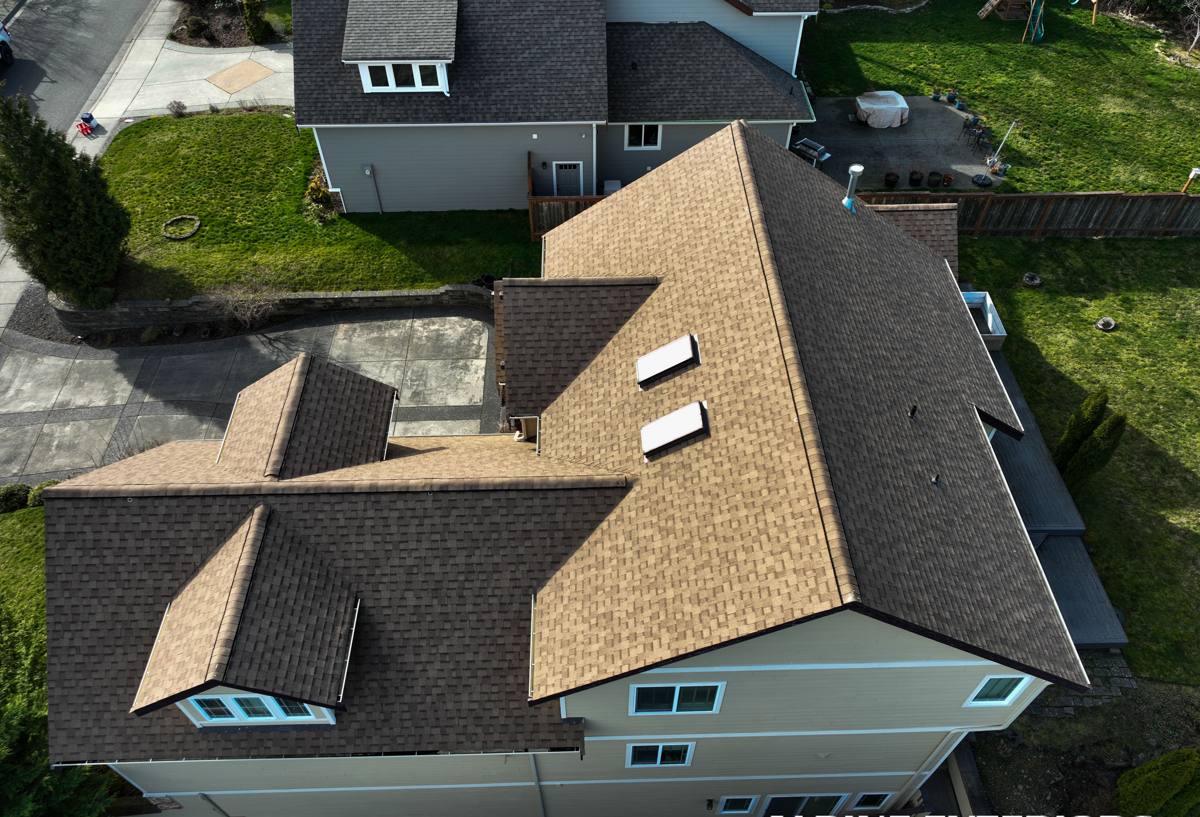
Signs Your Siding Needs Repair, Not Just a Cleaning
A lot of what looks like a cosmetic problem is actually a moisture problem wearing a cosmetic disguise. Knowing the difference saves homeowners from paying for a pressure wash when what they actually need is a board replaced.
Watch for these specific signs
- Soft or spongy spots when you press on the siding, especially near the bottom courses or around window trim
- Persistent moss or algae growth that returns within weeks of cleaning, particularly on north- and west-facing walls
- Visible gaps or separation at seams, corners, or where siding meets trim, windows, or doors
- Bubbling, peeling, or discoloration in the paint or finish that keeps reappearing in the same spots
- Streaking or staining below fastener heads, which often signals a failing or corroding fastener
- Warping, cupping, or visible cracking in individual boards or panels
- A musty smell or visible staining on interior walls that back up to exterior siding
Any one of these on its own might be minor. Several showing up in the same area, or a problem that keeps recurring after cleaning, usually means water is getting behind the siding rather than just sitting on top of it — and that's a repair issue, not a maintenance one.
What a Correct Siding Repair Actually Involves
A repair that only addresses the visible damage and skips the cause is a repair you'll be paying for again. In a salt-air, high-rainfall environment like Blaine, that's especially true.
Diagnosing the actual cause
Before anything gets removed or replaced, the damaged section needs to be traced back to why it failed. Common causes we find in Blaine include failed caulking or sealant at seams and penetrations, house wrap or flashing that was installed incorrectly or has degraded, fastener corrosion from salt exposure, and trapped moisture from inadequate ventilation behind the siding. Cutting out a bad board without checking the water-resistive barrier and flashing underneath it just sets up the next failure.
Correcting the water path, not just the surface
Proper repair means checking the house wrap and flashing behind the removed section, replacing anything that's compromised, and re-establishing correct drainage before new material goes back on. Fasteners should be corrosion-resistant and set to the manufacturer's spec — under- or over-driven fasteners are a common source of repeat failures. Seams and joints get sealed with a product rated for the exposure, not whatever caulk happens to be on the truck.
Matching material and finish
Patchwork siding repair often looks obviously patched because the replacement material doesn't match the existing color, texture, or profile. Where we can match existing siding closely, we do. Where the existing product is failing broadly — not just in the repaired spot — we'll tell you honestly if repair is a short-term fix and replacement with a better-performing product is the smarter long-term move.
Repair vs. Replace: How to Think About the Cost Factors
Homeowners often want a straight answer to "should I repair this or replace the whole wall," and the honest answer depends on a handful of factors, not a fixed rule.
| Factor | Favors Repair | Favors Replacement |
|---|---|---|
| Extent of damage | Isolated to one or two areas | Recurring across multiple walls |
| Age of existing siding | Under 10-15 years, otherwise sound | Near or past expected service life |
| Underlying material | Fiber cement or other durable substrate | Wood or composite already showing widespread rot |
| Cause of damage | Isolated flashing or seal failure | Systemic moisture intrusion behind the wall |
| Match availability | Existing product/color still available or close match possible | Discontinued product, poor match likely |
We'll walk your specific situation through this before recommending anything. A lot of Blaine homes we look at genuinely just need a repair — we're not in the business of upselling a full re-side when a targeted fix will hold up.
Where We See the Most Repair Calls in Blaine
Water-facing and wind-exposed walls
Walls facing open water or prevailing wind take the brunt of driving rain. These are the sections where seam sealant fails first and where we most often find water having tracked behind the siding rather than run off it.
Ground-level and lower courses
Splash-back, snow piled against a foundation, and general ground moisture make the bottom few courses of siding the most failure-prone area on almost any home, salt air or not. In Blaine, add in the corrosive effect of salt-laden moisture and this zone needs the most careful inspection.
Shaded, north-facing sections
Whatcom County's long wet season gives moss and algae plenty of time to establish on walls that don't get much direct sun. Left alone, that growth holds moisture against the siding surface and accelerates whatever finish or seam problem is already there.
Our Repair Process
- On-site inspection. We look at the reported problem area and the surrounding siding, not just the spot you pointed to — because the cause of a failure is often a few feet away from where it shows up.
- Diagnosis and honest recommendation. We tell you what's actually going on, what caused it, and whether repair or a broader fix is the right call — including if that means telling you repair isn't worth it long-term.
- Written scope and estimate. No surprise add-ons. If we find something worse once we open up the wall, we stop and talk to you before proceeding.
- Removal and inspection behind the siding. Damaged material comes off, and the house wrap, flashing, and sheathing underneath get checked and corrected as needed.
- Repair and reseal. New material goes in with correct fastening, flashing, and sealant appropriate for a marine, high-rainfall climate.
- Final check. We walk the repair with you before calling the job done.
Why the Repair Material Matters
When a repair involves replacing sections of siding rather than just resealing existing material, what you replace it with matters as much as the workmanship. We install James Hardie fiber cement exclusively, including for repair work, because it holds up to the exact conditions Blaine deals with: it doesn't absorb moisture the way wood-based products can, it's non-combustible, and its factory-applied ColorPlus finish is engineered to resist the fading and cracking that salt air and UV exposure cause in field-painted materials. For a homeowner doing a repair, that also means a better long-term color and material match if more repairs are ever needed down the road, since Hardie's product lines and colors are consistent and well documented.
We don't install LP SmartSide, vinyl, Cemplank, Allura, or primed wood siding, on repairs or full installs. That's a standard we hold across every job, not a sales pitch specific to this page — if you already have one of those products on your home and need a repair, we'll still give you an honest assessment of your options, including matching your existing material where that's the more sensible near-term fix.
Why It Matters to Hire a Crew That Already Works in Blaine
Siding repair done by someone unfamiliar with coastal Whatcom County conditions tends to under-spec the fix — using standard sealant instead of a marine-rated product, or fasteners that aren't corrosion-resistant enough for salt air exposure. A crew that regularly works Blaine and the surrounding coastal areas already knows which walls take the worst of the driving rain, how aggressively moss establishes on shaded siding here, and what fastener and sealant specs actually hold up rather than needing to be redone in two or three years. That local pattern recognition is the difference between a repair that lasts and one that's a recurring line item on your maintenance budget.
Questions to Ask Before Hiring for Siding Repair
- Will you inspect what's behind the damaged siding, not just replace the visible section?
- What fastener and sealant products do you use, and are they rated for coastal/marine exposure?
- Can you match my existing siding, and if not, what are my realistic options?
- Will you give me a written scope before starting, and tell me if the job changes once you open the wall?
- Do you work in Blaine regularly, or is this a one-off trip for you?
- If the damage points to a bigger underlying problem, will you tell me honestly rather than just patching over it?
If you're seeing soft spots, recurring moss, gaps at the seams, or staining that keeps coming back, it's worth having someone look at it before it spreads. We offer free, no-pressure estimates for siding repair in Blaine and the surrounding area — fill out the form below and we'll take a look.