 Custer
 Bellingham-Area Homes Face a Specific Kind of Weather Beating
Bellingham sits close enough to the water that salt-laden air is a daily fact of life, not an occasional event. Add in the long stretch of driving rain that rolls off the Strait of Georgia and Bellingham Bay most of the year, plus a shaded, moisture-heavy growing season that keeps north-facing walls and tree-lined lots damp for months, and you have siding conditions that are genuinely harder on a home's exterior than what you'd see twenty or thirty miles inland. We work this area regularly out of Custer, and the pattern is consistent: siding that isn't engineered for coastal Pacific Northwest exposure fails here faster than it does almost anywhere else in Whatcom County.
This page is specifically about James Hardie siding installed on Bellingham-area homes. It's not a general overview of siding — it's what this particular product, in this particular climate, actually requires to perform the way it's supposed to.
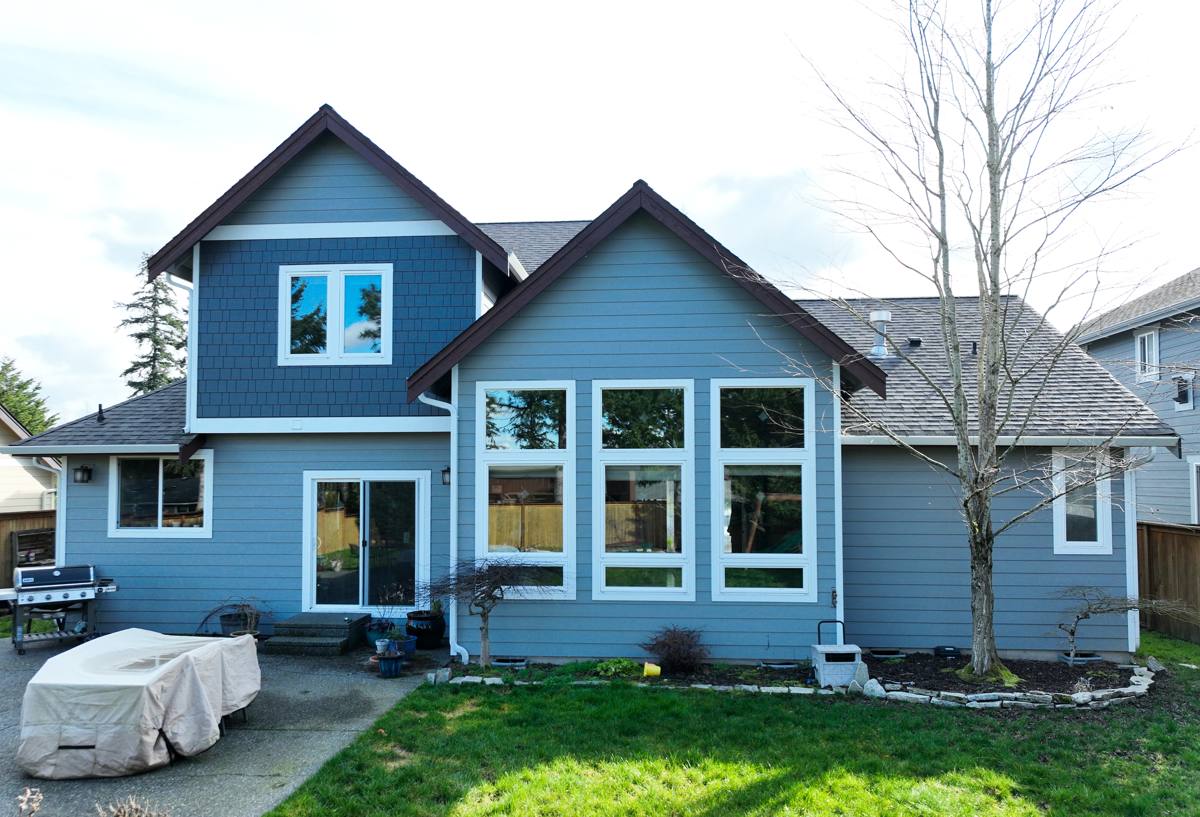
What Salt Air, Driving Rain, and Moss Season Actually Do
Salt Air
Airborne salt is corrosive to metal and slowly degrades many paint and coating systems over time, especially on the windward, water-facing sides of a house. Fasteners, flashing, and trim details that aren't rated for coastal exposure corrode faster here than the manufacturer's general specs assume. This matters more for the accessories around your siding than for the siding material itself.
Driving Rain
Wind-driven rain doesn't just wet a wall — it pushes water sideways and upward into laps, seams, butt joints, and anywhere caulking or flashing has failed. A siding system that only holds up against gentle, vertical rain will show problems at the seams within a few years in this area. Correct lap spacing, flashing, and a functioning drainage plane behind the siding matter more here than in drier parts of the state.
Moss Season
Shaded, north-facing, and tree-adjacent walls in this area stay damp for extended stretches, especially through fall and winter. Moss and algae don't just look bad — sustained organic growth traps moisture against a wall surface, and that moisture cycle is what breaks down siding that isn't dimensionally stable or properly finished. Any product that swells, wicks water, or holds a coating poorly will show it first in the shaded, moss-prone corners of a lot.
Why We Install Only James Hardie Here
We don't install vinyl, LP SmartSide, Cemplank, Allura, primed spruce, or cedar, on any home in this area — including Bellingham. That's not a marketing position, it's a practical one based on what holds up against this specific combination of salt, rain, and shade.
- Fiber cement doesn't rot or feed moss the way wood-based products can. It's cement, sand, and cellulose fiber — there's nothing organic on the surface for moss and algae to take hold of the way they can on cedar or engineered wood.
- It's non-combustible, which matters regardless of climate but is a genuine, permanent advantage over wood-based sidings.
- ColorPlus factory finish is baked on and backed by its own finish warranty, so it isn't relying on a field-applied coat to hold up against years of salt air and driving rain the way site-painted wood siding is.
- James Hardie makes climate-specific HZ formulations engineered for wet, humid regions like ours — the product is actually built for this weather, not just tolerant of it.
Vinyl can warp and its seams can open up under sustained wind-driven rain. LP SmartSide and other engineered wood products are wood-based at the core, which means moisture intrusion is a real risk if a seam, cut edge, or fastener point ever gets compromised — and in a climate with this much sustained dampness, that risk is higher than it would be somewhere dry. Cedar and primed spruce need ongoing maintenance and refinishing to keep ahead of moss, mildew, and coating breakdown, which is a real ongoing cost most homeowners underestimate when they choose it. We'd rather put one product on a home that's actually engineered for this weather than sell five options and let the climate sort out which ones fail first.
Choosing the Right Hardie Product and Line for This Area
Not every James Hardie profile or line is the right fit for every wall on a Bellingham-area home. Exposure varies a lot from one side of a house to another, especially with tree cover and prevailing wind direction factored in.
| Product | Best Use in This Climate | Why |
|---|---|---|
| HardiePlank lap siding | Most wall areas, especially rain-exposed sides | Proven drainage behavior with correct lap and flashing detail; widest color and texture selection |
| HardieShingle | Accent areas, gables | Traditional look without the moisture vulnerability of real cedar shingle in a damp climate |
| HardiePanel | Modern/vertical designs, covered porch soffits | Fewer horizontal laps means fewer water-entry points on the right wall condition |
| HardieTrim | All corners, window and door surrounds | Fiber cement trim eliminates a common wood rot point at the most exposed transitions |
For the shaded, moisture-heavy walls that are common on tree-lined Bellingham-area lots, we also pay close attention to color choice — darker ColorPlus finishes and certain textures show moss growth differently than lighter ones, and we'll talk through that honestly with you rather than just push whatever's in stock.
What a Correct Installation Actually Involves Here
James Hardie siding fails early almost exclusively because of installation mistakes, not because of the product itself. In a climate that punishes water intrusion this consistently, correct installation isn't optional detail — it's the difference between siding that lasts decades and siding that has problems in year three.
- Proper water-resistive barrier and a functioning drainage gap behind the siding, not siding fastened directly against sheathing
- Correct flashing at every window, door, deck ledger, and roof-to-wall transition — the majority of moisture failures we find start at these details, not in the field of the wall
- Manufacturer-specified nailing pattern and fastener type, including corrosion-resistant fasteners appropriate for coastal exposure
- Minimum clearance from grade, decks, patios, and roof lines so the bottom edge of the siding isn't sitting in a moisture trap
- Caulked and sealed joints only where James Hardie's install guide actually calls for sealant — over-caulking a butt joint can trap moisture instead of shedding it
- Factory-cut or properly sealed field-cut edges, since an unsealed cut edge is one of the few places fiber cement can take on water
Any one of these done wrong can undercut a good product's performance. We follow James Hardie's published installation requirements as the baseline, not a suggestion, because in this climate the margin for error is smaller than it is elsewhere in the state.
Our Process for a Bellingham-Area Siding Job
- On-site assessment. We look at each elevation separately — sun exposure, tree cover, prevailing wind and rain direction, and existing moisture damage all factor into the plan, not just a single quote for "the house."
- Product and line selection. We recommend specific HZ products, profiles, and colors based on that wall-by-wall exposure, and explain the reasoning rather than defaulting to one package for every home.
- Tear-off and inspection. Removing the old siding lets us check sheathing, framing, and existing flashing for hidden moisture damage before anything new goes on — this step catches problems a quote from the outside can't.
- Weather barrier and flashing first. This is the layer that actually keeps water out; it goes in correctly before a single piece of Hardie siding is hung.
- Installation to spec. Correct nailing, clearances, and joint treatment as covered above.
- Final walkthrough. We go over the finished job with you, including any maintenance notes specific to your lot's sun and moisture exposure.
What Drives Cost on a Job Like This
| Factor | Why It Matters Here |
|---|---|
| Extent of tear-off and sheathing repair | Hidden moisture damage under old siding is more common in shaded, damp-prone areas and adds labor once discovered |
| Number of flashing details (windows, decks, roof lines) | Each one takes real time to do correctly and is critical in a driving-rain climate |
| Product line and profile mix | Lap, shingle accents, and trim packages price differently; wall-by-wall product choice affects total cost |
| Color and texture selection | ColorPlus finish tiers vary in price; some premium colors and textures cost more than standard options |
| Site access and lot conditions | Tree cover, tight lots, and multi-story sections affect labor time and staging |
We give straightforward, itemized estimates rather than a single lump number, so you can see exactly what you're paying for and where.
Why a Crew That Already Works This Area Matters
Installing James Hardie correctly on paper and installing it correctly for Bellingham's actual weather are two different things. A crew that regularly works this part of Whatcom County already knows which elevations on a given lot typically hold moisture, how far to keep siding off grade given the local rain patterns, and which fastener and flashing details hold up against sustained salt air rather than just meeting a generic code minimum. That local repetition is worth more than a manufacturer certification alone — it's the difference between a crew that's installed a hundred similar jobs in this exact climate and one that's installing here for the first time.
Living With Hardie Siding in a Moss-Prone Climate
Even the right product benefits from basic upkeep in this environment. A rinse-down of shaded walls once or twice a year keeps moss and algae from getting established, and it's a much lighter task on fiber cement than it is on wood siding that needs re-coating. Keep gutters clear so overflow isn't running down the wall face, and trim back vegetation that's holding moisture directly against the siding. None of this is heavy maintenance — it's the kind of periodic attention any exterior in this climate needs, just with a lot less risk attached because the underlying material isn't organic.
If you're planning a siding project on a Bellingham-area home and want a straight answer about what your specific walls need, we're happy to take a look and walk you through it. Reach out for a free, no-pressure estimate — there's a form right below this page.