 Custer
 Windows Built for the Cherry Point Environment
Cherry Point sits close enough to the water that salt air is part of daily life, not an occasional nuisance. Combine that with Whatcom County's long wet season, near-constant driving rain off the Strait, and moss that colonizes anything shaded and damp, and you get a set of conditions that ages windows faster than in most inland neighborhoods. Frames corrode. Seals fail early. Wood sashes swell, stick, and eventually rot at the corners. None of this is exotic — it's just what happens when a window isn't matched to the environment it's actually installed in.
We replace windows in and around Cherry Point regularly enough to know which failure patterns show up here versus what we see on jobs further inland in Custer or elsewhere in Whatcom County. That local pattern recognition changes what we recommend, how we flash the opening, and where we tell homeowners to expect trouble down the road.
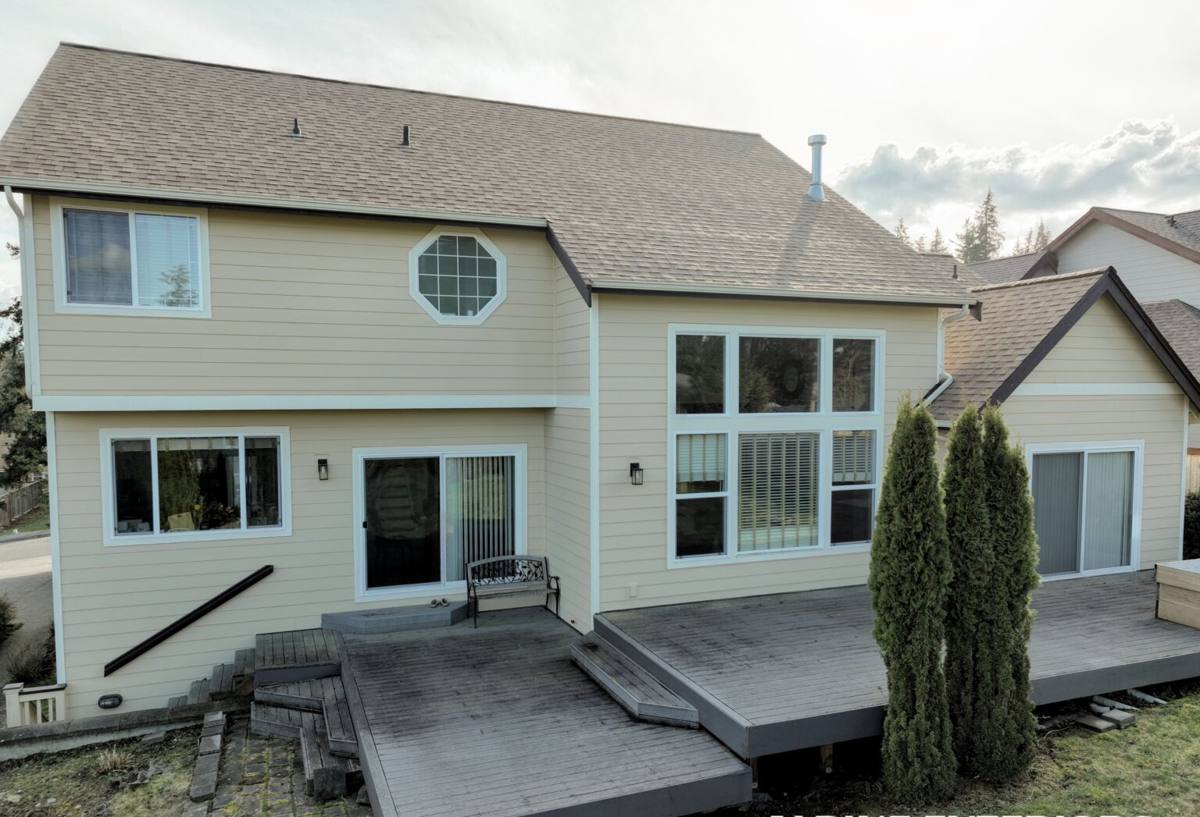
Why Salt Air and Moisture Change the Job
Corrosion Where You Can't See It
Salt-laden air accelerates corrosion on exposed metal — hinges, cranks, screws, and especially lower-grade aluminum or steel hardware. On a standard inland job, hardware corrosion is rarely a first-decade concern. Near Cherry Point, it can be. We pay attention to hardware material and finish, not just glass and frame, because a window that looks fine can have a crank mechanism or lock that's already seizing up from years of salt exposure.
Driving Rain Finds the Gaps
Wind-driven rain off the water doesn't just fall on a window — it gets pushed sideways and upward into any gap in the flashing or sealant. A window that would stay dry in a calmer inland setting can leak here if the installation isn't detailed correctly around the sill and jambs. This is less about the window product itself and more about how it's integrated into the wall — which is where a lot of replacement jobs actually go wrong.
Moss and Shaded Moisture
Homes with tree cover or north-facing exposure hold moisture longer, and moss establishes itself on sills, trim, and anywhere organic debris collects. Moss holds water against wood and painted surfaces, which speeds up rot and finish failure. It's a slow problem — you often don't notice until trim is already soft.
Signs a Cherry Point Home Needs Window Replacement
- Visible corrosion or pitting on hardware, hinges, or frame components
- Sashes that stick, won't stay open, or are hard to lock — a sign of swelling or warping
- Soft or discolored wood at the sill, especially on shaded or north-facing walls
- Fog or moisture between panes of double-pane glass, meaning the seal has failed
- Persistent drafts or a noticeable temperature difference near the window on windy days
- Moss or dark staining building up on the sill or lower trim
- Paint or finish that's bubbling, peeling, or chalky faster than the rest of the house
- Visible daylight or gaps around the frame from the interior
What a Correct Replacement Involves
Assessing the Opening, Not Just the Window
Before we talk product, we look at the rough opening: is the sill sloped correctly for drainage, is there existing rot in the framing, is the current flashing doing its job. Replacing the glass unit and frame without addressing a compromised opening just resets the clock on the same failure. If we find soft framing or old water damage behind the trim, we address it as part of the job rather than covering it back up.
Flashing and Sealing for Wind-Driven Rain
Given how much of Cherry Point's water intrusion problem is wind-driven rather than straight-down rain, we pay close attention to sill pan flashing, head flashing, and how the window ties into the surrounding weather-resistive barrier. This is the part of the job that's invisible once trim goes back on, and it's the part that determines whether the window stays dry for the next twenty years or leaks in year three.
Frame Material Selection
We steer homeowners toward frame materials and hardware finishes that hold up to salt air and sustained moisture, and we're upfront when a particular product or finish is a poor match for this environment — not because the manufacturer makes a bad product, but because certain materials simply don't perform as well under sustained salt exposure and repeated wet-dry cycling. That's a maintenance and longevity conversation, not a brand dispute.
Interior and Exterior Finish Work
Once the window is set and flashed, trim and finish work matter more here than in a drier climate — proper caulking, correctly primed and sealed wood trim (if wood trim is used), and attention to any spots where moss or organic debris tends to collect. A clean finish job isn't cosmetic near the water; it's part of the moisture management system.
Our Process for Cherry Point Jobs
- On-site assessment. We look at the existing windows, the framing behind them, drainage at the sill, and any signs of past water intrusion or moss buildup.
- Honest scope discussion. We tell you what's cosmetic, what's structural, and what can wait — including if the framing needs repair before a new window goes in.
- Product recommendation matched to exposure. Sun-facing, wind-facing, and shaded elevations don't always need the same spec, and we'll say so rather than upselling a blanket solution.
- Removal and opening prep. Old units come out carefully, and we inspect and repair the framing and sill before anything new goes in.
- Installation with correct flashing sequence. Sill pan, window, head flashing, and weather barrier integration — done in the right order, not shortcut.
- Finish and cleanup. Interior and exterior trim, caulking, and a final check for gaps, level, and smooth operation.
Cost Factors for Window Replacement Near Cherry Point
Pricing varies by window size, frame material, glass package, and how much (if any) framing repair is needed. As a general guide, straightforward vinyl replacement windows often run in the low-to-mid hundreds per window installed, while larger openings, higher-performance glass, or units requiring framing repair push costs higher. The table below outlines the main factors that move price up or down — we'll give you actual numbers after seeing the openings in person.
| Factor | Lower Cost | Higher Cost |
|---|---|---|
| Frame material | Standard vinyl | Fiberglass or clad-wood |
| Framing condition | Sound, no repair needed | Rot or damage requiring rebuild |
| Window size/type | Standard single or double-hung | Large picture windows, bays, or custom shapes |
| Glass package | Standard double-pane | Upgraded low-E, impact-rated, or acoustic glass |
| Hardware/finish | Standard hardware | Corrosion-resistant upgraded hardware |
| Exposure | Sheltered elevation | Direct wind/salt exposure, requiring extra flashing detail |
Why Local Experience on This Specific Job Matters
Window replacement is one of those jobs where the general instructions in a manufacturer's install guide don't fully account for local conditions. A crew that mostly works drier, more sheltered sites can do a technically fine installation that still underperforms near the water — not from lack of skill, but from not weighting the flashing and material decisions the way a coastal-adjacent job demands. Working Cherry Point and the surrounding Custer area regularly means we've seen which details actually matter here: sill pan flashing under driving rain, hardware selection under salt exposure, and finish choices that resist moss and sustained dampness rather than just looking good on install day.
We're also familiar with the practical side of working in this part of Whatcom County — typical wind exposure by elevation, how shaded lots hold moisture longer, and what kind of maintenance schedule actually makes sense for a home this close to the water. That context shapes the recommendation, not just the installation.
Maintenance That Extends the Life of New Windows
Even a correctly installed window benefits from a little seasonal attention in this environment. A short annual routine goes a long way toward protecting the investment:
- Rinse salt residue off frames and glass periodically, especially after storms
- Clear moss and organic debris from sills and tracks before it holds moisture
- Check and refresh exterior caulking every few years, sooner on wind-exposed elevations
- Lubricate hardware annually to prevent corrosion-related sticking
- Inspect interior sills after heavy storms for any sign of moisture intrusion
None of this is complicated, but skipping it is exactly how a well-installed window ends up with an avoidable problem a decade in.
Get a Straight Answer for Your Home
If you're noticing drafts, sticking sashes, corrosion, or moisture issues on a Cherry Point home, it's worth having someone look at the windows and the framing behind them before deciding what's actually needed. We offer free, no-pressure estimates — use the form below to set one up and we'll walk the property with you and tell you honestly what we find.