 Custer
 Roof Repair Built for the Sumas Climate
Homes in and around Sumas sit in a part of Whatcom County that gets hit from two directions at once: damp marine air moving in off the water, and long stretches of low-angle rain that never seems to let up between fall and spring. Add in the moss season that runs longer here than in drier parts of the state, and you end up with roofs that age differently than roofs 100 miles inland. A shingle or seam that would last fifteen years in a dry climate can start failing in eight or nine here if it was never sealed, flashed, or ventilated correctly in the first place.
Roof repair in this area isn't just about patching a leak after it shows up inside the house. It's about understanding how moisture moves through a roof system over a wet Whatcom County winter, where it collects, and what happens when it's given months at a time to work on wood, fasteners, and underlayment. A repair done without that context often just delays the same failure by a season or two.
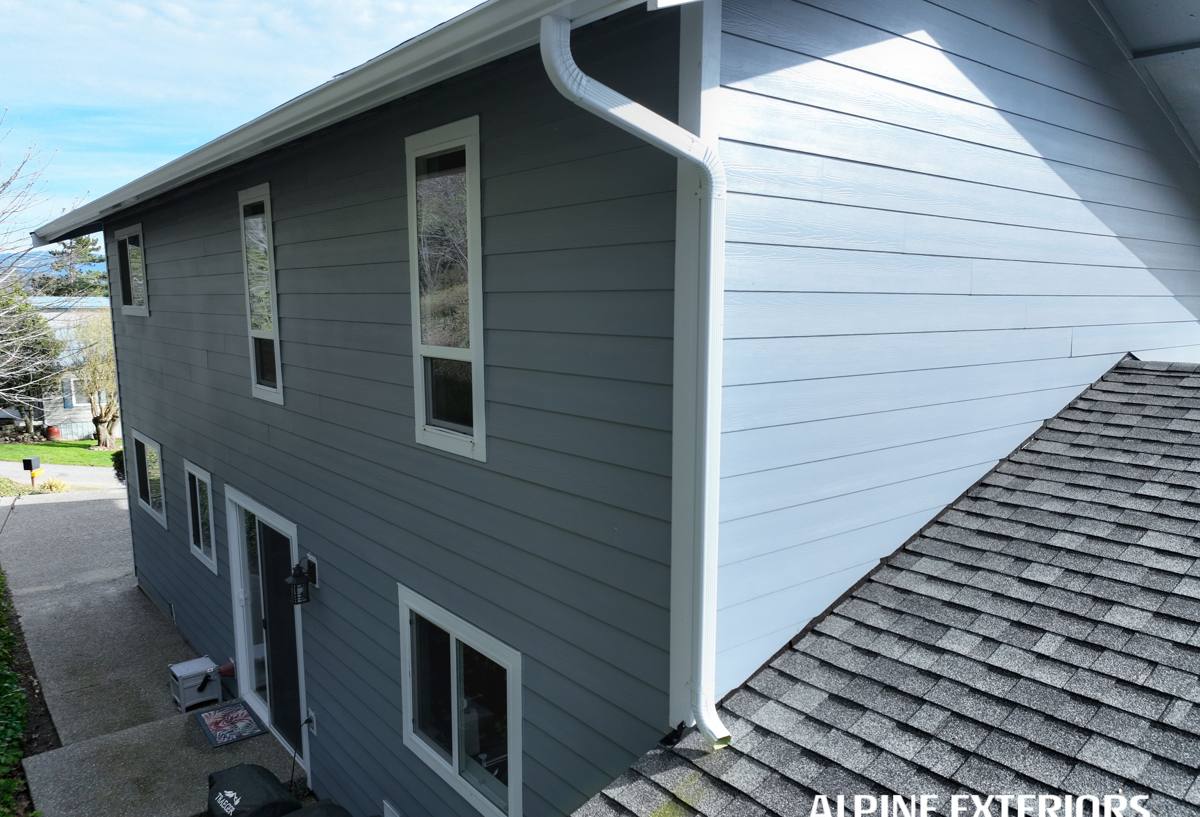
Why Local Roofs Fail Faster Here
Moss and Organic Growth
Moss doesn't just look bad — it holds water against the roofing material long after a storm has passed. On shaded, north-facing slopes (common on lots with mature trees, which are everywhere in this area) moss can stay damp for days. That constant moisture breaks down shingle granules, lifts shakes, and works its way under laps and seams where it doesn't belong.
Driving Rain and Wind-Driven Water
Rain here rarely falls straight down. Wind off the Strait and the lowland weather patterns push it sideways, which means water gets tested against flashing, vents, and edge details that a calm-weather roof would never see. Repairs that only address the visible hole and ignore the flashing or underlayment nearby tend to leak again the next windy storm.
Salt Air and Metal Fatigue
Proximity to Puget Sound and the Strait of Georgia means a steady low dose of salt in the air. It's not as aggressive as a beachfront property, but over years it accelerates corrosion on exposed fasteners, flashing, and metal roof panels. Galvanized nails and older flashing are usually the first things to show it.
What a Correct Repair Actually Involves
A proper roof repair isn't a tube of caulk and a prayer. Done right, it follows a sequence:
- Find the real source — water often travels along rafters or sheathing before it drips somewhere visible, so the stain inside the house is rarely directly below the actual entry point.
- Check the surrounding material — sheathing, felt or synthetic underlayment, and framing near the failure point often need to be assessed for rot before anything new goes down.
- Repair the water path, not just the hole — that means correcting flashing laps, step flashing at walls and chimneys, and valley metal so water is shed the way it was designed to be, not just plugged.
- Match materials and fastening methods — mismatched shingle types, wrong nail patterns, or incompatible sealants often cause a repair to fail faster than the original problem.
- Clean up moss and debris while the roof is already open, since leaving it in place undoes the benefit of the repair within a season.
Signs You Likely Need Repair, Not Replacement
- A single leak traced to a specific flashing point, vent boot, or damaged shingle section
- Moss buildup with the roofing material itself still structurally sound underneath
- Isolated storm or wind damage — a lifted section, a few missing shingles, a dented ridge cap
- Interior staining that hasn't spread or worsened over multiple rain events
- A roof under roughly two-thirds of its expected lifespan with an otherwise healthy field
Common Repair Points on Sumas-Area Homes
| Problem Area | What Causes It Locally | Typical Fix |
|---|---|---|
| Valleys | Heavy water volume during long rain events, moss damming flow | Clear debris, re-flash or replace valley metal, correct shingle overlap |
| Chimney and wall flashing | Wind-driven rain forcing water under poorly lapped flashing | Re-flash with proper step and counter-flashing, reseal with compatible sealant |
| Vent boots and penetrations | Rubber boots cracking from age and UV/moisture cycling | Replace boot, check surrounding shingles and underlayment for water intrusion |
| Shaded north-facing slopes | Extended moss season, slow drying time | Moss removal, treatment, and repair of any lifted or granule-worn shingles |
| Eaves and gutters | Overflow during heavy rain backing water up under the roof edge | Clear gutters, check and repair drip edge and starter course |
Our Process for Sumas Roof Repair Calls
We start with a straightforward inspection — on the roof when conditions allow, and from the attic or interior when we need to trace a leak's path. We'll tell you plainly what we find: whether it's a contained repair, a sign of a bigger problem developing, or something in between. We don't pad a small repair into a bigger job, and we don't downplay damage that's going to come back if it's ignored.
Once we've agreed on scope, we do the work in one visit whenever the repair allows for it, using materials that match or reasonably complement what's already on the roof. If we find rot or compromised sheathing while we're in there, we'll stop and show you before covering it back up — not just quietly patch over a bigger issue.
What We Check Every Time
- Flashing at every roof-to-wall and roof-to-vertical transition
- Underlayment condition near the repair area, not just the surface layer
- Fastener corrosion, especially on older galvanized nails
- Moss and organic buildup on shaded slopes
- Attic ventilation, since poor airflow accelerates moisture damage from the inside
Repair Materials: Trade-Offs Worth Knowing
| Approach | Where It Fits | Trade-Off |
|---|---|---|
| Spot shingle/shake replacement | Isolated wind or moss damage | Fast and affordable, but only as good as the flashing and underlayment beneath it |
| Flashing replacement | Chronic leaks at chimneys, walls, valleys | Addresses the actual water path; slightly more labor than a surface patch, but far more durable |
| Partial re-roof of a slope | Widespread wear on one shaded or exposed section | Higher cost than a spot repair, but avoids repeated call-backs on a slope that's clearly failing as a whole |
| Sealant-only patch | True emergency, temporary stopgap | Buys time in a pinch but isn't a lasting fix — we're upfront when this is all a situation calls for short-term |
What Affects the Cost of a Repair
Every roof and every leak is different, so we won't quote a number without seeing the roof. In general, cost is driven by:
- How much of the roof is affected versus a single isolated point
- Roof pitch and access — steep or high roofs take longer and require more safety setup
- Whether sheathing or framing underneath needs to be repaired, not just the roofing material
- Material match — some older or discontinued roofing products are harder to source or blend in
- How much moss or debris removal is needed before the repair itself can even start
Small, contained repairs are usually a modest expense measured in a few hundred dollars. Repairs involving flashing replacement, rotted sheathing, or a partial slope re-roof run higher — often into the low thousands — depending on scope. We'll always break down what's driving the number before we start.
Why a Crew That Works This Area Regularly Matters
Anyone can repair a roof on a sunny day. What matters here is knowing how a roof behaves through a full Whatcom County wet season — how water actually moves during a driving rain, how fast moss comes back on a shaded slope near Sumas, and which flashing details tend to fail first on homes built to older or regional code standards. A crew that works this area regularly has already seen the patterns: which roof ages, orientations, and construction types tend to have recurring trouble spots, and what actually holds up against another winter of salt air and steady rain.
That local pattern recognition is the difference between a repair that lasts and one that's back on the schedule next year.
Simple Maintenance to Extend a Repair's Life
- Clear gutters and downspouts before the fall rains start, so water isn't backing up under the roof edge
- Remove moss buildup on shaded slopes at least once a year rather than letting it establish
- Trim back overhanging branches to cut down on shade, debris, and abrasion
- Check attic ventilation periodically — trapped moisture damages a roof from underneath just as much as rain does from above
- Have any new interior staining looked at promptly, before it spreads or reaches framing
If you're dealing with a leak, moss damage, or storm damage on a home in or around Sumas, we're happy to take a look and give you an honest read on what it actually needs. Fill out the form below for a free, no-pressure estimate.