 Custer
 Why Sumas Roofs Wear Differently Than Roofs Inland
Sumas sits in a corner of Whatcom County where weather doesn't behave the way it does thirty miles south. Storms roll in off the water carrying salt-laden air, foothill wind funnels down through the valley, and the tree cover that makes this area beautiful also keeps roofs shaded and damp for months at a time. An asphalt shingle roof here isn't fighting one problem — it's fighting three at once: moisture that won't fully dry out between storms, wind that tests every nail and seal, and airborne salt that slowly works on metal flashing and fasteners. A roofing job that would hold up fine in a drier, more open part of the state can fail early in Sumas if it wasn't built with these specific conditions in mind.
Moss, Moisture, and the Long Wet Season
Whatcom County's wet season isn't just about total rainfall — it's about how long shingles stay damp. Shaded slopes and north-facing roof planes in Sumas can stay wet for days after a storm passes, which is exactly the environment moss needs to take hold. Once moss establishes itself in shingle granules, it holds even more moisture against the roof deck and starts lifting shingle edges, which is how small leaks begin. A roof designed for this area needs shingle placement, granule coverage, and drainage details that account for moss pressure from day one, not a plan to deal with it later.
Wind and Driving Rain Off the Foothills
Rain in this part of Whatcom County rarely falls straight down. Wind pushes it sideways under the shingle tabs and into any gap in the flashing, especially around chimneys, skylights, and valleys. That's a different failure pattern than simple water pooling, and it means sealant strips, nail placement, and starter course installation matter more here than in calmer climates. A roof that looks fine from the ground can still be taking on wind-driven water at the edges if these details were rushed.
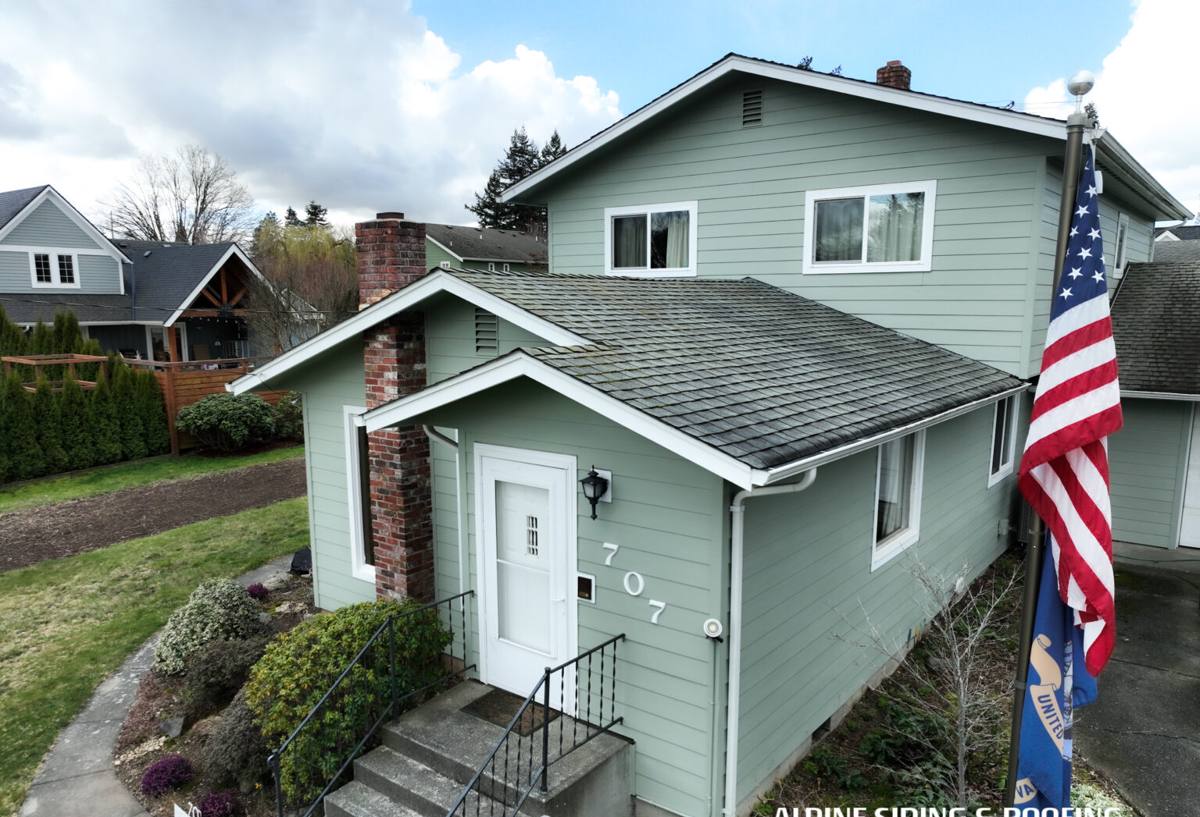
What a Correctly Installed Asphalt Shingle Roof Actually Involves
A shingle roof is a system, not a single product. Every layer underneath the shingles you see is doing specific work, and in a climate like Sumas gets, skipping or shortcutting any one of them shows up as a problem within a few years rather than a few decades.
Underlayment and Water Barrier
Synthetic or felt underlayment is the roof's backup plan if wind ever drives water past the shingles themselves. In valleys, along eaves, and around any roof penetration, we use a self-adhering water and ice barrier rated for this region's wet conditions — it's the difference between a roof that shrugs off a wind-driven storm and one that leaks quietly into the attic for months before anyone notices.
Ventilation Balance
Attics need a balanced intake and exhaust system so moist air moves out instead of condensing against the underside of the roof deck. In a humid, shaded climate, poor ventilation doesn't just shorten shingle life — it can rot decking from the inside while the shingles on top still look fine. We check existing ventilation on every job rather than assuming what's already there is adequate.
Flashing Details
Flashing is where most real-world leaks actually start, not in the open field of shingles. Step flashing at walls, counter-flashing at chimneys, and properly woven or metal valleys all need to be sized and installed correctly for the specific roof, not bent from a generic template. This is also where salt-air exposure matters most — the metal and fastener choices we use are selected to hold up against corrosion over time, not just look right on installation day.
Choosing the Right Shingle for Whatcom County Conditions
Not every asphalt shingle product is built the same way, and the right choice depends on your roof's exposure, budget, and how long you want to go before thinking about it again. Here's how the common tiers compare for a Sumas home specifically.
| Shingle Tier | Typical Lifespan | Wind Performance | Best Fit For |
|---|---|---|---|
| 3-Tab (economy) | Shorter, manufacturer-rated lower tier | Lower wind rating | Budget-driven projects, secondary structures |
| Architectural / Dimensional | Mid-range, manufacturer-rated | Higher wind rating, better nail hold | Most Sumas homes — the common standard today |
| Premium / Designer | Longer, manufacturer-rated top tier | Highest wind rating in the asphalt category | Steep-slope, highly visible, or high-exposure roofs |
We don't push whichever product carries the widest margin — we tell you honestly what tier makes sense for your roof's pitch, exposure, and how long you plan to stay in the home. Algae-resistant granules are worth the small upgrade cost on almost every Sumas roof given how much shade and moisture this area sees; skipping that feature to save a little upfront usually costs more in appearance and cleaning within a few years.
Our Installation Process, Step by Step
Every roof is different, but the sequence that produces a roof built to last in this climate doesn't change much:
- Inspection and deck check — we look at the existing roof, attic, and decking condition before quoting anything, because hidden rot changes the scope of the job.
- Tear-off and deck repair — old roofing comes off down to the deck, and any soft or damaged sheathing gets replaced, not covered over.
- Water barrier and underlayment — ice-and-water membrane goes down first at eaves, valleys, and penetrations, then synthetic underlayment across the rest of the deck.
- Flashing installation — new metal flashing at all walls, chimneys, and valleys, sized and formed for the specific roof rather than a one-size template.
- Shingle installation — starter strips, field shingles, and ridge caps installed to the manufacturer's nailing pattern, not a faster shortcut pattern.
- Ventilation check — intake and exhaust venting confirmed or corrected so the attic can actually breathe.
- Final walk-through — we cover what was done, what to expect, and what maintenance (if any) will help the roof age well.
Roof Maintenance and Moss Control for Sumas Homes
A well-installed roof still needs a small amount of upkeep in this climate, mostly centered on moss and drainage. None of it is complicated, but skipping it for years at a time is how small issues become expensive ones.
- Keep gutters clear of needles and debris so water isn't backing up under the lowest shingle course.
- Have moss growth treated and removed before it spreads across a shaded slope, rather than after it's established.
- Trim back overhanging branches where practical to reduce shade and debris buildup on the roof.
- Check attic ventilation isn't blocked by insulation or storage that's crept over the intake vents.
- Schedule a walk-on inspection after any major windstorm, especially if you noticed missing granules in the gutters afterward.
- Address small flashing leaks immediately — they rarely stay small in a climate this wet.
Common Problems We See on Sumas Roofs
Most of the roofs we're called out to look at in Sumas share a handful of recurring issues, and recognizing them early usually means a repair instead of a full replacement.
Granule loss in gutters often signals wind or age-related wear starting to expose the shingle's asphalt layer underneath. Curling or lifting tabs along shaded, moss-prone slopes usually mean moisture has been sitting against the shingle longer than it should. Rust staining at flashing points is common where salt-influenced air has been working on older metal for years. Soft spots in the decking, felt underfoot during an inspection, usually mean water has been getting past the shingle layer for a while — this is the one that turns a simple shingle job into a deck-repair job if it isn't caught in time.
Cost Factors for Asphalt Shingle Roofing in Sumas
There's no single number that fits every roof, but the variables that move the price are consistent. We walk through these with every homeowner before quoting so there are no surprises.
| Factor | Why It Matters |
|---|---|
| Roof size and pitch | Steeper roofs take longer and require more safety setup, which affects labor cost. |
| Number of existing layers | Tear-off of multiple old layers adds disposal and labor time versus a single-layer tear-off. |
| Decking condition | Rotted sheathing found during tear-off needs replacement before shingles go down. |
| Shingle tier chosen | Economy, architectural, and premium products carry different material costs. |
| Roof complexity | Valleys, dormers, skylights, and chimneys all add flashing work and time. |
| Ventilation upgrades | Adding or correcting intake/exhaust venting is worth doing during a re-roof, not after. |
As a broad guide, most straightforward asphalt shingle re-roofs in this area land somewhere in the mid-to-upper thousands of dollars, with steeper, larger, or more complex roofs running higher. We'll give you an actual number for your roof, not a placeholder estimate, once we've seen it in person.
Why a Crew That Already Works in Sumas Makes a Difference
Roofing crews that mostly work in drier, more sheltered parts of the state don't always account for how much shade, moisture, and wind-driven rain a Sumas roof deals with year-round. A crew that already works this part of Whatcom County knows which slopes tend to hold moss, which flashing details actually hold up against the wind patterns here, and which shingle tiers are worth the extra cost given how long roofs stay wet after a storm. That local pattern recognition doesn't show up on a spec sheet — it shows up in fewer callbacks and a roof that's still doing its job a decade later.
We're not interested in overselling a homeowner on features their roof doesn't need, and we're not interested in cutting corners that turn into a leak two winters from now. If you're weighing a repair against a full replacement, or just want a straight answer on what your roof actually needs, we're happy to take a look and give you a free, no-pressure estimate — use the form below to get started.