 Custer
 Marietta Sits Right in the Path of Whatcom County's Toughest Siding Conditions
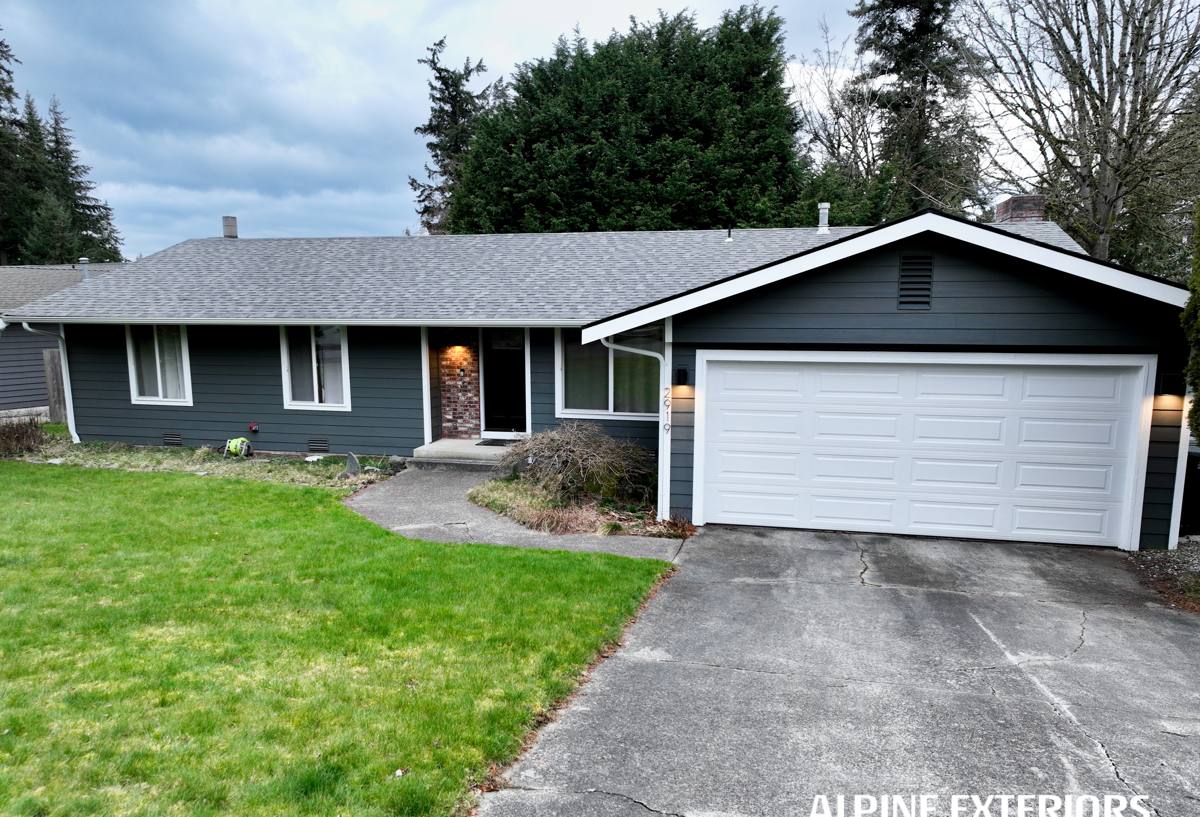
Marietta is a quieter stretch of the Custer area, close enough to the water that homes here take a different kind of beating than siding just a few miles inland. Between the salt-laden air coming off the bay, the driving rain that Whatcom County winters are known for, and a moss season that can run eight or nine months out of the year, exterior walls in this neighborhood are under near-constant pressure. Siding that would hold up fine in a drier, more sheltered part of the county can start failing early here — not because it's bad siding, but because it was never built for this exposure.
This page is about one thing: what a correct siding replacement looks like for a Marietta home, given what this specific location does to exterior materials over time. If you're weighing whether to repair, patch, or fully replace, or you're just trying to understand why your siding is aging faster than a neighbor's inland, this is the context that matters.
What Salt Air Actually Does to Siding Over Time
It's Not Just Corrosion
Salt air gets talked about mostly in terms of rusting fasteners and hardware, and that's real — exposed or under-driven nails, cheap trim screws, and unprotected metal flashing all corrode faster near the water. But salt air also affects the siding material itself. Airborne salt is hygroscopic, meaning it pulls moisture out of the air and holds it against whatever surface it lands on. On porous or moisture-sensitive siding materials, that means the surface stays damp longer than it would from rain alone, even on days that look dry.
Why This Matters for Material Choice
Any siding installed in Marietta needs to tolerate that near-constant low-level dampness without swelling, delaminating, or breaking down at the surface. Wood-based products — engineered wood, primed spruce, cedar — are the most vulnerable here, because their core material is designed to absorb and release moisture, and repeated wet-dry cycling right at the surface is exactly what accelerates rot and finish failure. This is one of the clearest reasons we standardized on fiber cement: it doesn't have an organic core to feed decay, and it isn't dimensionally reactive to humidity the way wood products are.
Driving Rain and Wind-Driven Water Intrusion
Whatcom County gets a lot of rain, but the rain that does the real damage to siding isn't the straight-down kind — it's wind-driven rain that gets pushed sideways and upward into laps, seams, and penetrations. Marietta's proximity to open water means wind off the bay can push rain harder against a wall than you'd see in a more sheltered inland location. Over years, that pressure finds every weak point in an installation: under-lapped courses, gaps at butt joints, poorly sealed trim, and flashing that was installed as an afterthought rather than integrated into the water management plan from the start.
This is why siding replacement here isn't just about swapping old boards for new ones. The water management behind the siding — the weather-resistive barrier, the flashing details at windows and doors, the lap and joint technique — has to be built to handle sideways-driven water, not just rain falling straight off a roofline.
The Long Moss Season and What It Does Beyond Looks
Why Moss Thrives Here
Custer's mix of shade, moisture, and mild temperatures gives moss and algae a long growing window — realistically, most of the year with only a short dry stretch in summer where growth slows. North-facing walls, shaded sides of the house, and areas near trees or fences with poor airflow are where it shows up first and worst.
The Real Damage Isn't Cosmetic
Homeowners usually notice moss because it looks bad, but the bigger issue is what it does to the siding surface underneath. Moss and algae hold moisture directly against the material, keep that surface shaded and slow to dry, and on some siding types their root structures can work into surface texture or coatings over time. On wood-based sidings, that sustained dampness is a direct path to rot. On a factory-finished fiber cement product, the risk is much lower because the finish is baked on and the substrate isn't organic — but it's still worth designing the installation (proper clearances, ventilation gaps where appropriate) to keep moss from getting a foothold in the first place.
Signs a Marietta Home Actually Needs Replacement, Not Just Repair
Not every issue calls for a full tear-off. But in this climate, some signs point clearly toward replacement rather than patching:
- Soft or spongy spots when you press on the siding, especially near the bottom courses or below windows
- Paint or finish that's bubbling, peeling, or chalking heavily rather than just fading evenly
- Visible gaps, warping, or cupping in boards, particularly on the side of the house facing the water or prevailing wind
- Moss or algae that keeps coming back within weeks of cleaning, especially on shaded walls
- Rust streaking from fasteners or trim, which usually means water is already getting past the surface
- Rot at butt joints, corners, or anywhere two pieces of siding meet
- Interior signs — musty smell, staining, or soft drywall on an exterior wall — that suggest moisture has already gotten past the siding entirely
If you're seeing more than one or two of these, especially in combination, it's usually a sign the underlying water management has failed somewhere, not just the visible surface.
What a Correct Siding Replacement Involves
Tear-Off and What's Underneath
A proper replacement starts with a full tear-off, not siding-over-siding. That's the only way to actually inspect the sheathing underneath for rot or moisture damage — which, given how much water intrusion we see in coastal-exposed Whatcom County homes, is common enough that skipping this step is a real risk. Any damaged sheathing gets replaced before new siding goes on; covering it up just hides the problem for a few more years.
Weather-Resistive Barrier and Flashing
A new weather-resistive barrier goes on correctly lapped so water sheds downward and outward, never into a seam. Flashing at every window, door, and roofline intersection gets integrated into that barrier — not just caulked on top of the siding afterward. This is the layer that actually stops wind-driven rain from reaching the sheathing, and it's the layer that gets shortcut most often on rushed jobs.
Fastening and Lap Technique for This Climate
Fastener spacing, type, and depth all matter more in a high-wind, high-moisture location like Marietta than they would somewhere more sheltered. Corrosion-resistant fasteners, correct nail penetration into framing, and proper lap overlap all reduce the chance of water finding a way in over the next twenty or thirty years.
Factory Finish vs. Field-Applied Paint
We install James Hardie fiber cement with its factory-applied ColorPlus finish rather than field-painted siding. A factory finish is baked on under controlled conditions and holds up to UV and moisture exposure far more consistently than paint applied on-site, which is exactly the kind of durability edge that matters on a wall taking direct salt spray and wind-driven rain year after year.
How Common Siding Materials Actually Hold Up in This Environment
Homeowners in Marietta often ask us to compare options directly, so here's an honest look at how the materials we get asked about most perform against this specific climate:
| Material | Salt Air / Moisture Behavior | Moss & Algae Resistance | Long-Term Maintenance |
|---|---|---|---|
| James Hardie fiber cement | Non-organic core, doesn't swell or rot from sustained dampness | Factory finish resists staining better than painted wood surfaces | Low — occasional wash, no repainting on Hardie's typical repaint cycle |
| Vinyl siding | Won't rot, but can warp or crack in wind and temperature swings; seams can allow water behind panels | Moderate — smooth surface sheds spores better, but trapped moisture behind panels can feed growth unseen | Low visible upkeep, but hidden moisture problems go unnoticed longer |
| LP SmartSide / engineered wood | Engineered wood core is moisture-sensitive; edge and seam swelling is a known risk in wet climates | Vulnerable if finish is compromised at cuts or joints | Moderate to high — finish and caulking need regular inspection |
| Cedar / primed spruce | Organic material, most vulnerable to sustained coastal dampness and salt exposure | Highest risk — moss and algae root readily into wood grain and finish | High — regular refinishing, sealing, and moss treatment needed |
This is why fiber cement is the only product we install. It's not that the alternatives are worthless everywhere — vinyl and engineered wood both have a place in drier, more sheltered climates. But on a wall facing salt air, driving rain, and a moss season this long, we've seen enough real-world performance differences over enough years to standardize on the material that holds up best here.
Our Process for a Marietta Siding Replacement
- On-site assessment of the existing siding, sheathing condition where accessible, and the specific exposure your home faces (wind direction, shade, proximity to water)
- Written scope covering tear-off, sheathing repair allowances, weather-resistive barrier, flashing details, and the Hardie product line and color selected
- Full tear-off and sheathing inspection before anything new goes up
- Barrier, flashing, and fastening installed to manufacturer spec, with particular attention to wind-driven rain exposure
- Final walkthrough covering what maintenance (if any) to expect and how to spot early trouble in the future
Why It Matters That We Already Work in Marietta
A crew that's replaced siding on other homes in this same stretch of Whatcom County already knows which walls take the worst of the wind, how bad the moss gets on shaded north sides, and where flashing tends to fail on older homes here. That's not something you can fully substitute with general experience from a different climate zone. It affects decisions on the job — where to add extra flashing attention, which walls need closer inspection during tear-off, how to sequence the work around Custer's wetter months. Local, repeat experience in a specific microclimate like Marietta's is part of what keeps a siding replacement performing for decades instead of years.
What to Ask Before Hiring Anyone for This Job
- Do they do a full tear-off, or install over existing siding?
- Will they inspect and repair sheathing if it's found damaged, and is that spelled out in writing?
- What weather-resistive barrier and flashing approach do they use, and can they explain why?
- Do they have experience specifically with coastal-exposed or high-moisture homes in this county, not just siding in general?
- What's covered under the material warranty, and what's covered under their labor warranty — and for how long?
If a contractor can't answer these clearly, that's worth noting before you sign anything.
If your Marietta home is showing any of the signs above, or you just want an honest read on where your siding stands, we're happy to come take a look. The estimate is free, there's no pressure, and you'll get a straight answer about whether you need a full replacement or something less.