 Custer
 Why California Creek Homes Wear Out Siding Faster
Homes around California Creek sit in a tough spot for exterior materials. The area gets a steady dose of salt-laden air off the nearby coastline, long stretches of driving rain through the fall and winter, and a moss season that can run for months on shaded, north-facing walls. None of that is unusual for Whatcom County, but it adds up over time in ways a lot of homeowners don't notice until the siding is already failing underneath.
Salt air accelerates corrosion on fasteners, flashing, and any metal trim that isn't properly rated for coastal exposure. Driving rain — rain that comes in sideways during a windstorm rather than straight down — finds every gap in a siding system that wasn't installed with that in mind: unsealed seams, missing flashing, or panels installed too close to grade. And moss doesn't just look bad. On wood-based or fiberboard products, sustained moss and algae growth holds moisture against the surface, which is exactly the condition that leads to rot, delamination, and swelling.
None of this means siding is doomed to fail here. It means the materials and the installation details have to be matched to what this climate actually does to a house, not just to what looks good on the day it goes up.
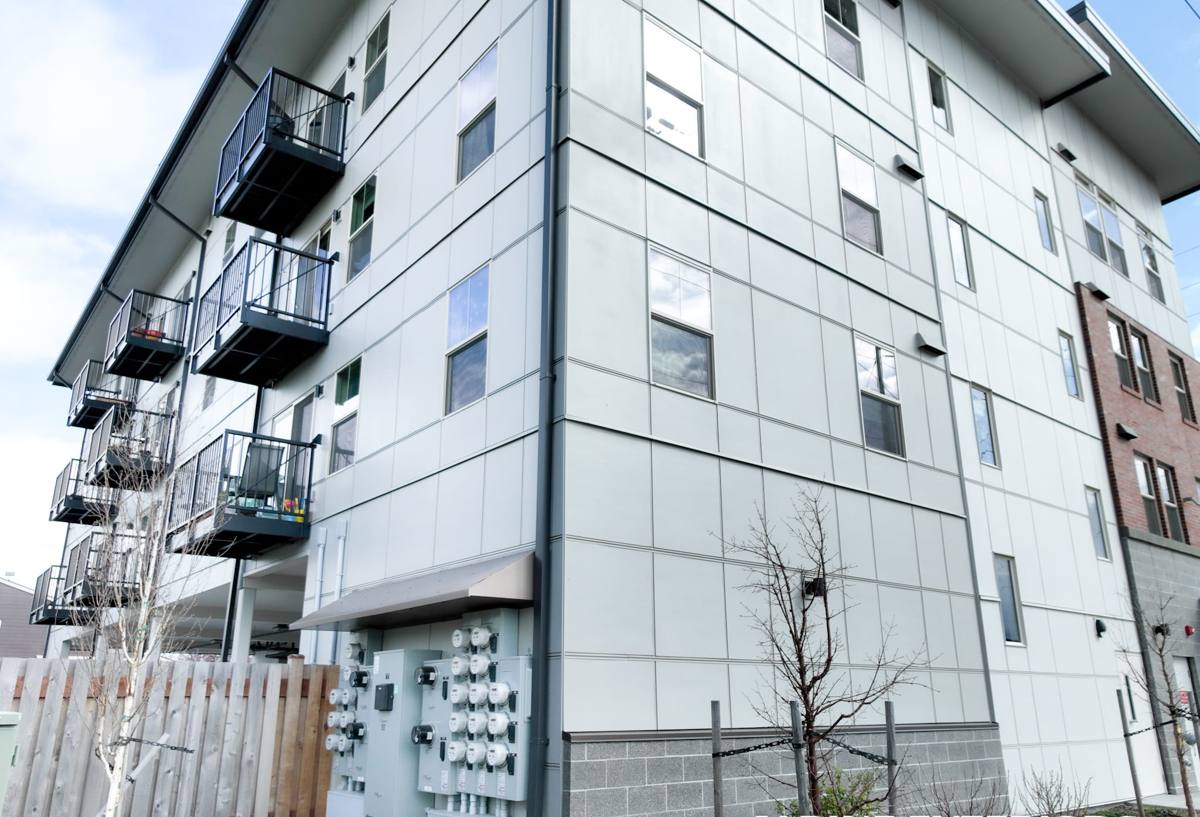
Signs Your Siding Has Reached the End of Its Life
Before jumping to full replacement, it's worth knowing what actual failure looks like versus normal weathering. A few boards that need paint touch-up is not the same problem as a siding system that's letting water into the wall.
- Panels that feel soft, spongy, or give slightly when pressed — a strong sign of moisture damage underneath
- Paint that's bubbling, peeling, or flaking rather than just fading
- Moss or dark staining that comes back within weeks of being cleaned off
- Visible cracking, warping, or delamination (layers separating) on individual panels
- Gaps opening up at seams, corners, or where siding meets window and door trim
- A musty smell or visible staining on interior walls that share an exterior wall with a rough area of siding
- Noticeably higher heating bills that can't be explained by anything else
If you're seeing more than one of these, especially the soft-panel or interior-staining signs, that's usually water intrusion rather than a cosmetic issue — and it tends to get worse, not better, on its own.
What a Correct Siding Replacement Actually Involves
Tear-Off and Inspection
A proper replacement starts with removing the old siding down to the sheathing, not installing new material over the old. That step matters everywhere, but it matters more here because it's the only point in the project where anyone can actually see what the rain and moss have been doing to the wall for years. Soft sheathing, rotted framing around windows, or corroded fasteners all need to be dealt with before anything new goes up — covering them over just locks the problem inside the wall.
Weather-Resistive Barrier and Flashing
This is the part of the job that's invisible once it's done, and it's the part that determines whether the new siding actually keeps water out. That means a continuous, correctly lapped weather-resistive barrier, proper head flashing above every window and door, kick-out flashing where a roofline meets a wall, and enough clearance at the bottom of the wall so siding isn't sitting in standing water or splashback. In a climate with sustained driving rain, skipping or shortcutting any of these details is where future leaks come from — regardless of how good the siding itself is.
Installation to Manufacturer Spec
Fiber cement siding has specific requirements for fastener type and placement, panel gaps, caulking at joints, and clearances from roofing, decks, and grade. Installing it correctly — to the manufacturer's published specifications — is what keeps the warranty valid and what actually gives the product its expected lifespan. A lot of premature siding failure isn't a product problem at all; it's an installation shortcut that shows up five or ten years later.
Why We Install Only James Hardie Fiber Cement
We don't install vinyl, LP SmartSide, cedar, primed spruce, or other fiber cement brands. That's a deliberate standard, not a lack of options. James Hardie is fiber cement, not a wood product, so it doesn't feed moss, mold, or rot the way wood-based sidings can, and it's non-combustible. It comes with a factory-applied ColorPlus finish, which holds up to sun and salt air better than a field-applied paint job and doesn't require repainting on the same schedule wood siding does. Hardie also builds specific product lines engineered for different climate zones, including a version made for wetter, marine-influenced regions like ours — which matters more here than in a dry inland climate.
That's not to say every other product is without merit. Vinyl is inexpensive and low-maintenance in mild climates. Cedar has a look a lot of homeowners genuinely love. LP SmartSide is a legitimate engineered wood product with its own fan base. But each of those comes with a trade-off that shows up specifically in wet, salt-exposed, moss-prone conditions — vinyl can warp and doesn't stop moisture at seams as well as a rigid panel system, wood products need more diligent maintenance to avoid moisture damage, and appearance and performance both suffer faster here than they would somewhere drier. We standardized on Hardie because it's the product we're comfortable standing behind for the specific conditions California Creek homes deal with.
Our Process for a California Creek Siding Replacement
- On-site assessment — we look at the current siding, sheathing condition where accessible, trim, flashing, and any problem areas you've noticed
- Written proposal — scope, product line, and a clear breakdown of what's included, no vague allowances
- Color and profile selection — choosing from Hardie's ColorPlus lineup and panel styles (lap, shingle, board-and-batten) to match the home
- Tear-off and disposal — full removal of old siding and responsible haul-away
- Sheathing repair — replacing any rotted or damaged sheathing and framing found during tear-off, discussed with you before we proceed
- Weather-resistive barrier and flashing installation — the step that actually keeps the wall dry going forward
- Hardie panel installation — fastened, gapped, and finished to manufacturer specification
- Trim, caulking, and touch-up — sealing and detailing around windows, doors, corners, and transitions
- Final walk-through — reviewing the finished work together before we call the job done
Cost Factors for Siding Replacement in This Area
Every home is different, and the only way to get an accurate number is a site visit — but these are the main factors that move the price on a typical siding replacement here.
| Factor | Why It Matters |
|---|---|
| Home size and number of stories | More wall area and taller walls both increase material and labor time |
| Sheathing or framing repair needed | Hidden rot found during tear-off adds carpentry work before new siding can go on |
| Trim and detail complexity | Dormers, multiple rooflines, and lots of window/door trim take more time to flash and finish correctly |
| Siding profile chosen | Lap siding, shingle-style panels, and board-and-batten all have different material and labor costs |
| Site access | Tight lots, slopes, or limited equipment access can add time to tear-off and staging |
As a broad, honest range, fiber cement siding replacement typically runs somewhere in the neighborhood of $10 to $25 per square foot installed nationally, with the specifics above pushing a given project up or down within — and beyond — that range. Anyone quoting a firm number before seeing your home and sheathing condition is guessing.
Why a Crew That Already Works This Area Matters
Siding installation isn't one-size-fits-all across climates, and it isn't one-size-fits-all across a single county either. A crew that regularly works in and around Custer knows what driving rain does to flashing details on this side of Whatcom County, knows how aggressively moss establishes itself on shaded walls near the creek corridors, and has already seen what happens when those factors get ignored on a job done to a generic spec. That familiarity shows up in small decisions — extra attention to kick-out flashing, being conservative about ground clearance, choosing panel gaps that account for our humidity swings — that a crew unfamiliar with the area might not think twice about.
It also means faster response if something needs a look after the fact, and a contractor who isn't learning the local climate on your project.
Maintaining Your New Siding After Installation
Fiber cement with a factory finish is low-maintenance, not no-maintenance. A little attention keeps it performing the way it's supposed to for decades.
- Rinse the exterior annually to remove salt residue, pollen, and early moss growth before it takes hold
- Check caulking at trim, seams, and penetrations every year or two and re-seal if it's cracking or pulling away
- Trim back plants, shrubs, and tree limbs so they aren't holding moisture against the wall
- Keep gutters clear so overflow isn't running down the siding face
- Watch shaded, north-facing walls more closely — that's where moss returns fastest in this climate
- Report any soft spots, cracked panels, or gaps promptly rather than waiting for the next scheduled look
If you're seeing early signs of trouble on your current siding, or you just want an honest read on what a full replacement would involve for your home near California Creek, we're glad to come take a look. The estimate is free, there's no pressure, and you'll get a straight answer about what your siding actually needs.