 Custer
 Why Marietta Siding Takes a Different Kind of Beating
Marietta sits close enough to the water that homes here deal with a combination most inland Whatcom County neighborhoods don't: salt-laden air, wind-driven rain coming off the Strait, and a moss season that can stretch from fall well into spring. None of those three things is unusual on its own. Together, and repeated year after year, they wear on siding in specific, predictable ways — and that means the repair work needs to be specific too, not a generic patch job.
Salt air accelerates corrosion on fasteners, flashing, and any exposed metal trim. Driving rain doesn't just fall straight down here — it gets pushed sideways into wall assemblies, seams, and butt joints that would stay dry in a calmer climate. And moss doesn't just sit on the roof; it colonizes north-facing and shaded siding, holding moisture against the wall surface for weeks at a time. A siding repair that doesn't account for all three is a repair that's likely to fail again within a few years.
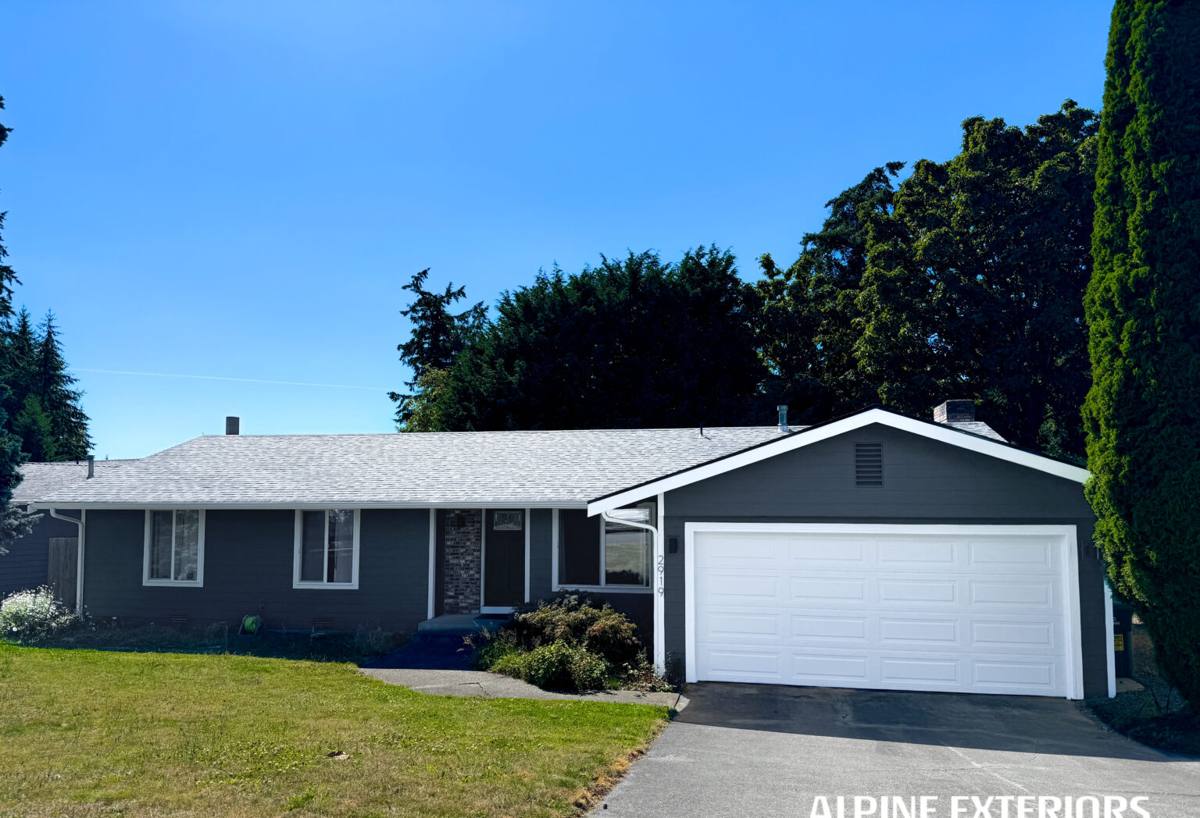
Signs a Marietta Home Needs Siding Repair
Most siding problems don't announce themselves with a dramatic failure. They show up as small, easy-to-dismiss details first. Homeowners who catch these early save real money, because a caulk-and-flashing fix is a fraction of the cost of replacing rotted sheathing behind the siding.
- Soft or spongy spots when you press on siding near the bottom of walls or below windows
- Dark streaking or persistent green-black growth, especially on shaded or north-facing walls
- Paint that's bubbling, peeling, or chalking unevenly in patches rather than across the whole wall
- Visible gaps at corner boards, trim, or butt joints where caulk has shrunk or pulled away
- Rusting or staining around nail heads and metal flashing
- A musty smell or visible staining on interior walls that share an exterior wall with damaged siding
- Warped, cupped, or separated boards, particularly on the sides of the house that face prevailing wind and rain
Why Small Problems Escalate Fast Near the Water
In a drier inland climate, a small gap in caulking might go unnoticed for years. Near Marietta, that same gap is an entry point for wind-driven rain almost every storm season. Once moisture gets behind the siding, it doesn't dry out quickly — the same humid, cool conditions that grow moss on the surface also slow evaporation underneath. That's why we treat "small" siding issues in this area with more urgency than we would somewhere drier.
What a Correct Siding Repair Actually Involves
A proper repair isn't just swapping out a damaged board and caulking the edges. It's a diagnostic process first, then a repair that addresses the cause, not just the symptom.
Step One: Find the Actual Moisture Path
Visible damage on the siding surface often isn't where the water is actually getting in. We check flashing above windows and doors, kick-out flashing at roof-to-wall intersections, butt joint seals, and penetrations for hose bibs, vents, and electrical fixtures — all common entry points that get worse with driving rain.
Step Two: Assess What's Behind the Siding
If there's any sign of prolonged moisture — soft siding, staining, a musty smell — we check the condition of the water-resistive barrier and sheathing underneath before closing anything back up. Repairing over hidden rot just hides the problem for another season.
Step Three: Repair or Replace the Affected Section
Damaged boards or panels get cut back to sound material, not just patched at the visible spot. New material is installed with correct flashing details and appropriate gaps for drainage, not sealed up airtight in a way that traps moisture.
Step Four: Match Finish and Seal Correctly
Caulking and touch-up paint matter more here than in a dry climate — the wrong sealant or a rushed paint match will fail faster under constant damp-and-dry cycling. We use products rated for the exposure and take the time to get the color and sheen close.
How Different Siding Materials Hold Up in This Climate
Not every siding material responds the same way to salt air, driving rain, and moss exposure. This matters both for how often a home will need repairs and for how straightforward those repairs are to do well.
| Material | Salt Air / Moisture Behavior | Moss & Algae Resistance | Repair Difficulty |
|---|---|---|---|
| Vinyl | Doesn't rot, but can warp or crack in temperature swings; seams are a common leak point | Grows on surface readily; hard to fully clean without damage | Discontinued colors and profiles make matching old panels difficult |
| Untreated or primed wood (spruce, cedar) | Absorbs moisture; prone to swelling, rot, and fastener corrosion staining | Moisture retention makes it a prime moss and mildew host | Often requires replacing more material than just the damaged spot, since rot spreads under the surface |
| LP SmartSide (engineered wood) | Better than raw wood but still wood-based; edges are the vulnerable point if not sealed and maintained | Moderate; surface treatment needs upkeep | Repairs need careful edge-sealing to avoid repeat swelling |
| James Hardie fiber cement | Non-combustible and dimensionally stable; doesn't swell, rot, or absorb water the way wood-based products do | Factory ColorPlus finish resists staining better than field-painted surfaces | Sections can be cut and replaced cleanly; color-matching is more consistent because of the factory finish |
This is exactly why we standardized on James Hardie fiber cement for the work we install: in a climate that punishes moisture-absorbing materials, a product engineered not to absorb and swell holds up better over the long run — and that means fewer emergency repairs down the road, which matters even more in a coastal-influenced area like Marietta.
Repair or Replace? How We Actually Decide
Not every damaged section means a full re-side, and we're not going to tell you it does. The right call depends on how much of the wall is affected, what's happening underneath the surface, and how old the existing siding is.
| Situation | Typical Approach | Rough Cost Range |
|---|---|---|
| Isolated panel or board damage, sound sheathing underneath | Cut out and replace the damaged section, re-flash and re-seal | Several hundred dollars for a single small section |
| Corner boards, trim, or fascia rot from long-term water exposure | Replace trim, address the flashing detail that caused the intrusion | Moderate — depends on how much trim run is affected |
| Widespread moisture damage across one wall or elevation | Full-wall section replacement, sheathing inspection and repair as needed | Higher — approaches partial re-siding cost |
| Aging siding (15+ years) with repeated repair calls | Often more cost-effective to re-side the affected elevation or whole home | Comparable to full replacement once repair frequency is factored in |
We'll always give you the honest version of that comparison rather than defaulting to the bigger job. If a targeted repair will hold up, that's what we recommend.
Our Repair Process for Marietta Homes
- Inspection: We walk the exterior, check moisture-prone areas first (below windows, roof-wall intersections, north-facing walls), and document what we find.
- Diagnosis: We identify the actual entry point and how far moisture has traveled, not just the visible damage.
- Written scope: You get a clear explanation of what needs to happen and why, including whether it's a targeted repair or something larger.
- Repair: Damaged material is removed back to sound substrate, flashing and drainage details are corrected, and new material is installed to spec.
- Finish and follow-up: Caulking, paint-matching, and a final check to confirm the repair addresses the original cause — not just the symptom.
Why Hiring a Crew That Already Works in Marietta Matters
Siding repair in a coastal-influenced part of Whatcom County isn't the same trade as siding repair in a dry inland climate, even though it looks similar on the surface. A crew that already works this area knows which walls take the worst of the driving rain, how aggressively moss establishes itself in the shaded, damp pockets common to this part of the county, and which flashing details actually hold up here versus which ones look fine on paper but fail within a few wet seasons.
That local pattern-recognition shortens the diagnostic phase and reduces the odds of a repair that looks right today but needs to be redone in two years. It also means realistic scheduling — we know the weather windows in this area well enough to plan repair work around them instead of rushing a job into a rain event.
What to Look for When Vetting a Local Contractor
- Willingness to explain the actual cause of the damage, not just quote a fix
- Experience with fiber cement repair specifically, not just general carpentry patches
- A clear answer on how they'll match color and finish, especially with factory-finished products
- Straight talk about repair versus replacement, including when repair is the right call
- Familiarity with local permitting and code requirements for exterior work in the county
Protecting a Repair After It's Done
A good repair can still get undermined by neglect afterward, especially in a climate this wet. A few habits go a long way toward protecting the investment:
- Keep gutters clear so overflow isn't running down the wall face during heavy rain
- Trim back vegetation and tree cover that keeps shaded wall sections damp and moss-prone
- Rinse visible moss or algae growth gently before it gets a chance to establish and hold moisture against the siding
- Do a quick visual walk-around each fall before the wet season sets in, checking caulk lines and trim joints
- Address new soft spots or discoloration quickly rather than waiting for the next inspection cycle
If you're seeing soft spots, moss buildup, or failing caulk on your Marietta home, it's worth having someone take an honest look before the next round of driving rain makes it worse. We offer free, no-pressure estimates — we'll tell you straight whether you're looking at a simple repair or something more, and why.