 Custer
 Siding Built for Cherry Point's Exposure
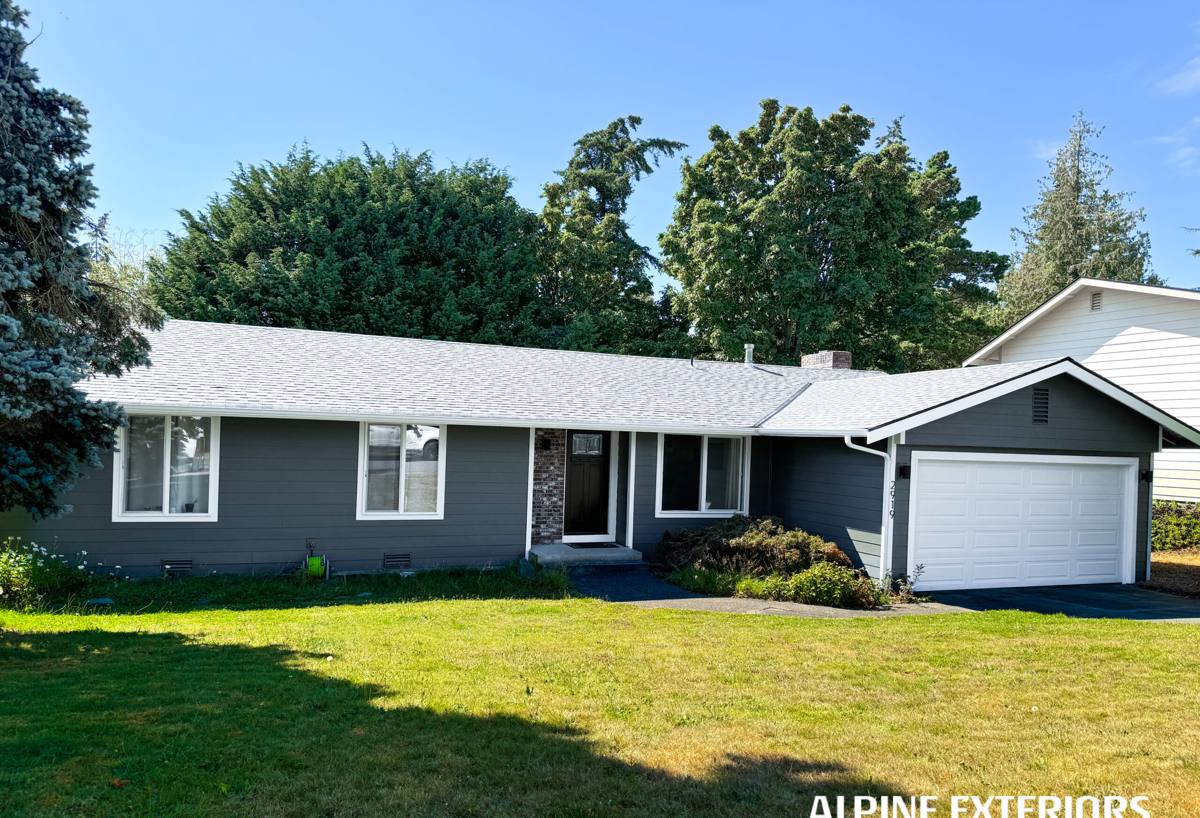
Cherry Point sits close enough to the Salish Sea that salt-laden air is part of daily life, not an occasional event. Add Whatcom County's driving rain off the Strait of Georgia and a moss season that can run eight months out of the year, and you've got one of the tougher siding environments in western Washington. Homes out here don't fail because the siding was ugly — they fail because whatever was on the wall couldn't handle the combination of constant moisture, salt exposure, and shade from the tree cover that's common on rural Cherry Point lots.
We install siding in this specific pocket of Whatcom County regularly, which means we've seen how different products actually hold up here — not in a lab, not in a catalog, but on real walls a few miles from the water. That local pattern-recognition is worth more than a sales brochure when you're deciding what goes on your house.
What Cherry Point's Climate Actually Does to Siding
Salt air and metal fasteners
Airborne salt accelerates corrosion on anything metal — fasteners, flashing, trim edges. Siding that isn't installed with corrosion-resistant fasteners and properly detailed flashing will show rust streaks and fastener failure years before the siding material itself gives out. This is a bigger deal at Cherry Point than it is twenty miles inland.
Driving rain and wind-driven moisture
Storms coming off the Strait push rain sideways, not straight down. That means water gets forced into laps, seams, and butt joints that would stay dry in a calmer climate. Siding installation here has to assume wind-driven rain is normal weather, not an edge case, which changes how laps, flashing, and caulking joints get detailed.
Moss, shade, and moisture retention
Whatcom County's long wet season and the tree cover common on Cherry Point properties mean north-facing and shaded walls stay damp for extended stretches. Moss and algae take hold on any siding surface that can't shed water and dry out between rain events. Once moss establishes, it holds moisture against the wall and accelerates whatever deterioration is already happening underneath.
Why We Install James Hardie Fiber Cement — and Nothing Else
We standardized on James Hardie fiber cement siding for every job we take, Cherry Point included. It's not brand loyalty — it's a decision based on how materials behave in exactly the conditions described above.
- Non-combustible core: fiber cement doesn't feed a fire the way wood-based products can, which matters for rural properties with more separation from fire department response times.
- Engineered for wet climates: Hardie's HZ10 product line is formulated specifically for moisture-heavy regions like ours, resisting moisture-related swelling and deterioration far better than wood-based composites.
- Factory-applied ColorPlus finish: baked-on finish resists fading and holds up to salt air and UV exposure without the recoat cycle that field-applied paint requires.
- Dense, moisture-resistant substrate: a well-detailed Hardie installation gives moss and algae less to hold onto than porous wood-fiber substrates, and the surface cleans up without damaging the material underneath.
- Transferable warranty: matters at resale, which is relevant on Cherry Point where waterfront-adjacent and rural properties often see longer ownership cycles but real resale value when they do change hands.
We don't install LP SmartSide, vinyl, Cemplank, Allura, primed spruce, or cedar. Each of those products has legitimate uses somewhere, but none of them is what we'd choose to put on our own homes in this specific climate, and we'd rather turn down work than install something we don't believe will hold up here.
How Hardie Compares to What We Won't Install
| Product | Trade-off in this climate |
|---|---|
| Vinyl siding | Can warp or crack in temperature swings and wind events; seams give wind-driven rain an entry path |
| LP SmartSide / OSB-based products | Wood-strand core is vulnerable to swelling and edge deterioration if moisture reaches a cut edge or seam |
| Primed spruce / cedar | Natural wood requires ongoing repainting and caulking to keep moisture out; shaded, damp walls shorten that maintenance interval significantly |
| Cemplank / Allura fiber cement | Similar core material to Hardie, but we standardize on one system for consistent installation detailing, warranty terms, and finish quality control |
| James Hardie HZ10 | Engineered specifically for Pacific Northwest moisture exposure; factory finish and non-combustible core |
What a Correct Installation Looks Like Here
The siding material is only half the job. Installation detailing is what actually determines whether a Cherry Point home stays dry and moss-free for the next few decades.
Weather-resistive barrier and drainage plane
Every installation starts with a properly lapped weather-resistive barrier and a drainage gap behind the siding. In a driving-rain climate, any water that gets past the siding face needs a clear path to drain back out — not a sealed cavity that traps it against the sheathing.
Flashing at every penetration
Windows, doors, hose bibs, vents, light fixtures — every penetration through the siding is a potential entry point for wind-driven rain. Correct flashing at each one, installed before the siding goes on, is non-negotiable in this climate.
Fastener and clearance details
Corrosion-resistant fasteners, correct nailing patterns per Hardie's installation specs, and proper ground clearance at the base of the wall all matter more here than in a drier climate. We also hold consistent gaps at butt joints and trim to give the material room to move without opening up water paths.
Caulking and sealant limits
Caulk is a backup, not a primary defense against water. We detail laps and flashing so the assembly sheds water on its own, then use sealant only where Hardie's specs call for it — not as a substitute for correct flashing.
Our Process for a Cherry Point Installation
- On-site assessment: we walk the exterior, check for moisture damage behind existing siding, note shade patterns and drainage issues specific to the lot.
- Material and color selection: we help you pick the right Hardie profile and ColorPlus color for the home, factoring in HOA or neighborhood norms where relevant.
- Tear-off and sheathing inspection: we remove existing siding and inspect the sheathing underneath for rot or moisture damage before anything new goes on — this step catches problems a re-side over old siding would hide.
- Weather barrier and flashing installation: the drainage plane and flashing details get installed and inspected before siding goes up.
- Siding installation to Hardie spec: correct fastening, clearances, and joint detailing throughout.
- Final walkthrough: we go over the finished job with you before calling it done.
Why a Crew That Already Works Cherry Point Matters
Siding installation isn't one-size-fits-all across Whatcom County. A crew that mainly works drier, more sheltered neighborhoods inland doesn't necessarily think about wind-driven rain or salt-air fastener corrosion by default — it's not part of their normal routine. Working Cherry Point and the surrounding Custer area regularly means those details are just how we build, every time, not an adjustment we have to remember to make.
We also know what moss and algae actually look like on different siding materials in this specific climate, which shapes how we detail a job to resist it. That's the kind of pattern recognition that only comes from doing the work here repeatedly, not from a manufacturer's installation manual alone.
Signs Your Cherry Point Home May Need New Siding
- Soft or spongy spots when you press on the siding, especially near the base of walls or under windows
- Persistent moss or algae growth that comes back quickly after cleaning
- Visible rust streaking from fasteners or trim
- Paint that's peeling, bubbling, or failing faster than a normal repaint cycle would suggest
- Gaps or separation at butt joints, corners, or trim boards
- Noticeably higher heating bills that may point to compromised insulation behind failing siding
Cost Factors for a Cherry Point Project
| Factor | Why it affects cost |
|---|---|
| Tear-off vs. re-side | Removing existing siding and repairing sheathing damage adds labor but is often necessary given moisture exposure here |
| Home size and wall complexity | More corners, gables, and penetrations mean more flashing detail work |
| Siding profile chosen | Lap, shingle, and panel profiles vary in material and labor cost |
| Access and site conditions | Rural lots with limited equipment access can affect scheduling and labor time |
| Color and trim package | ColorPlus color selection and trim details factor into overall material cost |
Exact numbers depend on the specifics of your home — we'd rather walk the property and give you a real number than a rough guess that doesn't hold up.
If your Cherry Point home is due for new siding, or you're seeing early signs of moss, moisture, or fastener corrosion, we're glad to come take a look. Estimates are free and there's no pressure — just an honest read on what your home needs.