 Custer
 Installing Siding on a Blaine Home Is Not the Same Job as Installing It Inland
A siding installation and a siding replacement sound like the same project, but the installation itself is where a job succeeds or fails, regardless of which material ends up on the wall. Blaine sits close enough to Semiahmoo Bay and Drayton Harbor that salt air, wind-driven rain, and a moss season that barely lets up all shape what "correct installation" actually means here. A fastener schedule, a flashing detail, or a clearance measurement that would be fine on a sheltered lot twenty miles inland can leave a Blaine wall vulnerable within a few wet seasons. This page focuses specifically on siding installation for Blaine homes: what the local climate demands from the work, what the process looks like step by step, and why the install matters at least as much as the material.
We're based in Custer and work this stretch of Whatcom County regularly, including Blaine and the water-facing neighborhoods around it. We install James Hardie fiber cement exclusively, for reasons we'll touch on below, but the bulk of this page is about the installation itself — the part of the job that determines whether any siding material, Hardie or otherwise, actually performs the way its spec sheet promises.
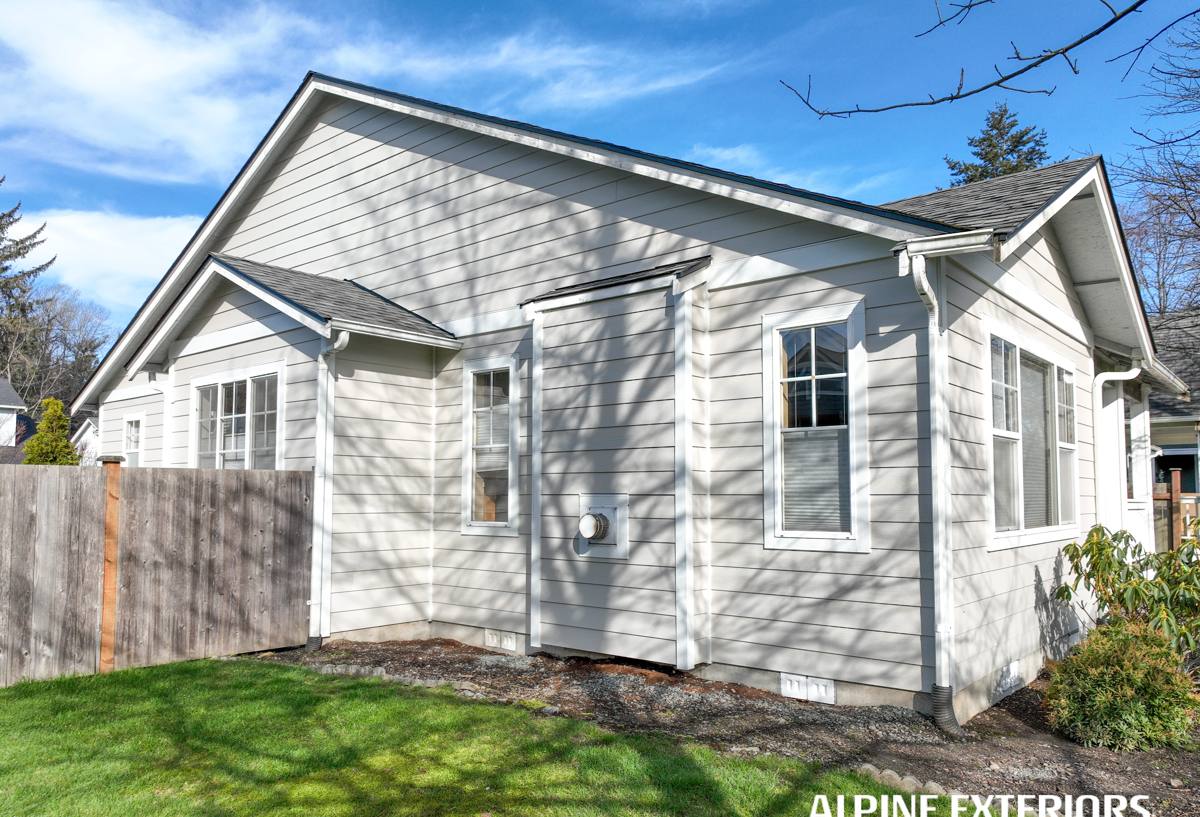
What Blaine's Climate Requires From a Siding Installation
Salt Air
Homes near the bay and harbor take a steady, direct dose of salt-laden air, and that changes what hardware and detailing choices hold up. Fastener corrosion resistance, the quality of flashing metal, and how well cut edges get sealed all matter more here than they would on a dry inland lot, because salt exposure accelerates the failure of anything undersized or improperly finished.
Driving Rain Off the Water
Storms coming off the Strait rarely drop rain straight down on a Blaine wall. Wind pushes it sideways, into lap joints, under trim, and against any seam where the water management detailing isn't right. An installation that assumes calm, vertical rainfall — the kind that's fine in a sheltered inland town — leaves gaps that wind-driven rain off the water will eventually find.
A Long Moss Season
Mild temperatures and near-constant moisture keep moss and mildew active on shaded or north-facing walls for most of the year in Blaine, especially on tree-covered lots set back from the water. An installation that traps moisture behind the siding, rather than giving it a way to drain and dry, gives moss and rot a head start it wouldn't get on a wall that was detailed correctly from the beginning.
What "Correct Installation" Actually Means
Fiber cement's real-world performance depends heavily on how it goes up, not just what it's made of. These are the details that separate an installation built for Blaine's exposure from one that just gets siding on the wall as quickly as possible.
| Installation Detail | Why It Matters on a Blaine Home |
|---|---|
| Rain screen / drainage gap behind the siding | Lets moisture that gets past the surface drain and dry instead of sitting against wet sheathing through a long moss season |
| Manufacturer-specified clearances at grade, roofline, and deck | Keeps splash-back and standing water away from board edges, especially on walls closest to the water |
| Correct fastener type, spacing, and depth | Corrosion-resistant fasteners set to spec resist salt air and hold the siding tight against wind-driven rain |
| Properly lapped house wrap and flashing at every penetration | Directs sideways-driven rain downward and outward instead of behind the wall assembly |
| Sealed butt joints and factory-cut edges used wherever possible | Protects the factory finish where it's most exposed and prevents salt-laden moisture from tracking in at the seams |
None of these are exotic techniques. They're the manufacturer's own published installation spec, followed consistently on every wall rather than treated as optional on the parts of the job that are hard to inspect once the siding is up.
How We Approach a Siding Installation in Blaine
Site Walk and Exposure Assessment
Before we talk products or pricing, we walk the property and look at how exposure actually varies across it. A wall facing open water off the bay takes a different load than a shaded, landward wall on the same house, and that difference should shape the installation plan, not just the estimate.
Tear-Off and Sheathing Inspection
Once the old siding comes off, we check the sheathing underneath for rot, soft spots, or signs that moisture was already getting behind the previous siding. Installing new material over damaged sheathing just hides a problem that keeps getting worse — we'd rather find it now and address it before anything new goes up.
Weather Barrier and Flashing First
The house wrap, window flashing, and every wall penetration get detailed before the first piece of siding goes on. Most long-term siding failures in a coastal climate trace back to water getting behind the cladding rather than through it, so this stage gets the same attention as the visible finish work, even though it's the part a homeowner won't see again once the job is done.
Installation to Manufacturer Spec
James Hardie's warranty depends on installation following their published specifications: fastener placement, clearances, field-cutting practices, and sealed transitions. We treat that spec as the baseline requirement on every Blaine job, not as an upgrade tier.
Final Walkthrough and Maintenance Expectations
We walk the finished job with the homeowner, point out anything worth knowing about caring for siding this close to the water, and confirm the work matches what was estimated before calling it complete.
Why We Install Only James Hardie Fiber Cement
We standardized on one siding system after seeing, repeatedly, what actually holds up through sustained salt and moisture exposure versus what performs well on a spec sheet and struggles on a real Blaine wall a few winters in. James Hardie's non-combustible fiber cement core doesn't swell, cup, or warp the way engineered wood can after repeated wetting cycles, and its factory-applied ColorPlus finish holds color and adhesion longer under salt air and UV than a field-applied coating. The HZ5 product line is engineered for regions with sustained moisture and freeze-thaw cycling, which is a reasonable description of this coastline's winters, and Hardie backs the product with a strong transferable warranty when installation follows their spec.
We don't install LP SmartSide, vinyl siding, Cemplank, Allura, primed spruce, or cedar. Each has a legitimate place in the broader market and homeowners elsewhere who are satisfied with them. Our position is specific to this climate and to what we've seen on tear-offs here: in an area with this much sustained salt and wind-driven moisture, we'd rather install one system correctly, every time, than offer a lower-cost alternative that shifts maintenance risk onto the homeowner down the road.
What Can Go Wrong With a Rushed Installation
- Skipped or undersized rain screen gap, leaving no way for incidental moisture to drain and dry
- Fasteners driven too shallow, too deep, or spaced wrong, weakening the panel's hold against wind
- Flashing details treated as an afterthought instead of installed before the siding goes up
- Field cuts left unsealed, exposing the raw edge of the board to moisture at the seam
- New siding installed directly over damaged or unaddressed sheathing
- Clearances at grade or roofline set too tight, inviting splash-back and standing moisture
Any one of these can look fine on install day and only show its cost two or three wet seasons later, which is exactly why the installation details matter as much as the material choice.
What Affects the Cost of a Siding Installation in Blaine
Every estimate is specific to the house, but a handful of factors consistently move the number: total square footage and number of stories, how much trim and detail work surrounds windows and rooflines, the condition of the sheathing once old siding comes off, how exposed the property is to open water and wind, and which James Hardie product line and color fits the home. We walk through those factors directly during the estimate instead of handing over a flat per-square-foot figure with no explanation behind it.
Signs an Existing Installation Wasn't Done to Spec
- Moss or dark staining that returns quickly after cleaning, particularly on shaded or north-facing walls
- Soft or spongy siding low on the wall or around window and door trim
- Visible gaps, buckling, or panels that flex under light pressure
- Rust staining running down from fasteners or trim hardware
- Cracked caulking or open joints at butt seams and trim transitions
- Musty odors or interior staining on walls that back up to exterior siding
None of these automatically means a full re-installation is needed, but each is worth a professional look before another wet season adds to whatever's already happening behind the wall.
Why Hiring a Crew That Already Works Blaine Matters
Installation quality comes down to judgment calls made on site, not just following a spec sheet line by line. Knowing which walls on a Blaine property will stay wet longest given wind direction off the water, where extra flashing attention actually earns its keep, and how much clearance a given lot's exposure calls for are the kind of decisions that come from working this coastline repeatedly, not from a single visit. A crew that's out here regularly also means that if a warranty question or maintenance issue comes up years later, it's a call to a company still working in the area, not one that's moved on somewhere else.
If you're planning a siding installation on a Blaine home, we're glad to walk the property and give you a straightforward, no-pressure estimate that accounts for exactly how exposed your walls are to salt air and wind-driven rain. Reach out using the form below to get started.