 Custer
 Why Semiahmoo's Waterfront Setting Is Hard on Siding
Semiahmoo sits right where Whatcom County meets the water, and that location is exactly what makes it a beautiful place to live and a demanding place to keep a house looking good. Homes along Semiahmoo Bay take on salt-laden air pulling off the water almost every day of the year, wind-driven rain that hits siding sideways instead of straight down, and a wet, shaded shoulder season that gives moss and algae months to get established before anyone notices. None of these conditions are dramatic on their own. The damage they cause shows up slowly, which is exactly why so many siding problems on this peninsula get discovered years after they started.
Salt air is corrosive to metal fasteners and trim, and it accelerates the breakdown of anything that relies on a surface coating to stay protected. Combine that with the region's rainfall totals and you get siding that stays damp longer after every storm than the same product would inland. Add a shaded, cool microclimate in the winter months and you get the ideal environment for moss and mildew to take hold on north-facing walls, under eaves, and anywhere airflow is limited. Any siding material installed on a Semiahmoo home has to hold up to all three factors at once, not just one of them.
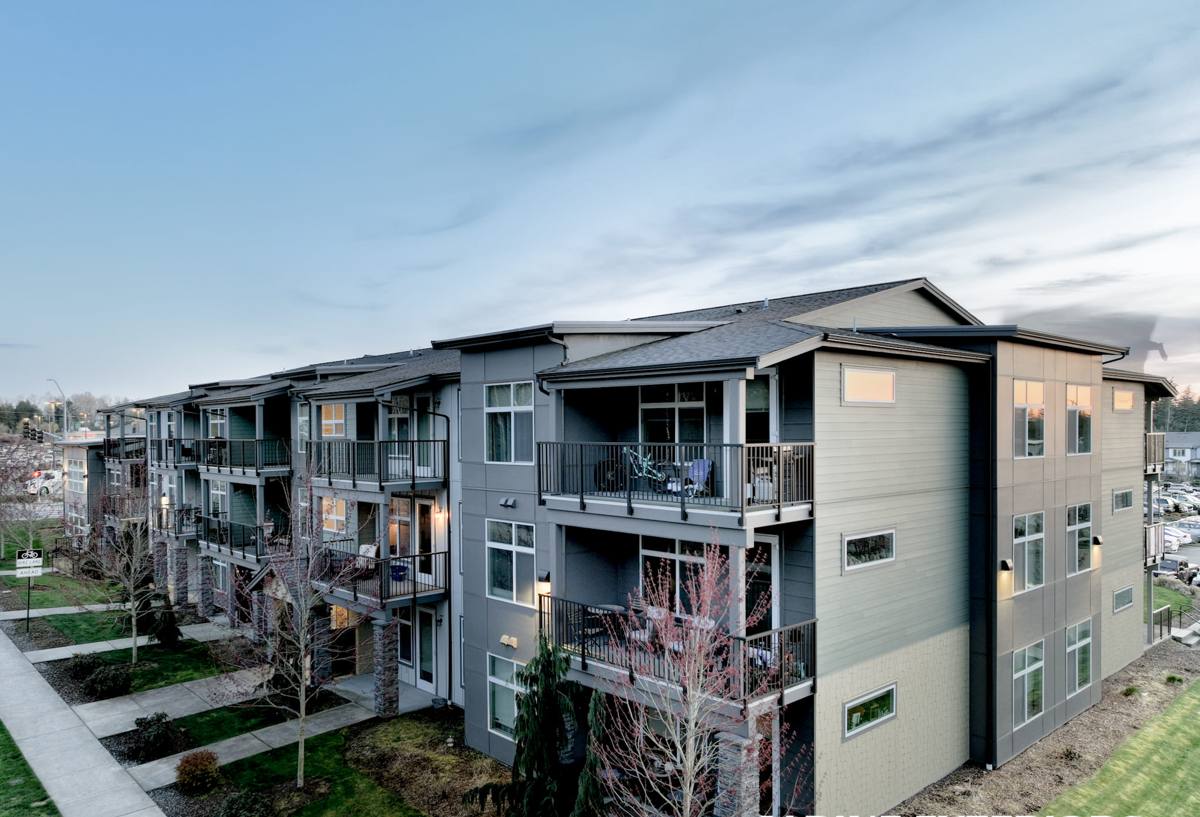
What Semiahmoo Homes Actually Need From Their Siding
We look at three things when we evaluate siding for a home in this area: how it handles moisture that doesn't dry out quickly, how it resists surface growth like moss and mildew, and how well its finish stands up to salt exposure without chalking, fading, or peeling. A siding product can be a perfectly good choice in a dry inland climate and still be the wrong choice fifty feet from Semiahmoo Bay.
Moisture That Lingers
Wind off the water drives rain into wall assemblies at angles that gutters and roof overhangs don't fully block. Siding needs to shed that water quickly and, just as important, the wall assembly behind it needs a drainage plane that lets any moisture that does get past the surface find its way back out instead of sitting against sheathing.
Moss, Algae, and Organic Growth
Whatcom County's long wet season gives moss and algae a real head start, especially on shaded elevations and under roof lines where sunlight rarely reaches. Siding that absorbs moisture gives that growth something to root into. Siding that stays dimensionally stable and resists water absorption gives it a lot less to hold on to.
Salt Exposure and Finish Durability
A factory-applied finish that's been engineered to resist salt and UV exposure holds its color and its seal far longer than a finish applied on site after installation, especially on a home that gets ocean air daily rather than occasionally.
Why We Install Only James Hardie Fiber Cement
We don't offer vinyl, LP SmartSide, Cemplank, Allura, or primed wood siding, and that's a deliberate standard, not a gap in our lineup. On a site like Semiahmoo, the trade-offs of those products get magnified. Vinyl can warp and gap at its seams under sustained wind-driven rain, and it doesn't stand up structurally to impact the way fiber cement does. Engineered wood products are wood-based at their core, which means moisture management at every cut edge and seam is non-negotiable, and a coastal climate gives moisture a lot more opportunity to find a way in. Primed wood and cedar require a repainting and recaulking cycle that only gets shorter in salt air.
James Hardie fiber cement is a cement-and-cellulose composite, not a wood product and not a plastic one. It doesn't rot, it isn't a food source for moss or insects, it's non-combustible, and its ColorPlus factory finish is baked on and warrantied separately from the substrate. That combination is why it's the only material we put on homes in this climate — not because other products can't perform anywhere, but because we've made a professional decision about what performs reliably here.
| Factor | James Hardie Fiber Cement | Vinyl / Engineered Wood |
|---|---|---|
| Moisture absorption | Very low; won't rot or swell | Wood-based products absorb at cut edges and seams |
| Moss/algae resistance | Non-organic surface, nothing to feed on | Organic substrates can support growth over time |
| Salt air / coastal finish life | ColorPlus factory finish rated for coastal exposure | Field-applied or factory finishes vary; recoating cycles common |
| Fire resistance | Non-combustible | Combustible |
| Typical repaint cycle | 15+ years with ColorPlus, longer than field paint | Often 5-10 years for painted wood products |
The Hardie Product Lines We Use on Coastal Homes
James Hardie makes climate-specific formulations, and for anything within reach of salt spray we spec the HZ5 line, engineered for cold, wet, coastal exposure rather than the HZ10 formulation built for hot, dry regions. On Semiahmoo homes this typically means:
- HardiePlank lap siding — the most common choice for full wall coverage, available in several exposure widths and textures
- HardiePanel vertical siding — often used for accent walls, gables, or a more modern look
- HardieTrim boards — for corners, window and door surrounds, and fascia, matched to resist the same moisture and salt exposure as the field siding
- HardieShingle — for homes wanting a shingle-style look without the maintenance burden of cedar shingles in a wet climate
Color is factory-applied through ColorPlus Technology rather than painted after installation, which matters more here than in a drier climate — a factory finish is baked on and formulated for UV and weather exposure, and it comes with its own finish warranty separate from the product warranty.
What a Correct Installation Involves
Fiber cement performs the way it's supposed to only when it's installed to manufacturer specification, and on a coastal site the margin for error is smaller. A correct installation on a Semiahmoo home includes:
Weather Barrier and Drainage
A properly lapped weather-resistant barrier behind the siding, with a drainage gap that lets any moisture that gets past the cladding drain and dry rather than sit against the sheathing. This is the layer most homeowners never see and the one that matters most in a wind-driven-rain climate.
Flashing and Sealing
Flashing at every window, door, and roof-to-wall transition, installed so water is directed out and away rather than trapped. Caulking is used at the right joints, not as a substitute for correct flashing.
Fastening and Clearances
Corrosion-resistant fasteners driven to the correct depth — over-driven nails crack the board's edge and create a moisture entry point. Proper clearance from grade, roof lines, and decks so the bottom edge of the siding isn't sitting in standing water or constant splash-back.
Cut-Edge Sealing
Every field cut needs to be sealed per manufacturer instructions. An unsealed cut edge is the single most common failure point we see on fiber cement installed by crews unfamiliar with the product.
Our Process for a Semiahmoo Project
- On-site assessment — we look at wall orientation, existing moisture damage, moss patterns, and drainage before quoting anything
- Tear-off and inspection — old siding comes off and we inspect sheathing for hidden rot or moisture damage before anything new goes up
- Weather barrier and flashing installation — the part of the job that determines how the house performs in ten years, not year one
- Hardie installation to spec — correct fastening, clearances, and cut-edge sealing throughout
- Trim, caulking, and final detailing — corners, window surrounds, and transitions finished to shed water correctly
- Walkthrough — we go over the finished work and what maintenance, if any, it'll need going forward
Cost Factors for Semiahmoo Projects
Every home is different, but the same handful of factors drive most of the cost variation we see on siding jobs in this area:
| Factor | Why It Affects Cost |
|---|---|
| Existing wall condition | Hidden moisture or rot found during tear-off means sheathing repair before siding goes up |
| Home size and wall complexity | More corners, gables, and transitions mean more trim, flashing detail, and labor time |
| Waterfront wind exposure | Higher-exposure elevations may call for additional flashing and sealing detail |
| Siding profile and accent choices | Mixing HardiePlank with HardiePanel or HardieShingle accents adds material and labor variety |
| Color selection | Standard ColorPlus colors versus premium or custom finishes |
| Site access | Waterfront lots with limited staging space or steep grades can add setup time |
Why Hiring a Crew That Already Works Semiahmoo Matters
A siding crew that mostly works inland can install fiber cement correctly by the book and still miss the details that matter specifically here — how far to hold clearance on a wall that takes direct spray off the bay, which elevations need extra attention for moss and moisture, or how the local wet season changes drying time between install stages. Working regularly in Custer and along the Whatcom County coastline means we're not guessing at how this climate behaves; we're accounting for it in the flashing, fastening, and finish decisions from the start. That's the difference between siding that looks right on install day and siding that still looks right in year fifteen.
Maintenance That Keeps Coastal Siding Looking Right
Fiber cement is low-maintenance, not no-maintenance, especially this close to the water. A simple annual routine goes a long way:
- Rinse siding with a garden hose once or twice a year to clear salt residue and light grime
- Check north-facing and shaded walls for early moss or algae growth and clean gently before it spreads
- Inspect caulking at trim joints and around windows annually and re-caulk any cracked or separated seams
- Keep gutters clear so water isn't overflowing directly onto siding below
- Trim back vegetation that keeps a wall section shaded and damp longer than the rest of the house
- Have any impact damage or cracked boards repaired promptly rather than left through a wet season
If you're weighing siding options for a home in Semiahmoo, we're glad to come take a look and give you a straightforward, no-pressure estimate based on your home's actual exposure and condition — no obligation either way.