 Custer
 Sandy Point Roofs Work Harder Than Most in Whatcom County
Sandy Point sits right up against the water, and that location shapes everything about how a roof ages there. Homes just a few miles inland in Custer see rain, wind, and the occasional windstorm. Homes closer to the shoreline get all of that plus a steady dose of salt-laden air, wind-driven rain that comes in sideways instead of straight down, and a moss season that runs longer than it does on drier, more sheltered lots. None of that means a Sandy Point roof is doomed to fail early. It means the roof has to be built and installed with that exposure in mind, and it means small maintenance issues that would sit harmlessly on an inland roof for years can turn into real problems faster here.
This page is about roof replacement specifically for that environment — what wears out first, what a correct job actually includes, and why the process looks a little different for a waterfront property than it does for a standard Whatcom County home.
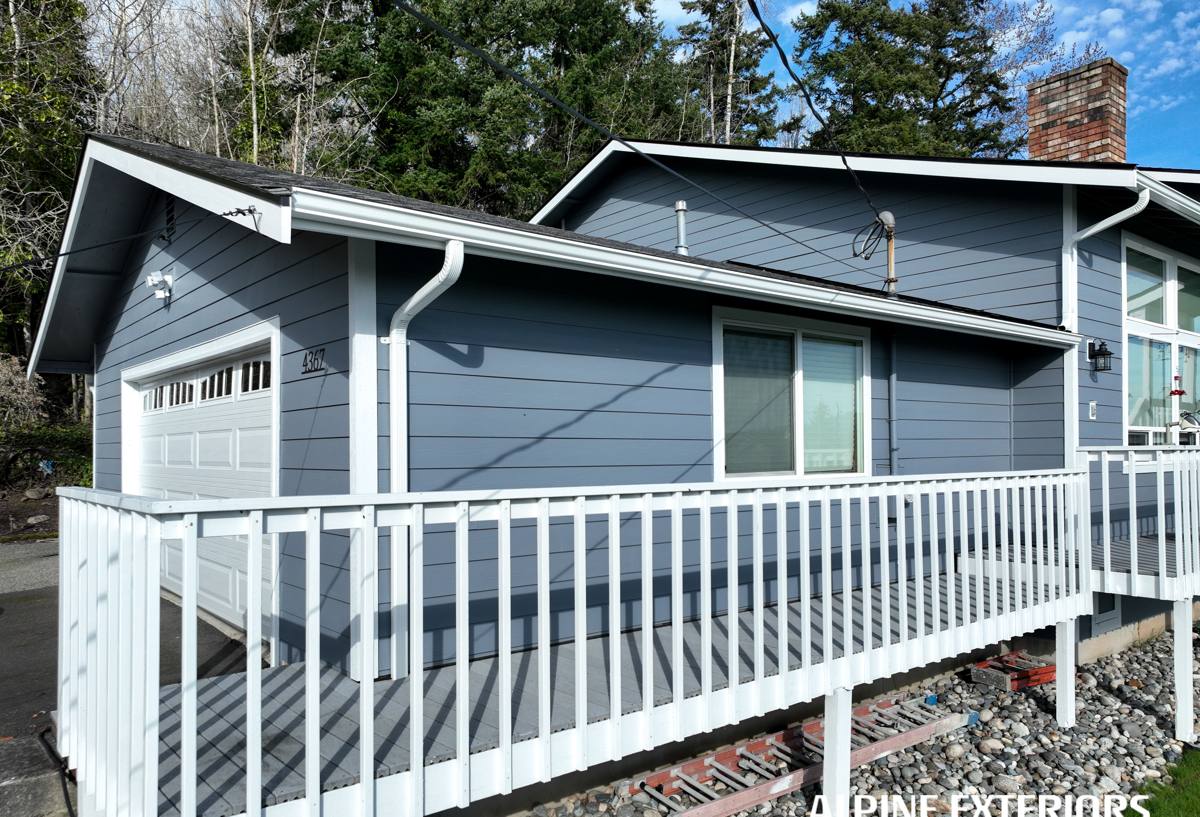
What Salt Air, Rain, and Moss Do to a Roof Over Time
Salt and Corrosion
Airborne salt doesn't just sit on the surface — it works into any exposed metal on the roof. Fasteners, flashing, drip edge, vent caps, and any metal roofing panels all take the brunt of it. Uncoated or lower-grade galvanized fasteners can start pitting years before they would inland, and once a fastener or flashing seam corrodes, it stops doing its job of keeping water out even if the surrounding shingles look fine.
Wind-Driven Rain
Open water means fewer windbreaks. Rain that would fall mostly straight down a few miles inland arrives at Sandy Point at an angle, which means it finds its way under shingle tabs, around ridge caps, and through flashing details that would stay dry in calmer conditions. A roof that's marginal — a lifted shingle here, a slightly short flashing lap there — gets exposed by this kind of weather much sooner than it would somewhere more sheltered.
Moss and Moisture Retention
Whatcom County's long, overcast, wet winters give moss months to establish itself, and shaded or north-facing slopes near the water are especially prone to it. Moss doesn't just look bad — it holds moisture directly against the shingle surface, lifts shingle edges as it grows, and works its way into granules and seams. Left alone long enough, it can hold enough water against the roof deck to start rot underneath, which is a much more expensive problem than the moss itself.
Signs a Sandy Point Roof Is Ready for Replacement
Roofs rarely fail all at once — they show warning signs first. On homes in this area, we look for:
- Heavy moss coverage, especially on shaded or north-facing slopes, that keeps coming back after cleaning
- Curling, cupping, or cracking shingles, particularly on slopes that take the most wind and sun
- Bald spots where granules have worn away, exposing the black asphalt underneath
- Rust staining or visible corrosion around flashing, vent boots, and exposed fasteners
- Soft or spongy spots when walking the roof, which usually means the decking underneath has taken on moisture
- Daylight visible through the roof deck from inside the attic, or damp insulation
- Water stains on interior ceilings, especially after a windy rainstorm
- Shingles that have blown off or lifted after a storm, even if the rest of the roof looks intact
- A roof that's simply reached the end of its expected service life for this climate
Any one of these on its own might just need a repair. Several at once, or a roof already past 18-20 years old this close to the water, usually means replacement is the more honest answer than another round of patching.
Choosing a Roofing Material That Can Actually Handle This Location
Not every roofing product performs the same way a few hundred feet from saltwater. The table below reflects how the common options typically hold up under Sandy Point's conditions specifically, not just general climate averages.
| Material | Salt/Corrosion Resistance | Moss Resistance | Typical Lifespan Here | Relative Cost |
|---|---|---|---|---|
| Architectural asphalt shingle (algae-resistant) | Good, with proper metal detailing | Good with AR granules; still needs periodic cleaning | 18-25 years | Lowest upfront |
| Standard 3-tab asphalt shingle | Fair | Fair; moss takes hold faster on flat profiles | 15-20 years | Low |
| Standing seam metal | Very good with marine-grade coatings and fasteners | Very good; smooth surface sheds moss | 40+ years | Highest upfront |
| Cedar shake | Fair; hardware needs to be corrosion-resistant | Poor without diligent maintenance | Varies widely; high upkeep | High |
Architectural asphalt with algae-resistant granules is the most common choice we install at Sandy Point because it balances upfront cost against real-world performance. Standing seam metal is worth the higher price for owners who want to minimize long-term maintenance and corrosion risk, provided it's installed with fasteners and flashing rated for coastal exposure. Cedar shake can look great, but it demands more upkeep in a moss-prone, wet environment than most owners want to keep up with, so we're upfront about that maintenance burden before anyone commits to it.
What a Correct Roof Replacement Actually Involves
Tear-Off and Deck Inspection
A full tear-off, not a layover, is the only way to actually see the deck underneath. In a salt-air, high-moisture environment, hidden rot or delaminated sheathing is common enough that skipping this step means guessing about what's really there. Any soft or damaged decking gets replaced before anything new goes down.
Underlayment and Ice/Water Barrier
A synthetic underlayment across the whole roof, with self-adhering ice-and-water membrane at eaves, valleys, and around penetrations, is what actually stops wind-driven rain that gets past the shingles. This detail matters more at Sandy Point than it does a few miles inland, precisely because of the angle rain tends to arrive at.
Flashing and Fasteners
All flashing — step flashing, valley metal, drip edge, vent boots — gets replaced with corrosion-resistant material, and fasteners are chosen with salt exposure in mind rather than whatever is cheapest. This is one of the most common corners cut on lower-bid roof jobs, and it's the detail that fails first near the water.
Ventilation
Proper intake and exhaust ventilation keeps moisture from building up in the attic, which matters everywhere but especially in a climate this wet. Poor ventilation shortens shingle life and can contribute to the kind of deck moisture that leads to early rot.
Our Process for a Sandy Point Roof Replacement
- On-site inspection of the current roof, deck condition where visible, ventilation, and flashing details
- A written scope and estimate that spells out materials, tear-off scope, and any deck repair allowances — no vague line items
- Material selection walk-through, including the real trade-offs between options for this specific location
- Property protection — tarps, landscaping coverage, and a plan for material staging before work starts
- Full tear-off and deck inspection, with any damaged sheathing replaced and documented
- Underlayment, ice-and-water barrier, flashing, and roofing material installed to manufacturer and code specifications
- Ventilation check and correction if intake or exhaust is inadequate
- Full cleanup, including a magnetic sweep for stray fasteners
- Final walkthrough so you can see the finished work and ask questions before we consider the job done
What Affects the Cost of a Roof Replacement Here
| Factor | Why It Matters at Sandy Point |
|---|---|
| Roof size and pitch | More surface area and steeper pitches take longer and require more safety setup |
| Number of existing layers | Tear-off of multiple old layers adds labor and disposal cost |
| Deck condition | Salt air and moss-related moisture make hidden deck repair more common here than inland |
| Material choice | Asphalt, metal, and cedar carry different material and labor costs, as shown above |
| Access and site conditions | Narrow shoreline access roads and wind exposure can affect staging and scheduling |
| Permitting | Whatcom County permit requirements and any applicable setback or shoreline considerations |
We don't quote a job over the phone based on square footage alone — an in-person look at the roof and deck is the only honest way to price a replacement, especially when hidden moisture damage is a real possibility.
Why It Matters to Hire a Crew That Already Works This Area
A roofing crew that mostly works inland neighborhoods isn't wrong about roofing in general, but they may not think about corrosion-resistant fasteners as a default, or plan around the wind exposure that comes with an open shoreline job site. Access at Sandy Point can also be tighter than a typical suburban lot, which affects how material delivery and staging get planned.
Working this area regularly also means we already understand how Whatcom County permitting applies to a straightforward roof replacement, and we've seen firsthand which materials and installation details actually hold up here versus which ones look fine for a season or two before the salt air and moss find the weak points. That local pattern recognition is the difference between a roof that's technically installed to code and one that's actually built for where it sits.
Ready to Talk About Your Roof?
If you're seeing moss buildup, granule loss, or signs of water getting in, it's worth having someone look at the roof in person rather than guessing from the ground. We offer free, no-pressure estimates for Sandy Point homeowners — use the form below to get a time on the schedule.