 Custer
 Sandy Point Decks Face a Different Set of Problems
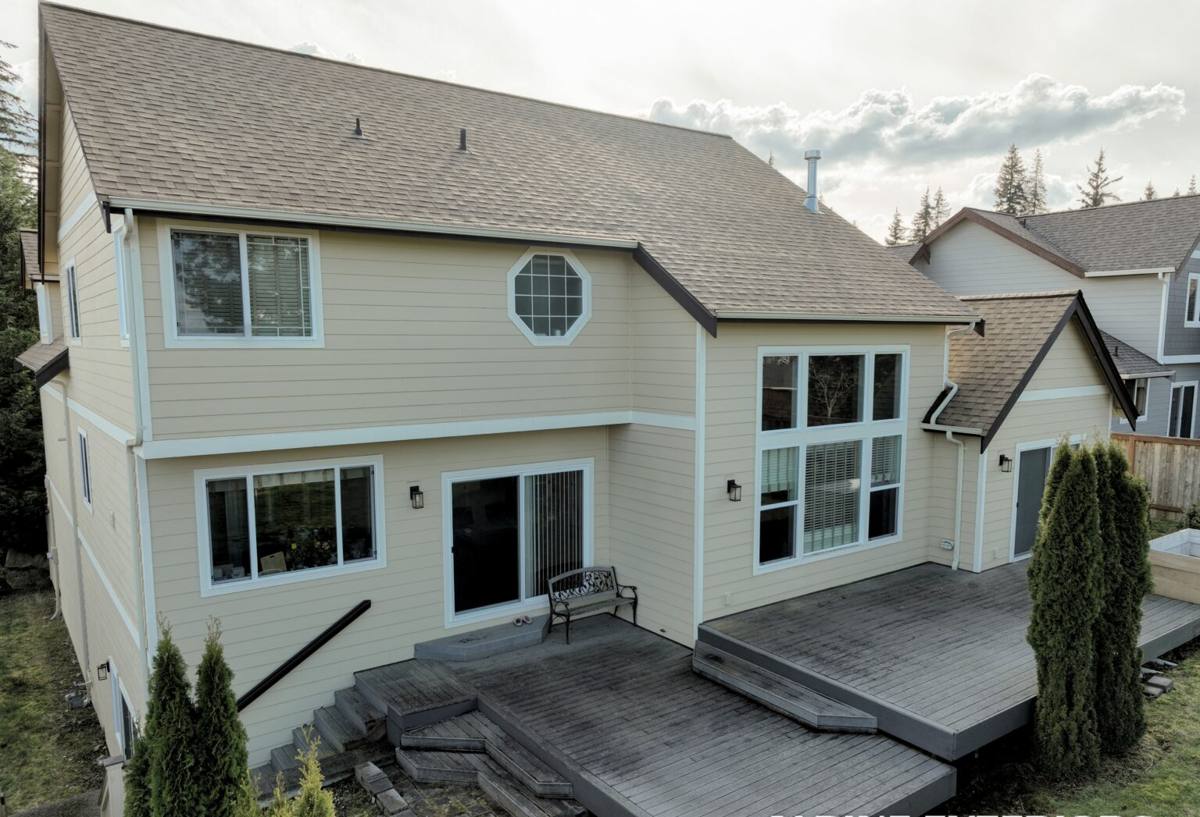
Sandy Point sits close enough to the Strait of Georgia that the salt air is a daily fact of life, not an occasional coastal breeze. Add in Whatcom County's long wet season, near-constant driving rain off the water, and a moss season that can stretch from fall through spring, and you have a set of conditions that will find every weak point in a deck within a few years if the build doesn't account for them. A deck built the way a contractor would build one in a dry inland neighborhood simply doesn't hold up the same way out here.
This isn't a generic deck-building page. It's specifically about what it takes to build and maintain a deck that lasts in Sandy Point's environment — the fastener choices, the framing details, the material trade-offs, and the maintenance habits that separate a deck that looks good for two seasons from one that's still solid in fifteen years.
What Salt Air and Moss Actually Do to a Deck
Corrosion Is the Silent Failure Mode
Salt-laden air accelerates corrosion on any fastener, bracket, or connector that isn't rated for it. The problem is that corrosion on structural hardware — joist hangers, ledger bolts, post bases — often isn't visible until the damage is already done underneath the decking boards. A deck can look fine on the surface while its structural connections are quietly failing below.
Moisture That Never Fully Dries
Custer's rain doesn't just fall and stop — it lingers. Between storms, humidity off the water keeps wood surfaces damp longer than they would be even a few miles inland. That extended dampness is exactly what wood-decay fungi and moss need to establish themselves, especially in shaded areas, under railings, and anywhere debris collects.
Moss Season Adds Its Own Load
A long moss season means more than an aesthetic problem. Moss holds moisture against the decking surface, and on wood decking it can trap enough dampness to accelerate rot in the boards it's growing on. On any decking material, a moss mat that isn't cleared becomes slick and genuinely dangerous underfoot, particularly on stairs.
What a Correctly Built Deck Looks Like Out Here
A deck that's going to hold up in Sandy Point's climate needs a handful of details done right from the framing stage forward. These aren't upgrades — they're the baseline for coastal building in this area:
- Ledger flashing that actually sheds water — the ledger board connection to the house is the single most common point of moisture intrusion and structural failure on any deck; it needs proper flashing, not just a bead of sealant.
- Coastal-rated fasteners and hardware — standard galvanized hardware corrodes faster near saltwater than most homeowners expect; stainless steel or heavy-duty coated hardware rated for coastal exposure belongs in the framing and connections.
- Joist protection — a taped or membrane-protected joist top sheds water away from the wood instead of letting it pool and soak in at every fastener penetration.
- Airflow underneath — proper deck height and spacing let air move beneath the structure so the framing can actually dry out between rain events instead of staying damp.
- Board spacing sized for drainage — gaps that are too tight trap debris and moisture between boards, which is where rot and moss both get their start.
- Post bases that keep wood off standing water — posts set directly in or against wet soil or standing water are one of the fastest ways to shorten a deck's structural life.
Choosing a Decking Material for a Waterfront-Adjacent Climate
There's no single "best" decking material — there's a right trade-off for your budget, maintenance tolerance, and how close your lot sits to the water. Here's how the common options actually compare in Sandy Point's conditions:
| Material | Relative Cost | Moisture/Salt Performance | Maintenance | Moss Resistance |
|---|---|---|---|---|
| Pressure-treated wood | $ | Good if sealed and re-sealed on schedule; end grain and fasteners are the weak points | High — annual cleaning and periodic sealing | Low — porous surface holds moisture, moss establishes easily |
| Cedar | $$ | Naturally decay-resistant but still needs sealing near saltwater to hold its color and integrity | Moderate to high | Low to moderate |
| Capped composite decking | $$$ | Very good — the cap layer resists moisture absorption and salt exposure well | Low — periodic washing, no sealing or staining | Moderate — surface film can still grow moss if shaded and left uncleaned |
| PVC decking | $$$ | Excellent — doesn't absorb moisture, unaffected by salt exposure | Low | Moderate to good, depending on surface texture |
We'll walk you through this trade-off honestly during your estimate. Composite and PVC cost more up front but cut down dramatically on the maintenance burden a wood deck demands in this climate. Wood costs less initially but only holds up if the sealing schedule actually gets kept — which, realistically, is where a lot of wood decks in this area start to slip.
Railings and Hardware: Where Corrosion Shows Up First
Railing hardware and any exposed metal — post caps, baluster brackets, cable rail fittings — take the brunt of salt air exposure because they're fully exposed to the weather with no decking or structure to shield them. We use stainless steel or marine-grade hardware on Sandy Point projects specifically because standard exterior-grade hardware visibly corrodes within a few seasons this close to the water. It costs more than standard hardware, and it's worth it here.
Our Process for a Sandy Point Deck Build
1. Site and Exposure Assessment
We look at how exposed your specific lot is — how much direct salt air and wind it gets, how much shade and drainage the build site has, and what that means for material and framing choices before we ever talk numbers.
2. Design and Material Selection
We walk through decking, railing, and finish options against your budget and maintenance preferences, with the trade-offs laid out plainly — not steered toward whatever's most profitable for us.
3. Permitting
Deck projects in Whatcom County typically require a building permit, and requirements can shift depending on deck height, size, and proximity to property lines or shoreline setbacks. We handle the permit process as part of the job so you're not left figuring out county requirements on your own.
4. Framing Built for the Climate
This is where the coastal-specific details from earlier in this page — flashing, joist protection, fastener grade, airflow — actually get built in, not treated as optional add-ons.
5. Decking, Railing, and Finish Work
Installation is done to the manufacturer's specifications for your chosen material, with attention to the fastening pattern and expansion gaps that keep composite and PVC decking performing the way it's designed to.
6. Final Walkthrough
We go over the finished deck with you, including what maintenance it actually needs given the material you chose and Sandy Point's climate — not a generic care sheet, but what applies to your deck specifically.
Maintenance That Matches This Climate
Whatever material you choose, a Sandy Point deck needs a maintenance rhythm built around the salt air, rain, and moss season — not a generic once-a-year checklist. Here's what actually matters:
- Rinse salt residue off decking and hardware periodically, especially after windy weather off the water
- Clear leaves, needles, and debris from between boards and in corners before they trap moisture
- Treat or scrub moss growth promptly, particularly on stairs and shaded sections, rather than letting it establish
- Inspect visible hardware (railing brackets, post caps, fasteners) annually for early corrosion
- Re-seal or re-stain wood decking on the schedule the product actually calls for, not "whenever it looks like it needs it"
- Check that drainage paths under and around the deck haven't been blocked by landscaping or debris buildup
How Deck Care Compares by Material
| Task | Wood | Composite/PVC |
|---|---|---|
| Sealing/staining | Every 1-2 years | Not required |
| Washing | 1-2x per year, more in moss season | 1-2x per year |
| Fastener inspection | Annually | Annually |
| Board replacement risk | Higher if sealing lapses | Low |
Why It Matters That We Already Work Sandy Point
A crew that mostly builds decks inland doesn't necessarily know, from experience, which fastener grade actually holds up here, how fast moss establishes on a shaded north-facing deck near the water, or how the county treats permitting for a build close to the shoreline. We've built and maintained decks in this exact environment, which means the framing decisions, material recommendations, and hardware choices on your project come from what's actually worked on decks like yours in this same stretch of Whatcom County — not from a generic build spec.
It also means we're a known, findable crew if something needs attention down the road. A deck built by a contractor who did one job in the area and moved on leaves you with no one local to call when a board needs replacing or a railing bracket starts showing rust.
Get a Straightforward Estimate
If you're planning a new deck or replacing one that hasn't held up to Sandy Point's climate, we're glad to take a look and walk you through your options honestly — materials, cost factors, and what the job actually involves for your specific site. Reach out using the form below for a free, no-pressure estimate.