 Custer
 Why Roofs in Point Roberts Wear Differently
Point Roberts sits out on its own — an exclave surrounded by water on most sides, reachable by land only by driving through Canada. That geography isn't just a curiosity, it's the reason roofs out there age faster than roofs a few miles inland. The same marine air that makes the area scenic also carries salt, and salt is hard on metal. Flashing, fasteners, gutter hangers, and exposed nail heads corrode sooner here than on a comparable roof in, say, Custer or Bellingham. Add in driving rain that comes in sideways off the water during winter storms, and you've got wind-driven moisture finding its way under shingles and around penetrations that would stay dry on a calmer site.
Then there's the shade and moisture combination that keeps moss growing on Point Roberts roofs for a much longer stretch of the year than drier parts of Whatcom County see. Moss holds water against the roofing material, works its way under shingle tabs, and lifts edges just enough for wind and rain to get underneath. None of this means Point Roberts roofs are doomed — it means they need repair work that actually accounts for salt exposure, wind-driven rain, and a long moss season, instead of a generic patch job.
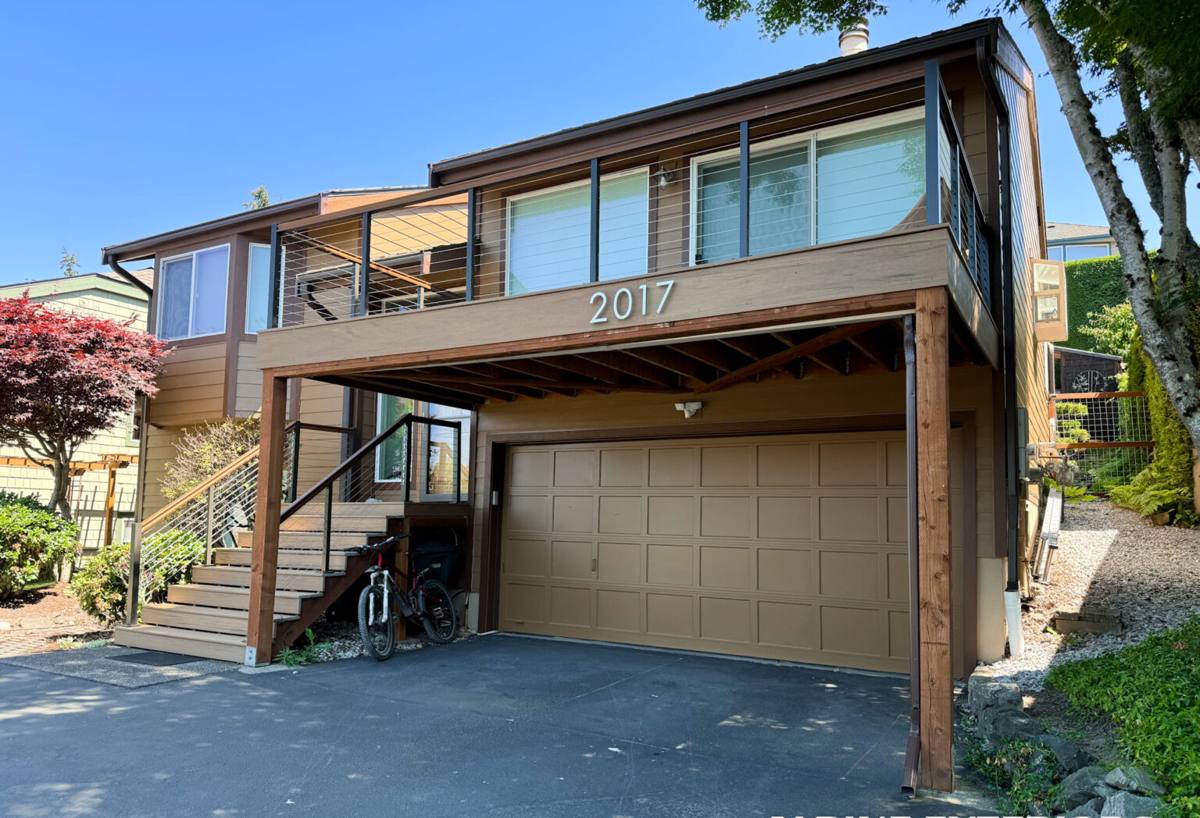
What We Typically Find on a Point Roberts Roof
After years of repair calls in this stretch of the county, the same handful of problems show up again and again:
- Moss buildup along the north-facing slopes and in shaded valleys, lifting shingle edges and holding moisture against the deck
- Corroded or failing flashing around chimneys, vents, and skylights — usually the first thing salt air gets to
- Nail pops and loosened fasteners from repeated wet-dry cycling
- Granule loss on asphalt shingles from years of wind and driving rain, leaving thin spots that let UV and water through
- Clogged or sagging gutters that back water up under the first course of shingles
- Soft or discolored decking under old moss patches, found once the moss and shingles are pulled back
Most of these start small. A repair done early — before the deck underneath is compromised — is a straightforward fix. Left alone through another wet Whatcom County winter, the same issue can turn into a much bigger job.
What a Correct Roof Repair Actually Involves
A roof repair that holds up on this stretch of coastline isn't just "put a new shingle where the old one blew off." It starts with figuring out why that shingle failed in the first place, because if the underlying cause isn't addressed, the next storm undoes the fix.
Flashing and Fasteners That Actually Hold
Given the salt air, we pay close attention to what flashing and fasteners are made of and how they're installed, not just whether they're present. Corrosion-resistant materials and proper fastener patterns matter more here than they would on a roof twenty miles inland. Flashing that's simply caulked over instead of properly integrated with the shingle courses is one of the most common failure points we find on older repairs in this area.
Moss, Algae, and Debris Removal Done Right
Moss has to come off carefully — pressure washing or aggressive scraping can strip granules and shorten the life of shingles that are otherwise fine. We remove moss by hand or with gentle methods, clear the debris that's trapping moisture, and only then assess what's actually damaged versus what just looks rough. Skipping this step and repairing over moss just means the same problem returns within a season or two.
Once the area is cleared, we check the decking underneath for soft spots, replace what's genuinely damaged, and match new roofing material to the existing roof as closely as possible so the repair blends in and performs consistently with the surrounding sections.
Repair or Replace?
Not every roof problem calls for a repair, and not every roof problem calls for full replacement. Here's how we generally think about it:
| Situation | Repair Usually Makes Sense | Replacement Worth Considering |
|---|---|---|
| Age of roof | Roof is under 15-20 years old | Roof is near or past its expected service life |
| Extent of damage | Isolated to one slope, valley, or penetration | Multiple slopes showing granule loss, curling, or moss damage |
| Decking condition | Deck is solid once damaged shingles are removed | Widespread soft or rotted decking found in multiple areas |
| Leak history | First or occasional leak, clear cause identified | Recurring leaks in different spots each season |
| Material availability | Matching shingles or panels are still obtainable | Original material discontinued, patchwork look unavoidable |
We'll always tell you honestly which category your roof falls into. A repair that's really just delaying an inevitable replacement isn't a good use of your money, and we'd rather say so upfront than sell you a patch that won't last.
Our Roof Repair Process in Point Roberts
- Inspection and honest assessment. We walk the roof (or use a ladder and binoculars for steep pitches), check the attic if accessible, and identify the actual source of the problem — not just where water is showing up inside.
- Written scope and estimate. You get a clear explanation of what's failing, why, and what it takes to fix it correctly, with a straightforward price before any work starts.
- Scheduling that accounts for access. Because Point Roberts is only reachable by land through Canada, we plan material deliveries and crew time in single trips rather than piecemeal visits, which keeps the job efficient and keeps costs down.
- The repair itself. Moss and debris removal, deck repair where needed, correct flashing and fastener work, and shingle or panel replacement matched to your existing roof.
- Cleanup and walk-through. Job site cleared of debris and nails, and we show you exactly what was done and why.
What Affects the Cost of a Roof Repair
We don't publish flat prices because every roof and every repair is different, but these are the factors that move the number up or down:
| Factor | Why It Matters |
|---|---|
| Roof pitch and access | Steeper roofs and limited access points take longer and require more safety setup |
| Extent of moss and moisture damage | Determines whether decking needs partial replacement, which adds material and labor |
| Roofing material | Asphalt, cedar, and metal repairs involve different materials, tools, and skill |
| Number of penetrations involved | Chimneys, vents, and skylights each need their own flashing work |
| Material matching | Older or discontinued roofing may require sourcing time or a broader repair area |
| Trip logistics | Point Roberts access through Canada is factored into scheduling, not built into inflated pricing |
Why a Crew That Already Works in Point Roberts Matters
A lot of contractors in Whatcom County will quote a Point Roberts job and then quietly hope it doesn't come up too often, because the border crossing and travel logistics eat into their day. That can mean delayed callbacks, rushed repairs to get back across sooner, or a reluctance to come back for a follow-up if something needs adjustment.
We treat Point Roberts as a regular part of our service area, not an inconvenient exception. That means we plan trips properly, bring the right materials the first time, and don't cut corners on flashing or moss removal just to get off the roof faster. It also means we've seen how salt air and driving rain actually behave on roofs in this specific spot, season after season — not just in general coastal Washington terms, but on this peninsula specifically.
A Simple Seasonal Checklist for Point Roberts Homeowners
Between professional repairs, a few habits go a long way toward keeping a Point Roberts roof in good shape through another wet Whatcom County winter:
- Look up at your roof from the ground each season and note any dark, green, or fuzzy patches — early moss is far easier to deal with than established moss
- Keep gutters clear so water isn't backing up under the lowest shingle course during heavy rain
- Trim back branches that overhang the roof — shade and falling debris both feed moss growth
- After a windstorm, check for shingles that look lifted, curled, or missing granules
- If you notice a musty smell or discoloration on an interior ceiling, don't wait — that's usually moisture that's already been working on the roof for a while
- Have flashing around chimneys and vents looked at every couple of years, since that's where salt air corrosion shows up first
If you're seeing moss buildup, a slow leak, or just want an honest read on how your Point Roberts roof is holding up, we're happy to take a look. Fill out the form below for a free, no-pressure estimate.