 Custer
 Building Decks for a Uniquely Exposed Corner of Whatcom County
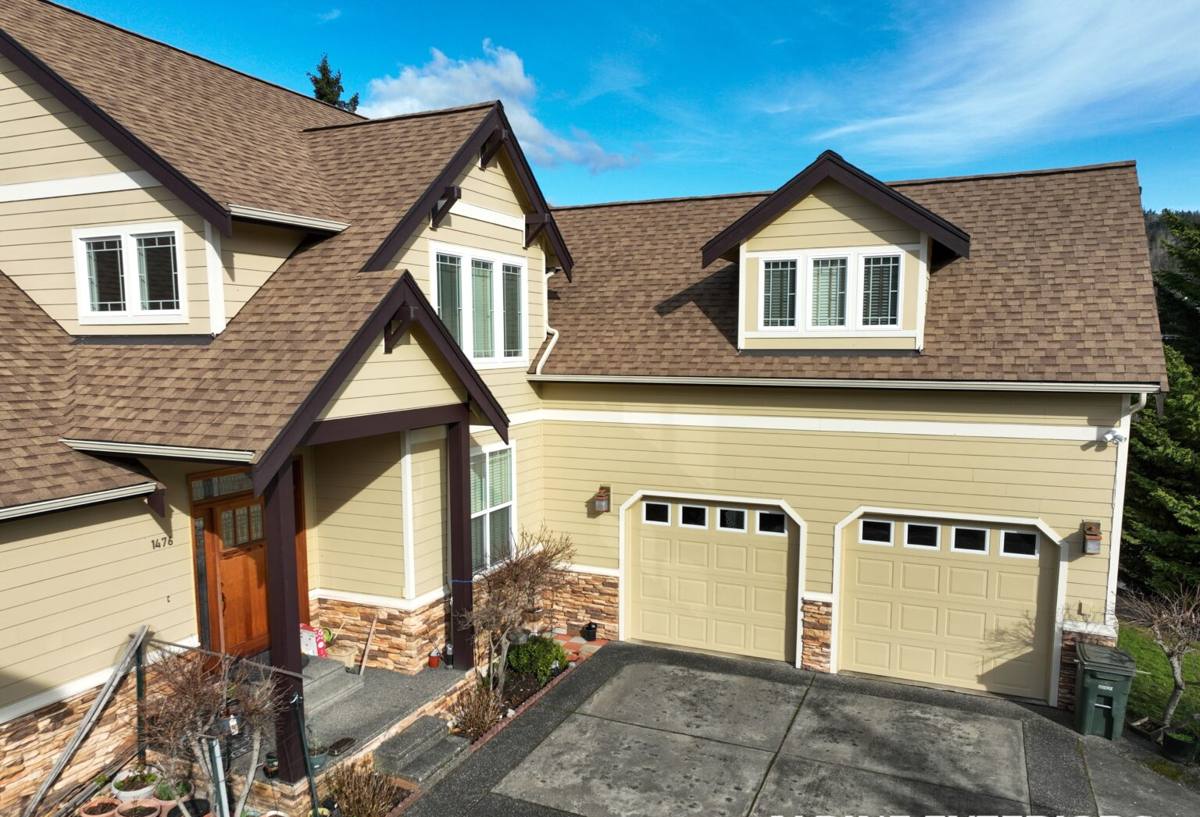
Point Roberts sits in a position most decking crews never have to plan around. It's surrounded by water on three sides, sits low relative to the Strait of Georgia, and gets weather that doesn't behave like weather ten miles inland. A deck built here takes a different kind of beating than one in a sheltered Whatcom County yard, and if it isn't built with that in mind, the problems show up early — not after twenty years, but after two or three.
We're based in Custer and have done decking work throughout the area, including Point Roberts. That matters for reasons beyond just knowing the roads — it means we've already seen how decks here actually age, not just how they're supposed to age on paper.
What Point Roberts Weather Does to a Deck Over Time
Three things drive almost every deck problem we see out here, and they compound each other.
Salt Air
Being surrounded by saltwater means airborne salt settles on everything — railings, fasteners, joist hangers, screws. Ordinary zinc-coated hardware corrodes faster in this environment than it would a few miles inland. Once fasteners start rusting, they weaken, streak the decking around them, and eventually fail.
Driving Rain
Wind off the water pushes rain sideways, not just straight down. That means water gets driven into joints, under rail posts, and along the edges of boards that would stay dry in a calmer setting. A deck design that only accounts for water falling vertically leaves gaps that this kind of weather finds immediately.
A Long Moss Season
Cool, damp air for much of the year, combined with shade from trees or the house itself, gives moss and algae a long runway to establish themselves on deck surfaces. Once moss takes hold in the grain or texture of a board, it holds moisture against the surface even longer, which speeds up whatever wear is already happening underneath.
None of this means a deck can't hold up well in Point Roberts. It means the material choice and the install details have to actually account for these conditions instead of assuming average Pacific Northwest weather.
Why Composite Decking Fits This Climate
Composite decking is made from a blend of wood fiber and plastic, and most modern boards used for exterior decking are "capped" — meaning they have a hard polymer shell wrapped around the core. That cap is the important part for a place like this. It doesn't absorb water the way raw wood does, it doesn't provide the same organic surface for moss to grip and grow into, and it doesn't need the yearly staining or sealing that keeps wood decks weather-resistant.
That doesn't make composite maintenance-free — nothing outdoors here is — but it removes the biggest failure points wood decking runs into under salt air and heavy rain: rot, splintering, and the constant refinishing cycle.
What a Correct Composite Deck Installation Involves Here
The composite boards themselves are only part of the job. Most of the decks we've had to repair or rebuild in exposed coastal settings didn't fail because of the decking material — they failed because of what was underneath or holding it together.
Substructure and Framing
The joists and beams under a composite deck still need to be protected from moisture, even though the decking on top won't absorb water the way wood boards do. We use joist tape or an equivalent moisture barrier on framing members, and we make sure the substructure is pressure-treated or otherwise rated for ground contact and exterior exposure, not just standard framing lumber.
Fasteners and Hardware
Given the salt exposure, we don't use standard zinc-coated fasteners and hangers on Point Roberts jobs. Stainless steel or coated fasteners rated for coastal/marine-adjacent use cost more up front, but they're the difference between hardware that lasts and hardware that starts staining and weakening within a few seasons.
Drainage and Airflow
Boards need proper spacing for water to shed rather than pool, and the space underneath the deck needs enough airflow to dry out between rain events. On low decks or ones close to grade, we pay extra attention to this — a deck that can't breathe underneath stays damp longer, and everything above it ages faster as a result.
Rail Posts and Penetrations
Every place a post, screw, or fixture penetrates the decking or framing is a potential entry point for driven rain. Those connections get properly flashed and sealed rather than just bolted through and left.
Composite vs. Other Decking Materials for This Environment
| Material | Salt Air Behavior | Maintenance | Typical Lifespan Here |
|---|---|---|---|
| Capped Composite | Resists corrosion staining and won't rot; hardware is the main vulnerability | Occasional wash-down; no staining or sealing | 25+ years with correct install |
| Pressure-Treated Wood | Absorbs moisture and salt spray; accelerates weathering | Annual/biennial staining or sealing required | 10–15 years before major repair or replacement |
| Uncapped or Budget Composite | More prone to surface moisture absorption and mold/moss growth than fully capped boards | Low, but surface can degrade faster in damp shade | Varies widely by product quality |
| PVC Decking | Fully synthetic, very moisture-resistant | Low | Comparable to or longer than composite, higher material cost |
We install fully capped composite systems as our standard recommendation for Point Roberts because they hit the right balance of upfront cost, low ongoing maintenance, and real resistance to the specific conditions out here. PVC is a reasonable option too for homeowners who want to spend more up front to minimize maintenance further — we'll walk through that trade-off honestly if it's relevant to your project.
Our Process for a Point Roberts Composite Deck
- On-site assessment. We look at sun/shade exposure, wind direction relative to the water, existing framing condition if this is a rebuild, and drainage around the deck footprint.
- Design and material selection. We talk through board color and texture options, railing style, and any structural changes needed — steps, multiple levels, built-in seating — based on how the space will actually be used.
- Substructure work. Framing is inspected or built to code, moisture-barrier taped, and fitted with coastal-rated hardware before a single composite board goes down.
- Decking installation. Boards are installed with hidden fastener systems where the product allows, keeping the surface clean and reducing the number of exposed screw points that salt air can attack.
- Rail, trim, and finish work. Fascia boards, post sleeves, and railing are installed and all penetrations sealed.
- Final walkthrough. We go over care recommendations specific to your deck's exposure — sun, shade, proximity to the water — before we consider the job done.
Maintenance Point Roberts Homeowners Should Actually Expect
Composite decking is low-maintenance, not no-maintenance. In this climate, a little regular attention goes a long way toward keeping a deck looking and performing the way it should for its full lifespan.
- Rinse or sweep the deck periodically to clear salt residue, pollen, and organic debris before it builds up in board grooves
- Wash shaded or damp areas more often — these are where moss and algae get a foothold first
- Check the underside airflow path seasonally to make sure leaves or debris haven't blocked ventilation gaps
- Inspect visible fasteners and hardware once a year for early signs of corrosion or staining
- Keep gutters and downspouts near the deck clear so runoff isn't dumping extra water onto or under the structure
- Address any soft spots, movement, or gaps around posts and stairs early rather than waiting
Why a Crew That Already Works in Point Roberts Matters
Point Roberts is a genuine logistical outlier — reaching it means crossing an international border each way, which most contractors based elsewhere in Whatcom County simply aren't set up to do routinely with crews, tools, and materials. That adds scheduling and logistics considerations that don't exist on a typical mainland job, and a crew unfamiliar with that reality can end up costing you time.
Working out of Custer, we've built that logistics piece into how we plan and schedule Point Roberts projects, and we've seen firsthand how decks here actually hold up — or don't — a few years after installation. That's the kind of knowledge that doesn't come from a spec sheet; it comes from doing the work in this specific setting.
Let's Talk About Your Deck
If you're planning a new composite deck or replacing one that hasn't held up to Point Roberts weather, we're happy to take a look and give you an honest read on what your project needs. There's no pressure and no obligation — just fill out the form below and we'll be in touch to schedule a free estimate.