 Custer
 Why Board & Batten Fits Nooksack Homes
Board and batten has become one of the most requested siding profiles in the Nooksack area, and it's not just a style trend. The vertical lines and deep shadow lines work well on the mix of farmhouse-style homes, newer builds, and older ranch-style houses that make up this part of Whatcom County. It also happens to be a profile that, done right, sheds water cleanly off a wall instead of letting it sit in horizontal ledges — which matters a great deal this close to the water.
Homes around Custer and the Nooksack corridor deal with a specific combination of conditions: salt-laden air moving in off the Strait of Georgia and Puget Sound, long stretches of driving, wind-pushed rain rather than gentle vertical rain, and a moss season that can run from October well into April. Any siding installed here has to handle all three at once, and board and batten's vertical battens actually help — they create channels that guide water down and off the wall rather than across it, if the underlying assembly is built correctly.
The problem is that a lot of board and batten failures we get called out to inspect aren't failures of the profile itself. They're failures of material choice or installation shortcuts that a coastal Whatcom County climate finds and exploits within a few wet seasons.
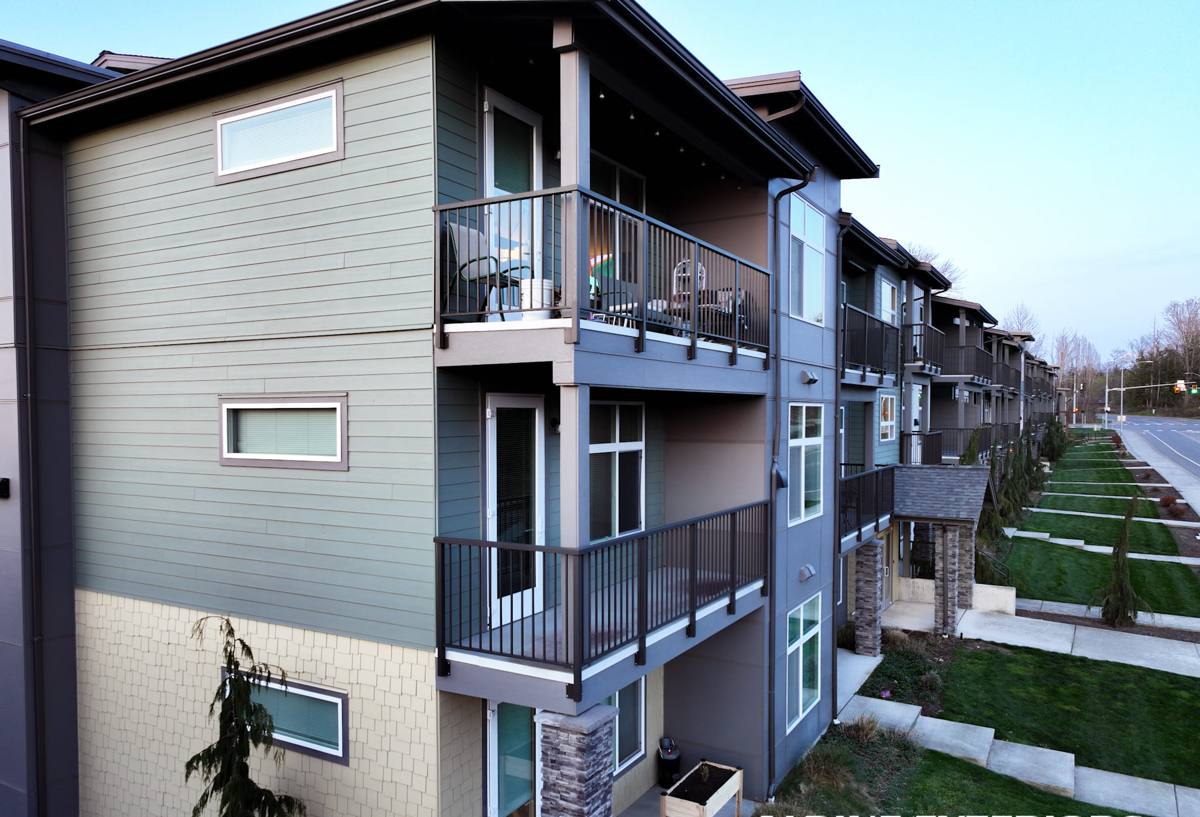
What a Correct Board & Batten Installation Involves
The Water Management Layer Comes First
Before a single board goes up, the wall needs a properly lapped weather-resistant barrier and correctly integrated flashing at every window, door, and penetration. Board and batten in particular depends on this layer because the battens themselves aren't watertight seals — they're a cosmetic reveal over a seam. If the barrier behind them is wrong, driving rain off the Strait will find its way behind the boards eventually.
Fastening and Spacing Matter More Than They Look
Vertical siding needs blocking or strapping behind it in most assemblies so fasteners land in solid backing at the right intervals, not just wherever the studs happen to be. Batten spacing and board width also need to account for expansion and contraction — fiber cement moves less than wood, but it still needs room to breathe, and gaps that are too tight will telegraph as buckling within a year or two.
Field Cuts Need to Be Sealed, Every Time
Every cut end exposes the raw core of the material. On a job with dozens of battens, that's a lot of cut ends, and skipping the sealing step on even a few of them is exactly the kind of shortcut that shows up as a soft spot near the bottom of a wall three or four winters later — right where splash-back and standing moisture are worst.
Why We Install Only James Hardie for Board & Batten
We don't install LP SmartSide, vinyl, Cemplank, Allura, primed spruce, or raw cedar board and batten. That's a deliberate standard, not a sales pitch, and it's worth explaining honestly rather than just asserting it.
Cedar board and batten looks beautiful new. It also needs re-staining or re-sealing on a real schedule, and in a moss-prone, salt-air environment like this one, that schedule gets shorter than most homeowners expect. Skip a cycle and moisture gets a foothold in end grain and behind battens where it's hard to see. Vinyl board and batten handles moisture fine on its own but is a poor match for this climate's temperature swings and impact exposure, and it can't be painted to match trim as the house ages. Engineered wood products like LP SmartSide perform well in many climates but rely on an intact factory treatment and careful field-sealing of every cut edge — in a region with this much sustained moisture exposure, that's a maintenance dependency we're not comfortable putting our name behind.
James Hardie fiber cement is non-combustible, doesn't swell or rot when wet, and comes with a factory-applied ColorPlus finish that's baked on rather than field-sprayed — meaning the color layer itself resists the fading and moss-staining that plain painted surfaces show first. Hardie also engineers specific product lines (HZ5, HZ10) for different climate zones, and this area falls squarely into the wetter, harsher end of that range. That's the whole reason we standardized on one manufacturer instead of offering five options and letting climate mismatch become the homeowner's problem five years down the road.
Comparing Your Board & Batten Material Options
| Material | Moisture Behavior Here | Maintenance Burden | Typical Lifespan (This Climate) |
|---|---|---|---|
| James Hardie fiber cement | Doesn't rot or swell; factory finish sheds moisture | Occasional wash; repaint only if desired | 30+ years to warranted life |
| Cedar | Absorbs moisture at cut ends and battens if unsealed | Re-stain/seal every 2-4 years | 15-25 years with diligent upkeep |
| Vinyl | Sheds water but can warp/crack in wind and cold snaps | Low, but not repairable-in-place | 15-25 years |
| LP SmartSide / engineered wood | Fine if factory seal stays intact and cuts are field-sealed | Moderate; edge-sealing is critical | 20-30 years if maintained |
What Affects Your Board & Batten Project Cost
Wall Prep and Existing Conditions
Homes with existing moisture damage, rot, or inadequate backing behind the current siding cost more to prepare properly — and around Nooksack, we find this more often on the north and west-facing walls that take the brunt of driving rain off the Strait.
Board Width and Reveal Style
Wider board spacing with narrower battens reads differently than a tighter, more traditional reveal, and the choice affects both material quantity and labor time. Neither is "better" — it's an aesthetic decision that should match the house's style and any HOA guidance in your area.
Trim and Corner Detailing
Board and batten lives or dies on clean corner and trim work. Outside corners, window returns, and transitions to other siding profiles all add labor, but skimping here is where amateur-looking jobs and water-entry points both originate.
- Confirm the crew is replacing or verifying the weather-resistant barrier, not just siding over the old one
- Ask specifically how cut ends and field edges will be sealed
- Get the batten spacing and reveal width in writing before work starts
- Verify blocking/backing plans for fastener attachment on vertical runs
- Confirm which James Hardie color line and HZ product is being used, and get the written warranty
Our Process for Nooksack-Area Homes
We walk the exterior first and look specifically at the sides of the house that take the worst of the weather — usually facing the water or open exposure, not the street-facing elevation most people assume is the problem side. From there we scope the water management layer, confirm flashing details at every opening, and lay out board and batten spacing that fits the house's proportions before ordering material.
Installation follows Hardie's fastening and clearance specifications to the letter, including ground clearance and roof-line clearances that matter more here than in drier climates, since standing moisture at those transitions is where most siding problems start. We finish with a walk-through so you know exactly what was done and what, if anything, needs periodic attention.
Living With Board & Batten Through Whatcom County's Moss Season
Moss doesn't damage Hardie siding the way it can compromise wood, but it will still grow on any north-facing or shaded exterior surface in a climate this wet, and homeowners often ask what to do about it. The honest answer is that moss on fiber cement is a cosmetic issue, not a structural one, and it's simple to manage:
- A soft wash (not a pressure washer on high setting) once a year keeps moss from building up in board and batten's shadow lines
- Trim back vegetation and tree cover that keeps a wall shaded and damp longer than the rest of the house
- Check gutters and downspouts each fall — clogged gutters push water directly onto the siding face right where battens meet the wall
- Watch the bottom few feet of any wall near grade or a walkway, since splash-back is the most common source of prolonged wetting
Why a Crew That Already Works Nooksack Matters
Board and batten installed to a generic spec sheet from a drier region doesn't hold up the same way out here. A crew that has already worked on homes in and around Custer and the Nooksack area knows which walls tend to take the worst weather, how local permitting and inspection process, and where the moisture problems in this specific stretch of Whatcom County actually originate — because we've opened up enough old siding locally to have seen it firsthand. That local pattern recognition is worth more than a lower bid from a crew working outside their normal territory.
If you're weighing board and batten for a home in the Nooksack area, we're happy to walk the property, talk through what your specific exposure needs, and give you a straightforward, no-pressure estimate — no obligation, just an honest look at what your house needs.